

Sensory room grants can turn a cluttered storage closet into a calm, age-appropriate space where teens reset and return to class. Picture a ninth grader who leaves math three times a week and spends most of the period in the office hallway. The team knows a short, planned sensory break would help. However, there is no room, no equipment, and no budget.
This guide works like a short course for SPED teams and administrators. By the end, you will be able to define the need, gather data, link the space to school goals, build a clear budget, write the proposal, and report results that win renewal. Examples are fictional. Adapt to the student’s goals and agreed supports. This is guidance, not a diagnosis.
At a glance
- Funders support a clear need, a clear plan, and clear results.
- Teens need sensory spaces that look mature and protect dignity.
- Simple local data, like time out of class, makes the strongest case.
- Tie the room to goals the school already has, such as PBIS or inclusion.
- A small, itemized budget is easier to fund than a large wish list.
1. Define the need for a secondary sensory space
First, describe the problem in your building, not in general terms. Funders read many proposals that say “students need sensory support.” Instead, explain what happens now and who is affected.
Adolescents have different sensory needs than young children. They often want discreet tools, more autonomy, and a space that does not feel babyish. In addition, many teens avoid support that makes them look different in front of peers. Therefore, a secondary sensory room should use mature colors, adult furniture, and private seating.
Next, look at the current options. Many schools send dysregulated teens to the office, the nurse, or the hallway. Those places are not designed for regulation, and students may lose a full period. As a result, the need is both about wellbeing and about lost instruction.
Worked example: Ridgeview High School
Ridgeview is a fictional high school. Its SPED team noticed that several students with autism, ADHD, or anxiety left class often and returned slowly. One of them, Jordan, a fictional ninth grader, regularly lost most of a math period after leaving class.
The team wrote a one-paragraph need statement: “Students who leave class to regulate currently have no designated space. They wait in the office or hallway and often miss the rest of the period. We need a quiet, age-appropriate room where students can take a short, planned break and return to learning.”
Notice what the statement does well. It names who is affected, describes what happens now, and states what the team wants instead. Moreover, it avoids diagnoses and personal details, which keeps student privacy intact. Because it fits in one paragraph, it can open almost any application form without changes.
2. Gather data that strengthens sensory room grants
Data turns a good idea into a fundable project. Fortunately, you do not need a research study. Simple counts collected over a few weeks are often enough to show the need.
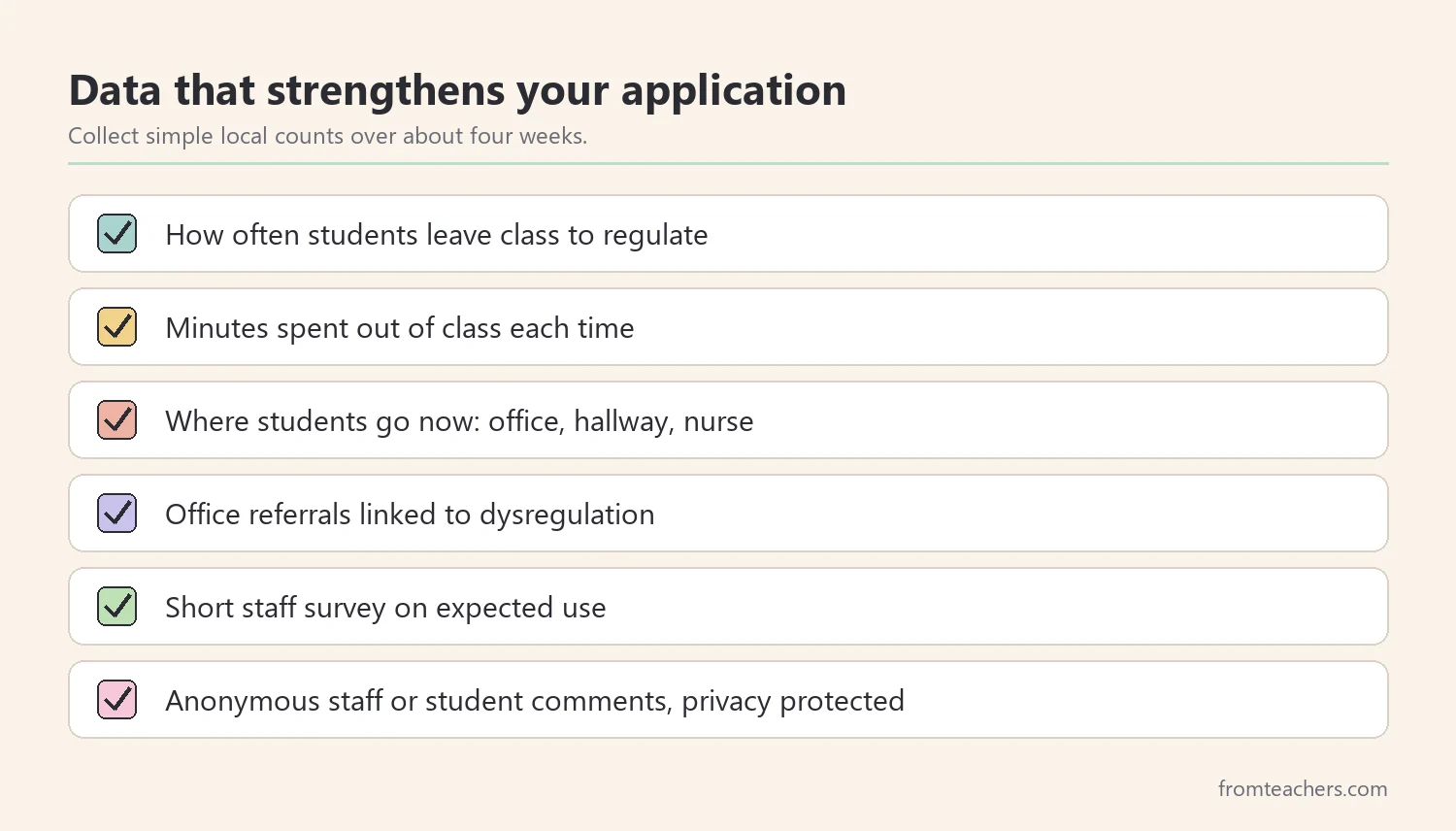
Useful data includes how often students leave class, how long they are gone, and where they go. Also count office referrals linked to dysregulation. In addition, a short staff survey can show how many teachers would use the space.
Keep the tracking light so staff actually do it. For example, a one-line log by the classroom door can capture the date, time out, time back, and where the student went. Then, one team member adds up the entries each Friday. As a result, the data stays current without adding much work.
Then, add qualitative evidence. Brief, anonymous quotes from staff or students can bring numbers to life. Always protect privacy, and never share identifying student details in a grant.
Ridgeview baseline data
Over four weeks, the team tracked a small group of students. They logged every exit from class for regulation reasons.
| Where students went | Exits in 4 weeks | Average minutes away |
|---|---|---|
| Office | 18 | 35 |
| Hallway | 14 | 25 |
| Nurse | 8 | 30 |
| Total | 40 |
That adds up to 630 minutes in the office, 350 in the hallway, and 240 with the nurse. In total, students spent 1,220 minutes, or about 20 hours, out of class in four weeks. Because the numbers are local and simple, a funder can understand them in seconds.
3. Align the room with school goals
Next, connect the sensory room to goals your school already has. Funders and administrators are more likely to support a project that moves existing priorities forward.
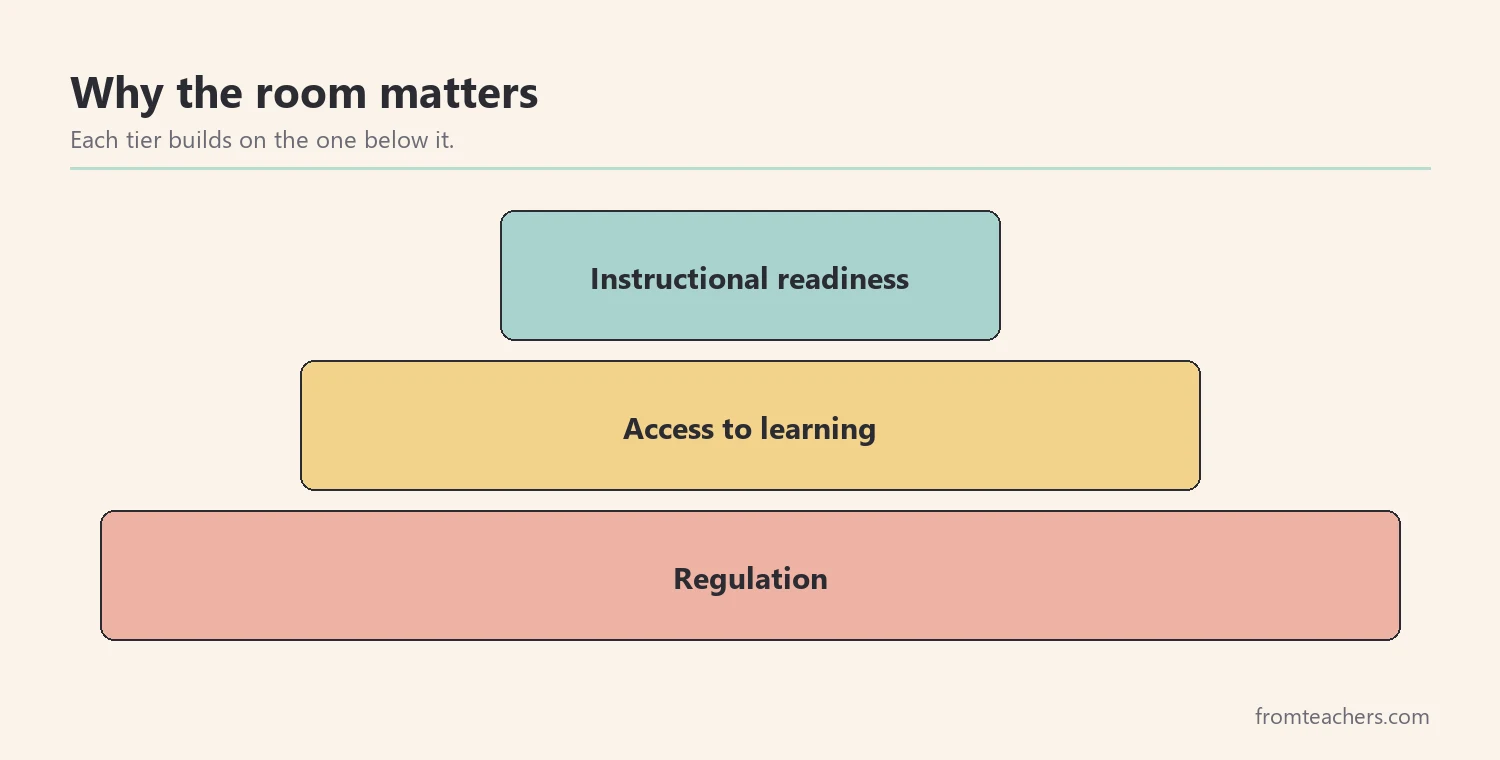
For example, a sensory room can support PBIS by giving students a planned, positive alternative to disruptive behavior. It can also support trauma-informed practice, since predictable calm spaces help many students feel safe. Moreover, it supports academic achievement when students return to class faster.
Also, frame the room as an inclusion support. When students can regulate close to their classroom, they may stay in general education settings more often. As a result, the room can help reduce more restrictive placements.
In addition, address equity and access. Plan for students with different mobility needs, sensory profiles, and communication styles. A ready-made guide such as this practical guide to securing grants for secondary sensory rooms covers these alignment points, including PBIS, inclusion, and equity, in one place.
4. Build a budget for sensory room grants
A clear budget shows funders that you have thought through every dollar. Instead of a long wish list, focus on items that serve the need you described. Group them in a few simple categories.
First, list furniture and seating, such as a couch, floor cushions, or a partitioned reading nook. Next, add sensory tools appropriate for teens, such as noise-reducing headphones, weighted lap pads, and fidgets. Then include lighting, like lamps or light filters, to replace harsh overhead light. Finally, add visual supports, such as a break timer and a return-to-class routine posted on the wall.
Always get real quotes from vendors before you finalize numbers. Prices change, and funders notice estimates that look rounded or guessed.
Ridgeview sample budget
The figures below are a fictional example to show structure. Use your own quotes.
| Category | Example items | Amount |
|---|---|---|
| Seating | Couch, floor cushions | $1,200 |
| Sensory tools | Headphones, lap pads, fidgets | $650 |
| Lighting | Lamps, light filters | $400 |
| Visual supports | Timers, routine posters | $250 |
| Total request | $2,500 |
Also, show any in-kind support. For example, the school may provide the room, paint, and staff time. That signals commitment and stretches the funder’s dollars.
Plan for the room’s daily use
A budget covers things, but funders also want to know how the room will run. So decide a few practical details before you apply. Who supervises the space? How do students request a break? How long can a visit last?
For example, Ridgeview planned for a staff member in an adjoining office to check in at the start and end of each visit. Students would use a pass, and visits would last about ten minutes. In addition, a simple sign-in sheet would record each visit, which also feeds the evaluation data later.
Also, plan for upkeep. Fidgets break, cushions need cleaning, and headphones go missing. Therefore, set aside a small part of the budget, or a school contribution, for replacements during the first year.
5. Write a clear, focused proposal
Most grant applications ask similar questions in a similar order. Therefore, you can draft the core sections once and adapt them for each funder. Keep sentences short and avoid jargon.
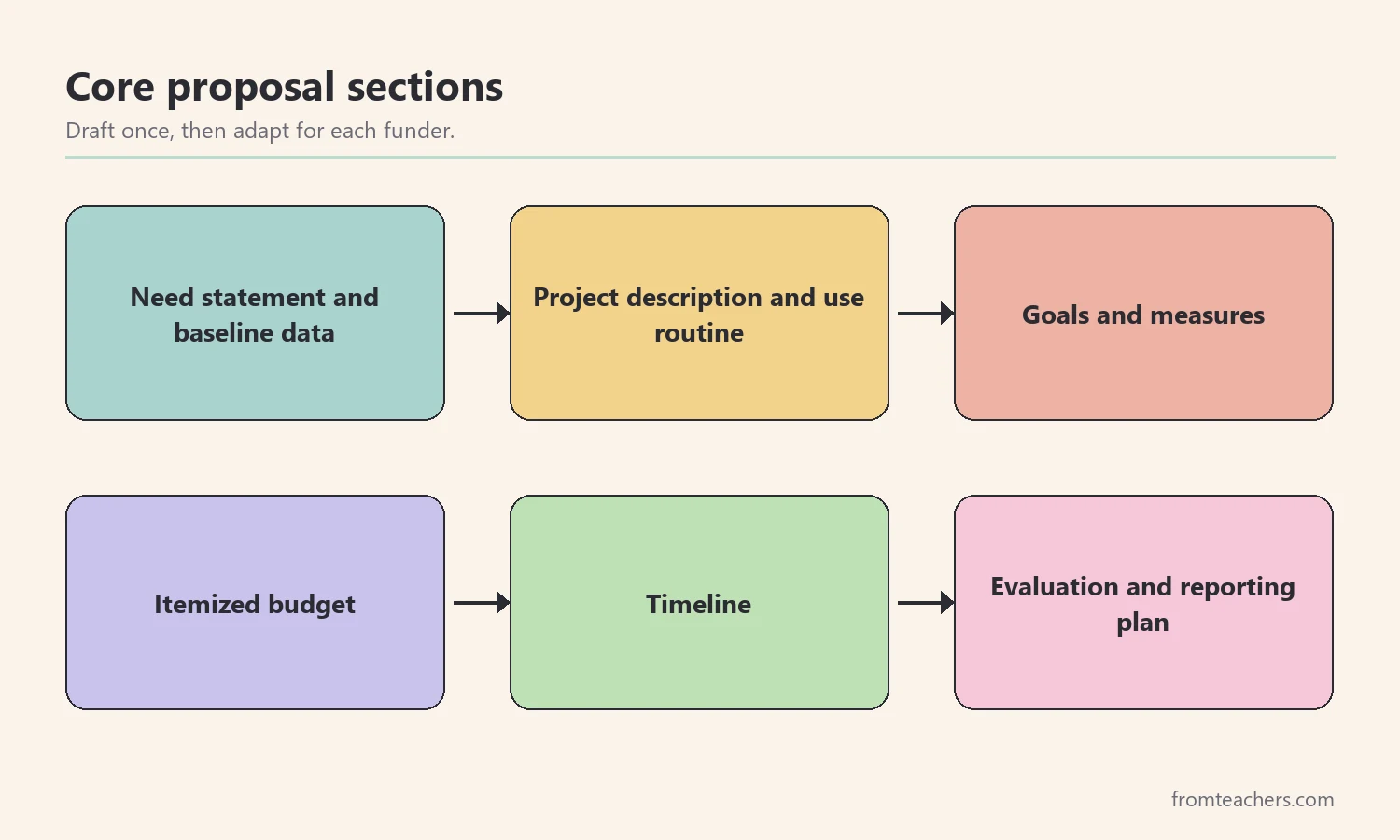
Start with the need statement and your baseline data. Next, describe the project: what the room will look like, who will use it, and how. Then explain goals and how you will measure them. Finally, attach the budget and a short timeline.
Moreover, describe how the room will be used, not only what it contains. Funders want to know that students will have a planned routine. For example, Ridgeview wrote: “Students will use a pass, set a ten-minute timer, choose a regulation tool, and complete a short check-in before returning to class.”
Also, look for funding in several places. Many sensory room grants come from a mix of small sources, such as a local education foundation, a parent-teacher group, a community service club, or a local business. In addition, check whether your district has internal innovation or wellness funds. Read each funder’s rules carefully, because eligibility and deadlines vary.
Before you submit, ask a colleague outside SPED to read the proposal. If they can explain the project back to you in one minute, it is clear enough.
6. Measure results and report back
Winning one grant is a start. Reporting results well helps you win the next one. So plan your evaluation before the room opens.
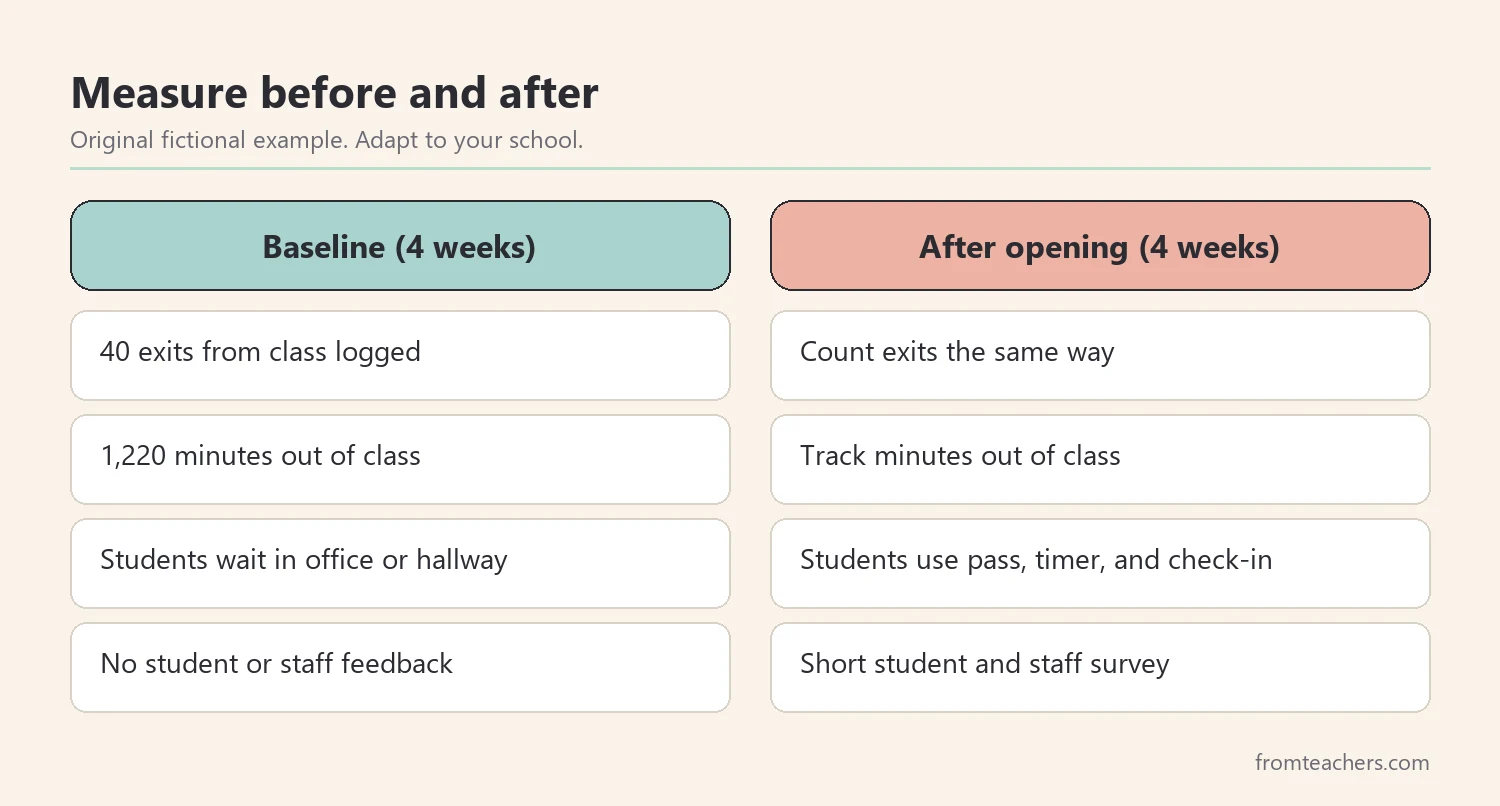
Use the same measures you collected at baseline. For example, track exits, minutes out of class, and office referrals linked to dysregulation. In addition, ask students and staff short questions about whether the room helps.
For Ridgeview, the team planned to compare a four-week period after opening with the original four-week baseline. Their goal was simple: fewer minutes out of class and faster returns. Whatever the outcome, they planned to report it honestly, along with changes they would make.
In addition, watch for unplanned effects. For instance, if students stay in the room far longer than planned, review the routine and the timer. Similarly, if one group never uses the space, ask why. Their answers may point to a design or access issue you can fix.
Finally, thank your funders with a short report and, where allowed, photos of the space without students’ faces. A clear thank-you report often opens the door to future support.
Common mistakes and how to avoid them
- Mistake: designing a room that feels childish. Fix: choose mature colors, adult furniture, and private seating for teens.
- Mistake: no baseline data. Fix: collect four weeks of simple counts before you apply.
- Mistake: a wish list instead of a budget. Fix: group items in categories, use real quotes, and match each item to the need.
- Mistake: no usage routine. Fix: describe the pass, the timer, and the return-to-class step in the proposal.
- Mistake: relying on one funder. Fix: combine several small sources and in-kind support.
- Mistake: forgetting the follow-up report. Fix: plan your evaluation and thank-you report before the room opens.
Questions teachers and parents ask about sensory room grants
Who should write a sensory room grant?
Usually a small team works best. A special education teacher, an administrator, and an OT or counselor can each add a different view. One person should own the final draft so the voice stays consistent.
How much should we ask for?
Ask for what the need requires and what the funder allows. Many local funders prefer smaller, focused requests. Therefore, a clear, modest budget with real quotes is often a strong start.
Do we need a whole room?
Not always. A corner of a resource room or a partitioned area can work well. The key is a calm, predictable space with a clear routine for using it.
How can parents help with sensory room grants?
Parents can share experiences, with consent, and connect the school with local groups or businesses. In addition, parent-teacher groups often fund or co-fund classroom projects.
What if we do not get the grant?
Ask the funder for feedback if they offer it. Then strengthen your data and apply again or to another source. Also, start small with low-cost changes while you wait.
Related reading: Managing Sensory Overload: Practical Strategies for Autism and ADHD, Essential Trauma-Informed Teaching Strategies, and Understanding Autistic Burnout and School Exhaustion.
A companion resource for sensory room grants:
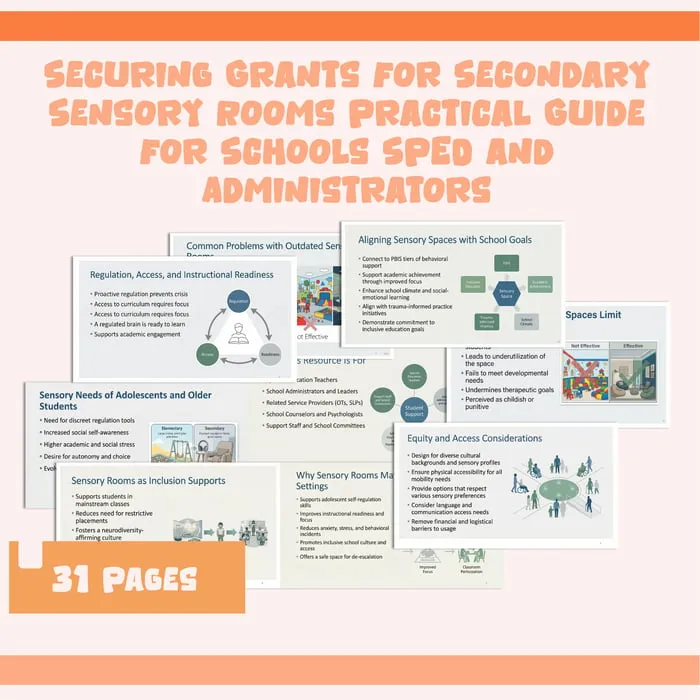
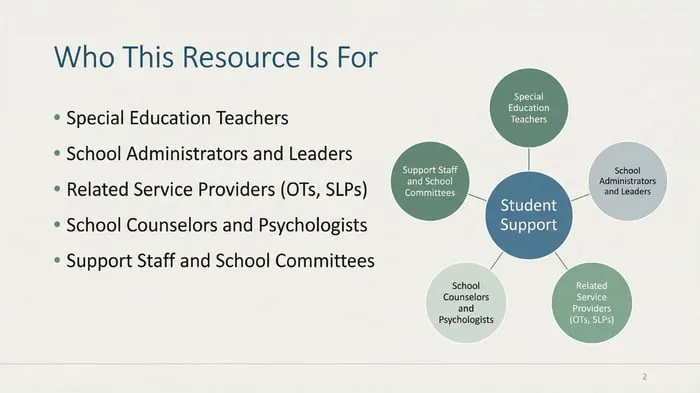
Securing Grants for Secondary Sensory Rooms: A Practical Guide for Schools, SPED Teams, and Administrators: A 31-page guide on teen sensory needs, aligning sensory spaces with PBIS and inclusion goals, and the data and documentation that strengthen a grant application.
Sources and scope
- IDEA, U.S. Department of Education: the federal law and guidance on special education and least restrictive environment.
- IRIS Center, Vanderbilt University: free modules on behavior support and inclusive practice.
- Center on PBIS: guidance on positive behavioral interventions and supports in schools.
- Understood.org: plain-language resources on sensory processing and learning differences.
Scope: this guide covers general planning and proposal writing for school sensory spaces. It does not give legal or financial advice, list specific grant programs, or replace an occupational therapist’s guidance on individual sensory needs.
Key takeaways
- Describe the local need with simple baseline data like minutes out of class.
- Design a mature, private space that respects teen dignity.
- Link the room to PBIS, inclusion, equity, and academic goals.
- Submit a focused, itemized budget built on real quotes.
- Measure the same things after opening and report back to funders.


Leave a Comment