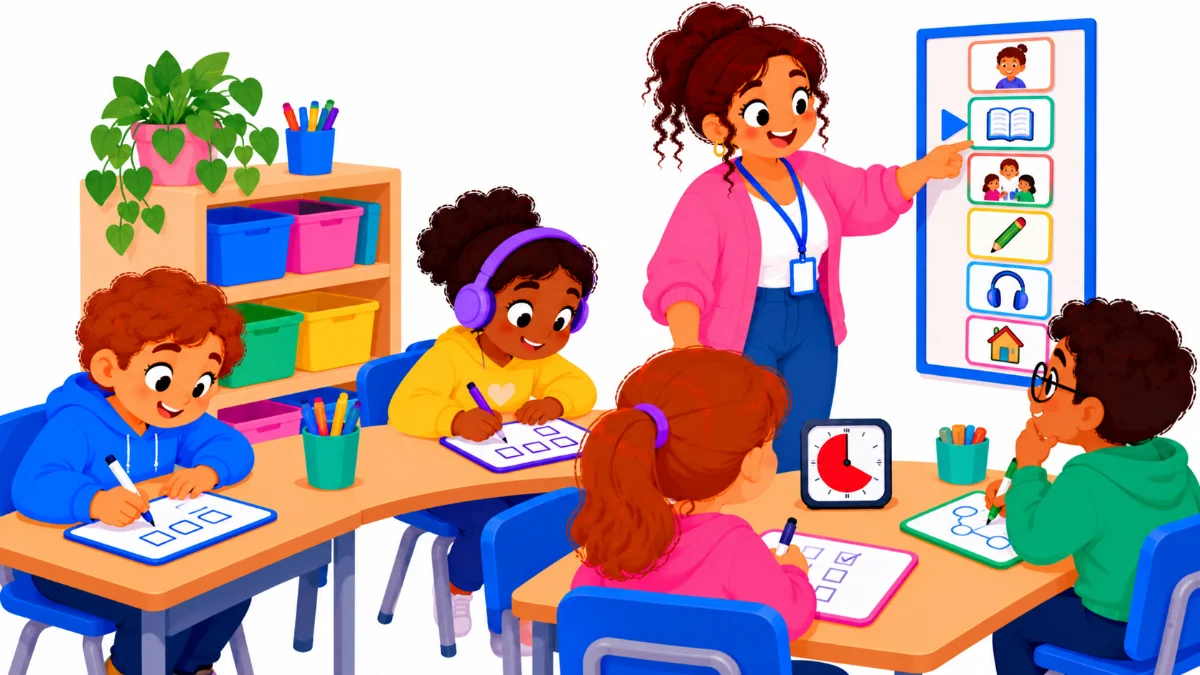

Knowing the classroom management mistakes to avoid can save a special education teacher weeks of frustration. Picture a grade 2 to 4 resource room at 9:15. Mr. Patel gives a long set of spoken directions, three students start the wrong task, Eli wanders to the window, and the lesson loses ten minutes before it begins.
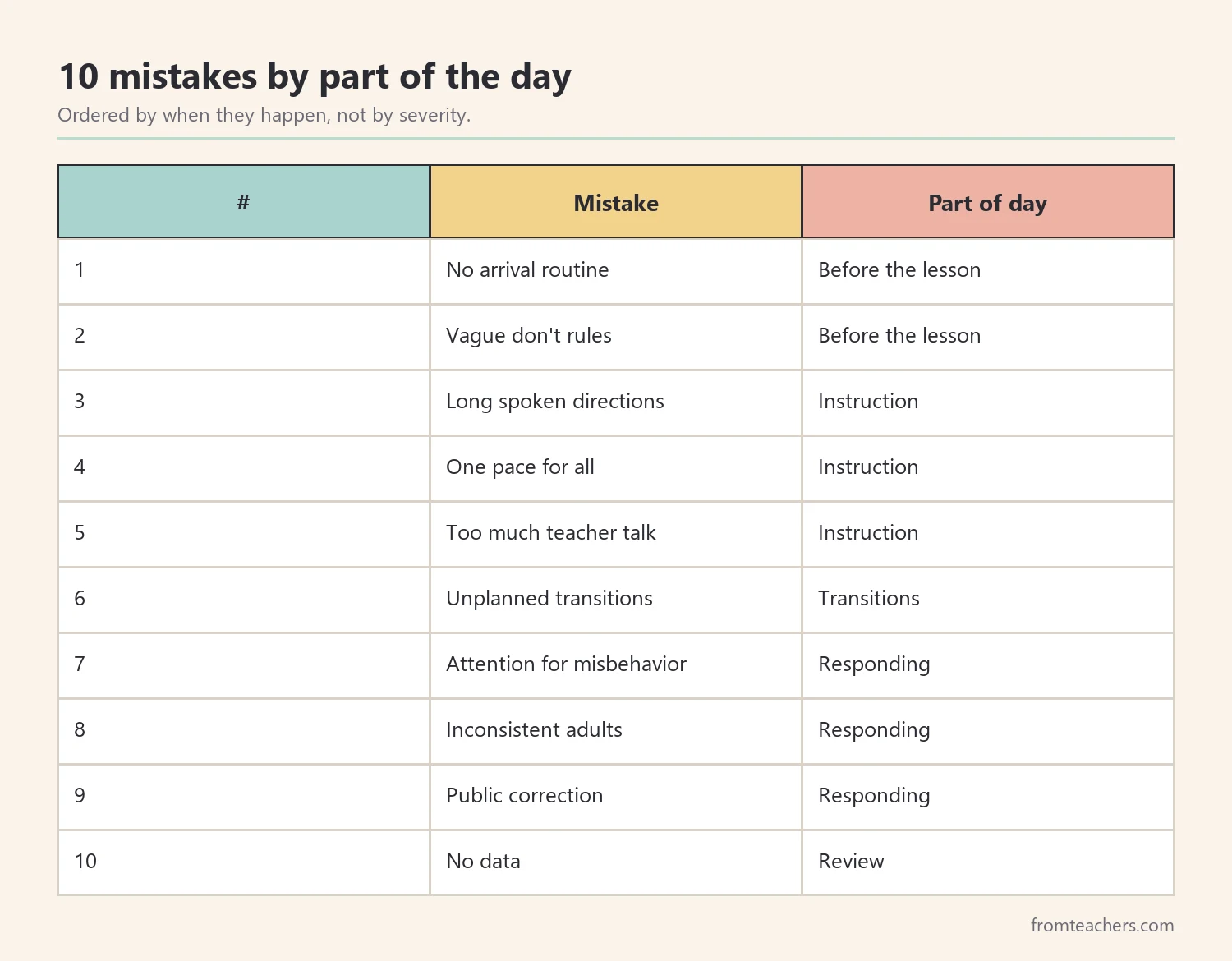
This list covers ten common mistakes, grouped and ordered by the part of the day where they usually happen: before the lesson, during instruction, during transitions, and in responding to behavior. By the end, you will know what each mistake looks like, why it causes trouble, and what to do instead, with one quick fix you can try tomorrow.
Examples are fictional. Adapt to the students’ goals and agreed supports, including IEPs and behavior plans. This is guidance, not a diagnosis.
At a glance
- Teach routines for arrival and transitions before anything else.
- Post positive expectations with pictures instead of a list of don’ts.
- Give short, visual directions and many chances to respond.
- Notice good behavior often and keep adult responses consistent.
- Fix one mistake at a time and check simple data.
How we ordered these mistakes
We did not rank the mistakes by how “bad” they are, because there is no fair way to score that. Instead, they follow the school day: planning and setup first, then instruction, transitions, and finally responses to behavior. As a result, you can scan the section that matches the moment you find hardest.
Most of these mistakes come from good intentions, such as wanting to be flexible or wanting to give lots of information. The fixes keep those intentions but add structure, which many students in special education need to feel safe and successful.
The ready-made option: a visual dos and don’ts guide
If you prefer to learn by seeing, the classroom management dos and don’ts guide for SPED teachers is a 51-page comic-style guide. Each page pairs a “what not to do” scene with a “do this instead” scene, covering engagement, behavior, transitions, differentiation, and communication.
Because the guide is visual rather than text-heavy, it is easy to flip through during planning time or to share with a new team member or paraprofessional.
1. No clear routines for the first five minutes
What it looks like: students arrive and wait while the teacher sets up. Waiting time quickly becomes off-task time.
Why it causes trouble: unstructured minutes invite wandering, conflict, and anxiety, especially for students who rely on predictability.
Do this instead: teach a fixed arrival routine, such as unpack, check the visual schedule, and start a short warm-up task. Practice it until it runs without you.
Example: Mr. Patel placed a warm-up folder on each desk. Within two weeks, students started work within a couple of minutes of arriving.
2. Rules that are vague or stated as “don’ts”
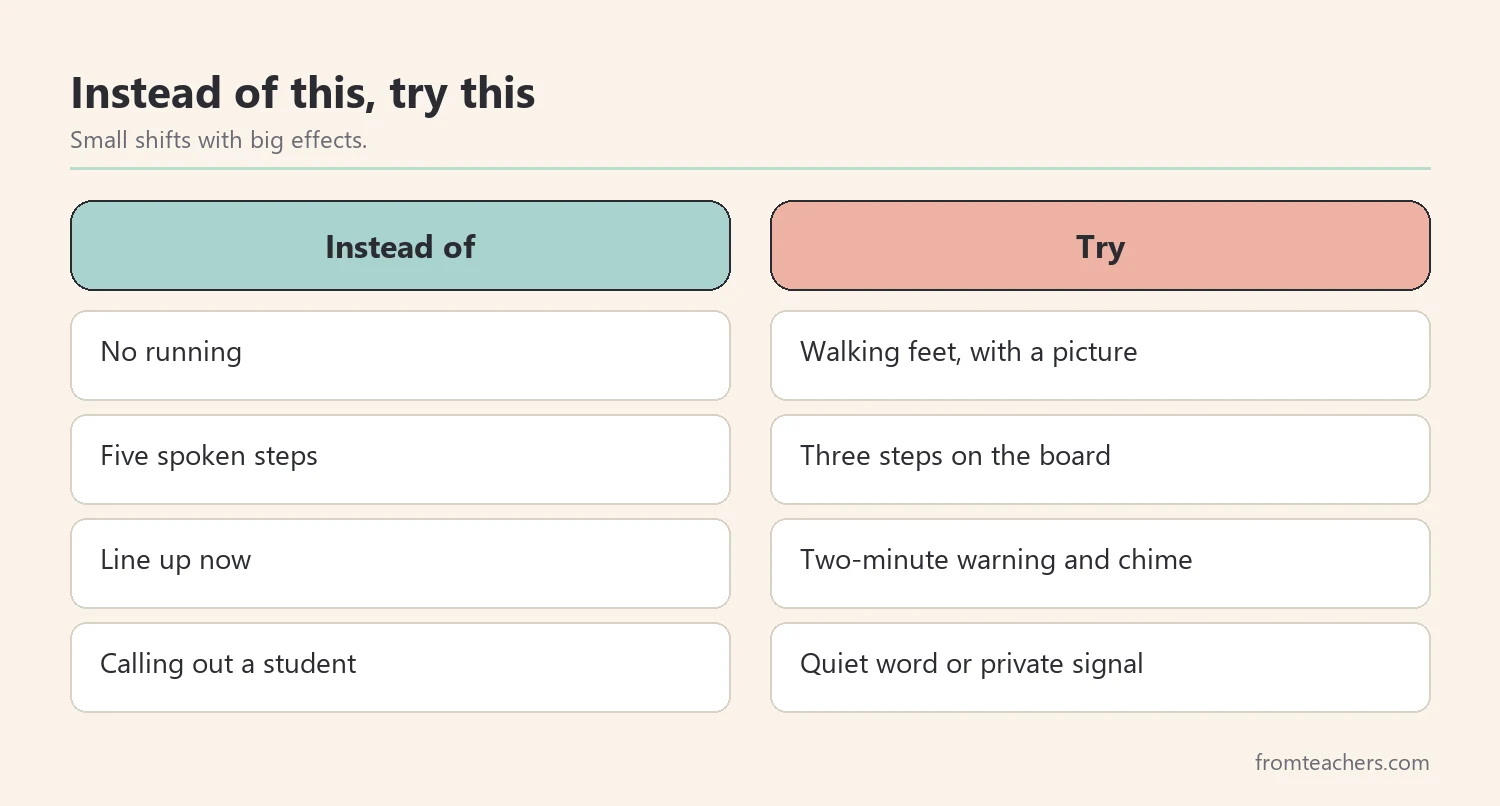
What it looks like: a poster with “No running, no shouting, no hitting.”
Why it causes trouble: students learn what not to do, but not what to do instead.
Do this instead: post three to five positive expectations with pictures, such as “walking feet” and “quiet voice.” Teach each one with examples and non-examples, as many positive behavior support frameworks recommend.
Example: Mr. Patel replaced his “no” list with four picture expectations and practiced one each morning for a week.
3. Long spoken directions
What it looks like: five steps given aloud in one breath.
Why it causes trouble: many students with disabilities have difficulty holding several spoken steps in memory.
Do this instead: give one or two steps at a time, show them visually, and check understanding by asking a student to repeat or point.
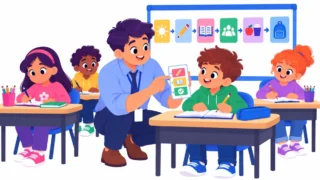
Example: Mr. Patel began writing three numbered steps on the board with small icons. Wrong starts dropped noticeably. He also left the steps on the board, so students could check them again instead of asking.
4. One pace for everyone
What it looks like: the whole group works on the same task for the same length of time.
Why it causes trouble: some students finish early and drift, while others feel lost and give up.
Do this instead: plan a core task plus a “must do” and a “may do,” or use small group rotations so you can teach at different levels.
Example: Mr. Patel used two levels of the same math task. Early finishers moved to a “may do” game, which reduced wandering.
5. Too much teacher talk, too little student response
What it looks like: long explanations with only a few students answering.
Why it causes trouble: when students are passive, attention fades and behavior problems grow.
Do this instead: build in frequent chances to respond, such as whiteboards, response cards, choral answers, or thumbs up.
Example: Mr. Patel added whiteboards to every lesson. Every student answered every question, and Eli stayed at his seat longer.
6. Unplanned transitions
What it looks like: “Okay, everyone line up,” with no warning.
Why it causes trouble: sudden changes can be very hard for students who need predictability, including many autistic students.
Do this instead: give a warning, use a visual timer, and teach a transition routine with a clear signal.
Example: Mr. Patel used a two-minute warning and a chime. Transitions became calmer and shorter, and fewer students needed individual reminders to move.
7. Attention mostly for misbehavior
What it looks like: students who follow expectations are ignored, while students who disrupt get frequent attention.
Why it causes trouble: attention is powerful. If it comes mainly after problems, some students may learn that disruption works.
Do this instead: notice and name positive behavior often, with specific praise such as “You started your work right away.”
Example: Mr. Patel set a goal of several specific praise statements in each lesson. He tracked them with a tally on a sticky note.
8. Inconsistent responses between adults
What it looks like: the teacher allows something, the paraprofessional does not, and students test both.
Why it causes trouble: mixed messages make expectations unclear.
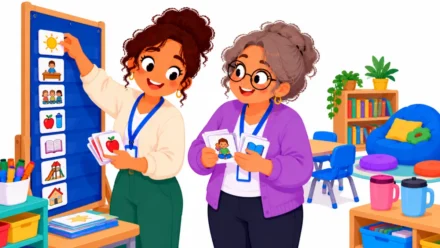
Do this instead: agree as a team on expectations, prompts, and responses. A short weekly check-in with support staff keeps everyone aligned.
Example: Mr. Patel and his paraprofessional agreed on the same three prompt words. Students responded faster when both adults used them.
9. Public correction
What it looks like: calling out a student in front of the class.
Why it causes trouble: it can embarrass the student, escalate the situation, and damage the relationship.
Do this instead: use proximity, a quiet word, or a private signal. Save longer conversations for a calm moment.
Example: When Eli wandered, Mr. Patel walked over, pointed to his schedule, and quietly said “math first.” Eli returned to his seat.
10. Not using data to adjust
What it looks like: the same strategies continue for months without checking whether they help.
Why it causes trouble: without data, teams can keep strategies that do not work and drop ones that do.
Do this instead: track one or two simple measures, such as minutes to start work or number of redirections, and review weekly.
Example: Here is Mr. Patel’s record across five weeks as he fixed mistakes one at a time.
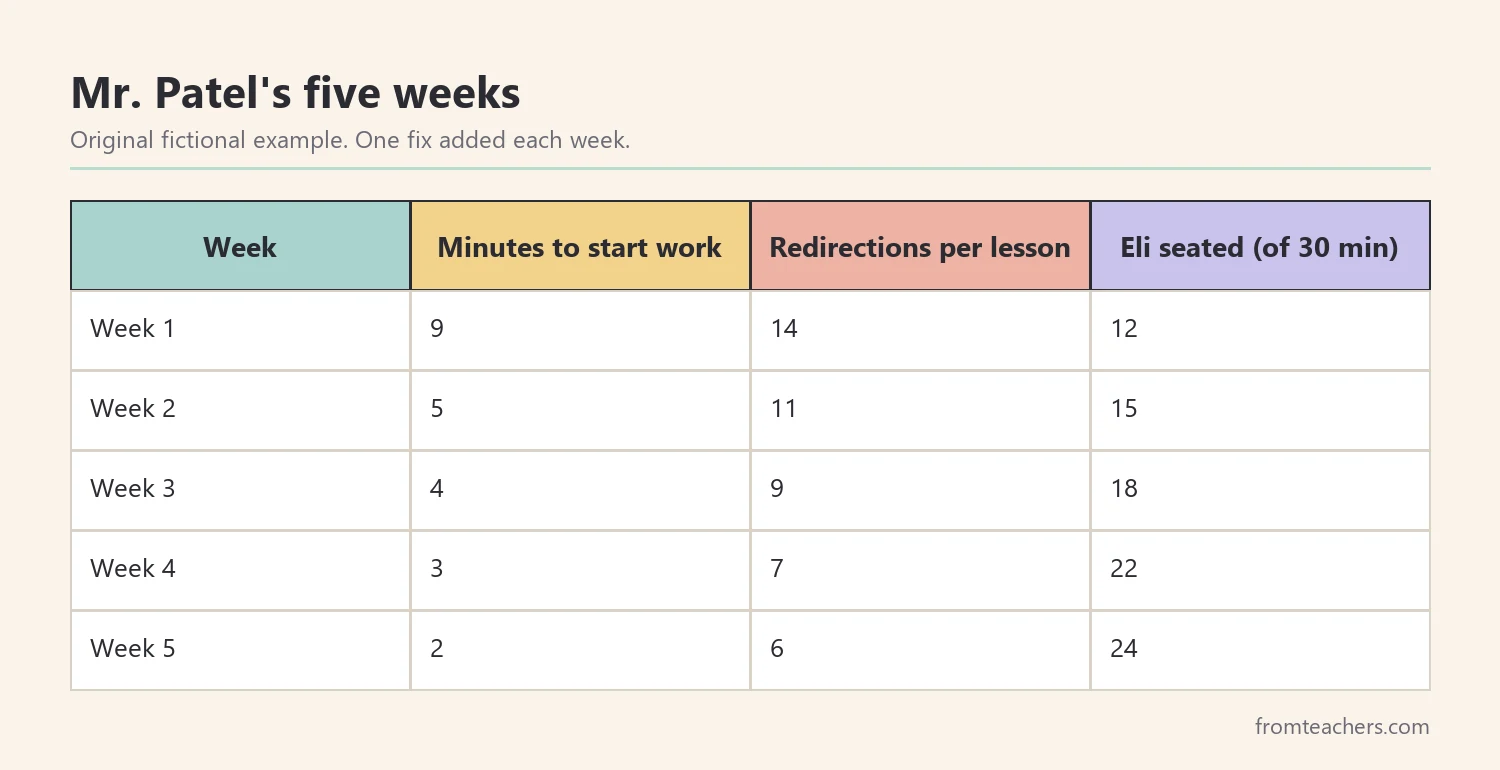
The changes added up. Starting time fell, redirections dropped, and Eli’s time in his seat rose. As a result, Mr. Patel kept the new routines and shared them with the paraprofessional and the general education teacher.
Fixing classroom management mistakes to avoid, one at a time
Trying to fix all ten at once is a mistake of its own. Instead, pick the one that costs you the most time, fix it for two weeks, and check the data. Then move to the next.
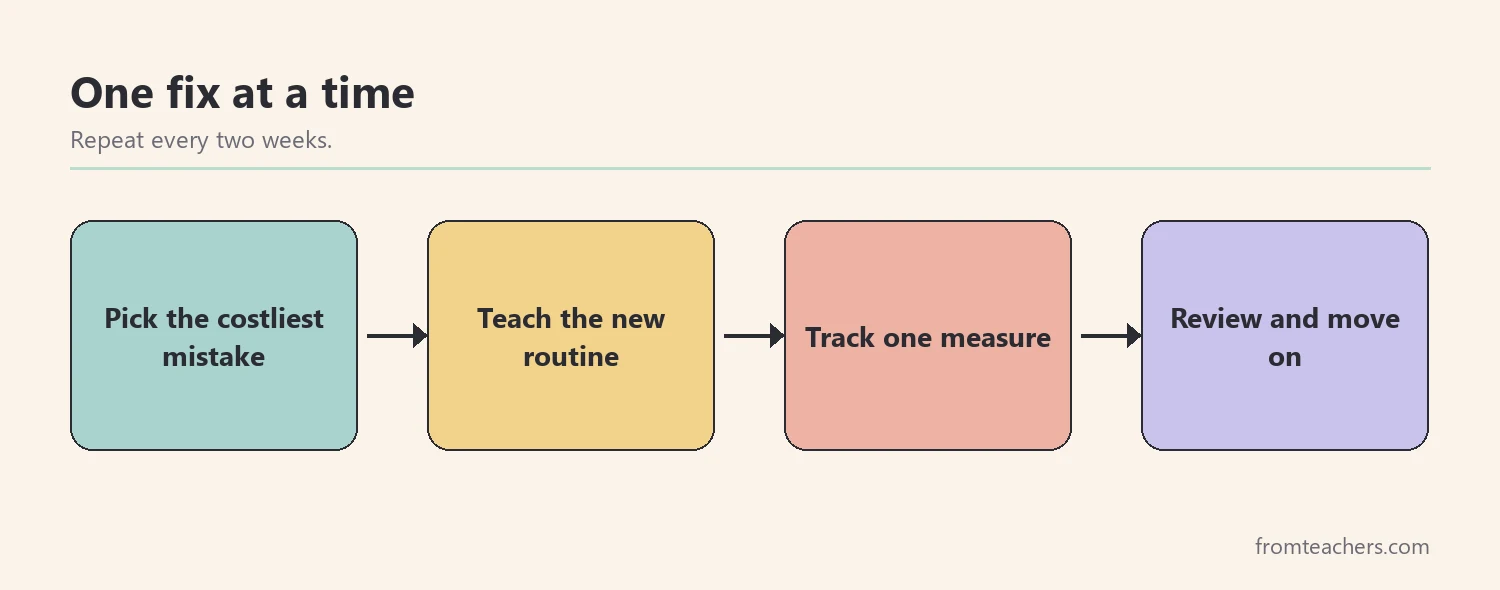
Also, involve students. Ask them which routines help and which feel confusing. Students often notice problems before adults do, and their ideas build ownership. A short class meeting on Fridays, with one question such as “What made this week easier?”, is often enough to collect useful ideas.
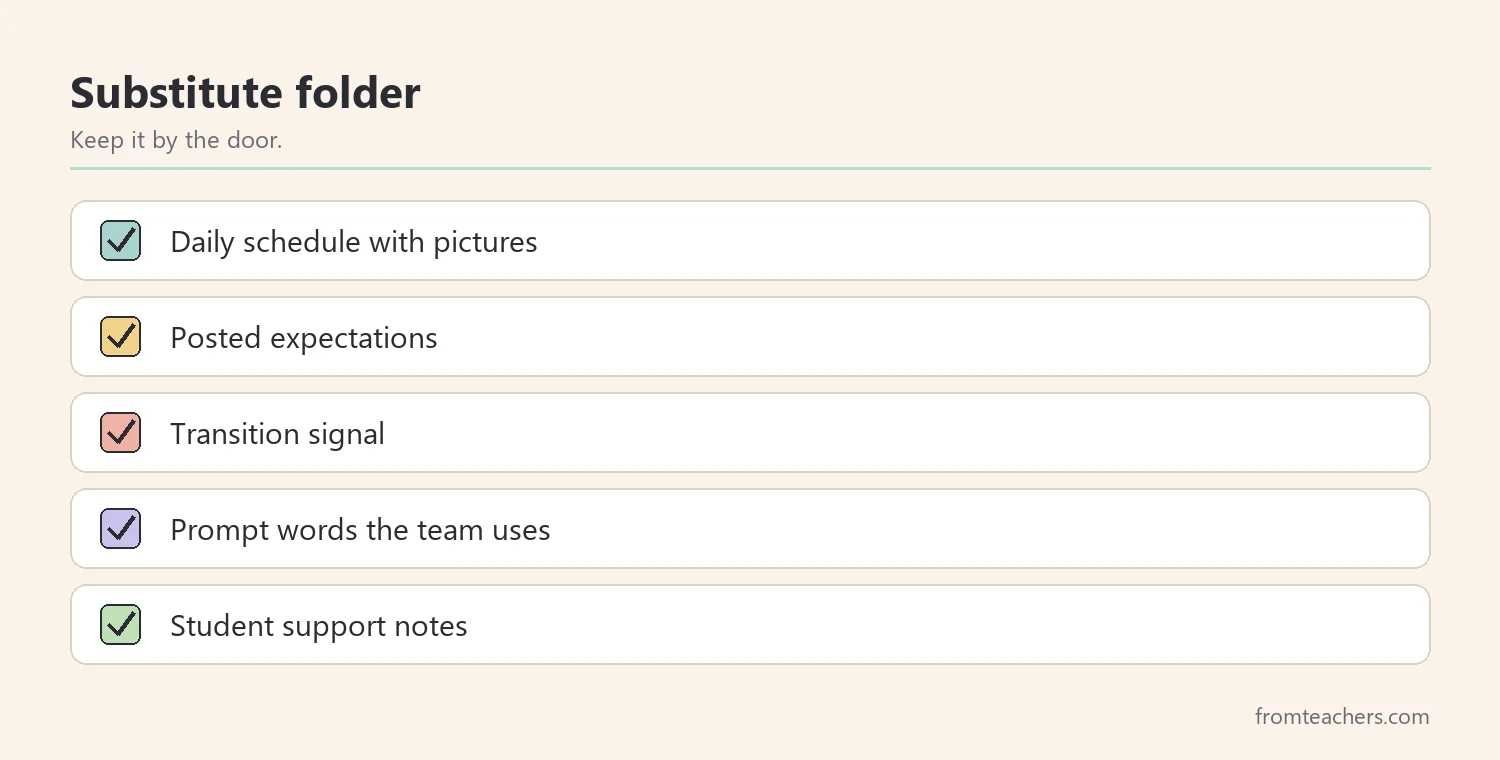
In addition, plan for substitutes. A one-page summary of routines, expectations, and signals helps the class run smoothly when you are away. Many teachers keep it in a bright folder by the door.
Moreover, remember that classroom management in special education is closely linked to instruction. When tasks match students’ levels and lessons include many chances to respond, many behavior problems shrink on their own. Good management is not about control; it is about creating a predictable place where students can learn.
A closer look
It also helps to look at the room itself. Clear pathways, a defined space for small group teaching, labeled materials, and a calm corner for breaks all reduce the number of decisions students must make. When the environment does part of the teaching, adults spend less time redirecting.
Likewise, review your schedule. Long stretches of seated work, especially right after lunch or recess, are common trouble spots. Short movement breaks, a predictable order of activities, and a visual schedule that students can check on their own often prevent problems before they start.
Finally, take care of yourself. Special education classrooms are demanding. Small routines that save time each day, such as prepared folders and visual directions, reduce stress for adults as well as students.
Questions teachers ask about classroom management mistakes to avoid
Which mistake should I fix first?
Start with the one that costs the most time or causes the most stress. For many teachers, that is the first five minutes or transitions.
How long does a new routine take to work?
It varies by class and routine. Many teachers practice a new routine daily for a week or two and keep reteaching after breaks or schedule changes.
Do these ideas work in general education classrooms too?
Yes. Clear routines, positive expectations, visual directions, and frequent responses help most students, not only those with IEPs.
What if a student has a behavior plan?
Follow the plan written by the team. Classroom routines should support it, and any changes should be discussed with the team.
How can I get my paraprofessional on board?
Share the plan, explain the reasons, and agree on simple prompt words. A short weekly check-in makes a big difference.
Related reading: Moving Beyond Shame and Behavior Charts, Special Education Strategies: 10 Powerful Ways Teachers Can Succeed, and Addressing Challenges in Special Education.
You may also need: Classroom Observation Form for Special Education (SEN): 12 Daily Checklists.
A companion resource for classroom management mistakes to avoid:
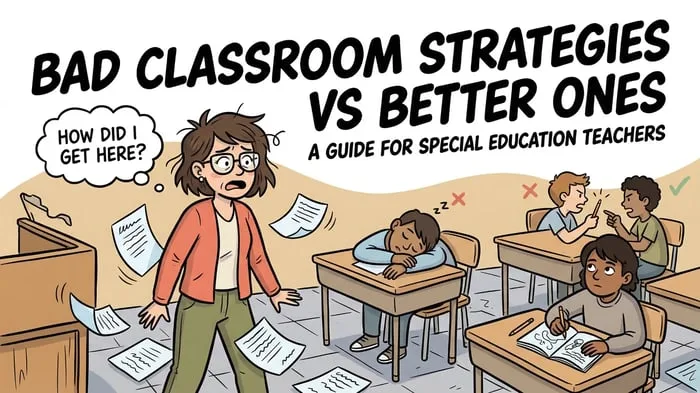
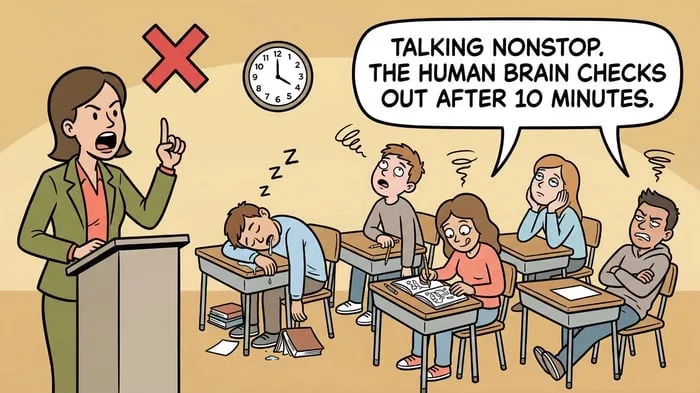
Classroom Management Strategies: Dos & Don’ts for SPED Teachers: a 51-page comic-style guide that walks through common classroom habits and more effective alternatives, covering engagement, behavior, transitions, differentiation and communication, with each page pairing a what not to do scene with a do this instead scene.
Sources and scope
- Center on PBIS: resources on positive behavioral interventions and supports, including classroom practices.
- What Works Clearinghouse: research reviews and practice guides, including a guide on reducing behavior problems in the elementary classroom.
- Intervention Central: practical classroom behavior and academic intervention tools.
- AFIRM Modules: learning modules on evidence-based practices for autistic learners, including visual supports.
This list covers everyday classroom management in special education settings. It does not replace individual behavior plans, functional behavior assessments, or crisis procedures, which follow your team and district policies.
Key takeaways
- Most classroom management mistakes to avoid come from good intentions without enough structure.
- Teach arrival routines, positive expectations, and transition signals.
- Give short, visual directions and many chances to respond.
- Notice positive behavior and keep adult responses consistent.
- Fix one mistake at a time and check simple data weekly.







Leave a Comment