

Executive function homework help is what many families need when the backpack comes home and nothing happens next. Picture a weeknight at the kitchen table: your middle schooler says there is “no homework,” then remembers a project at 9 p.m., cannot find the instructions, and melts down. You know your child is capable. The problem is not effort. It is planning, starting, and keeping track.
This guide is for parents and caregivers of children who struggle to organize schoolwork. You will learn how to set up a homework launch routine, break tasks into steps, estimate time, gather materials, check in without hovering, and build independence week by week.
Examples are fictional. Adapt to the student’s goals and agreed supports. This is guidance, not a diagnosis.
At a glance
- Executive function skills include planning, starting, organizing, time management, and self-monitoring.
- A short, written plan before homework often prevents the evening spiral.
- Breaking a task into three to five steps makes starting easier.
- Estimating time and then checking real time builds awareness.
- Your role shifts from doing it with them to checking in, then to stepping back.
1. Understand what executive function looks like at home
Executive functions are the mental skills that help us plan, start, organize, and finish tasks. At home, difficulties often look like forgetting assignments, starting very late, losing materials, or underestimating how long work will take. Many children with ADHD or learning differences find these skills especially hard, but any child can struggle with them.
First, look at the pattern rather than a single bad night. Does your child struggle most with starting? With knowing what to do first? With finishing? Each pattern points to a different kind of support. Executive function homework help works best when it targets the step that breaks down.
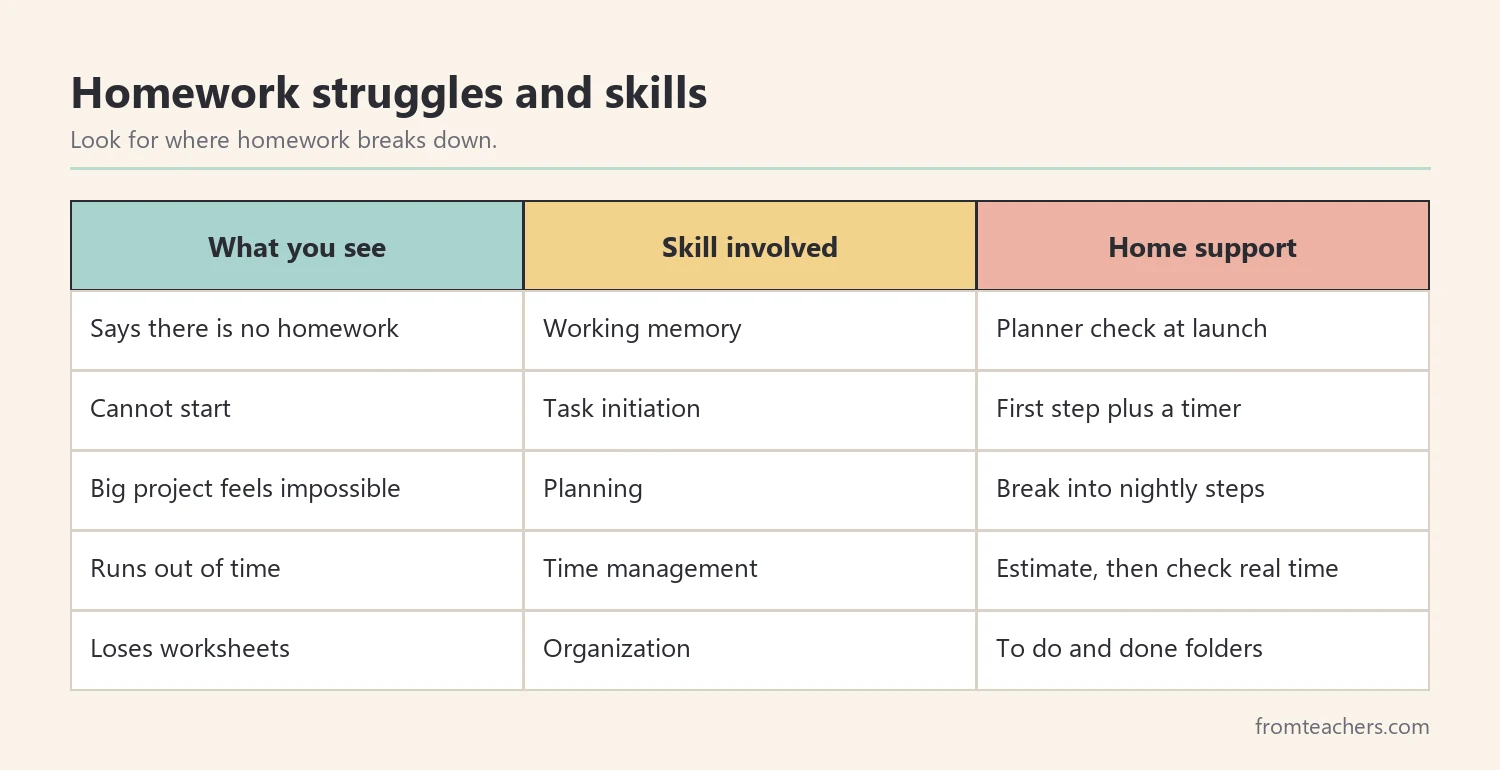
Also, separate skill from will. A child who stares at a blank page for twenty minutes is often stuck, not lazy. When parents see the difficulty as a missing skill, conversations become calmer and more helpful.
Jonah (fictional, grade 7) usually said he had no homework. When his parents looked closer, they found he forgot to write assignments down and did not know where to start on longer projects. Starting and planning were the weak spots, not effort.
In addition, talk with the school. Teachers may already see similar patterns in class and may have strategies that work. If your child has an IEP or 504 plan, executive function supports may already be listed, and home can mirror them.
2. Build a homework launch routine
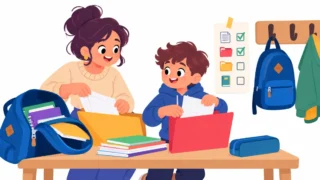
A launch routine is a short, predictable start to homework time. It takes five minutes and answers three questions: What do I have to do? What do I need? What will I do first? Consequently, the hardest part of homework, getting started, becomes a habit.
Choose the same time and place each day when possible. A quiet corner of the kitchen table with good light and fewer distractions works well. Next, keep a small homework kit there with pencils, paper, a calculator, a timer, and any other basics your child uses often.
Then, walk through the launch together for the first few weeks:
- Open the planner or school portal and list every task.
- Choose the order, starting with a quick win or the most urgent task.
- Gather materials for the first task.
- Set a timer for the first work block.
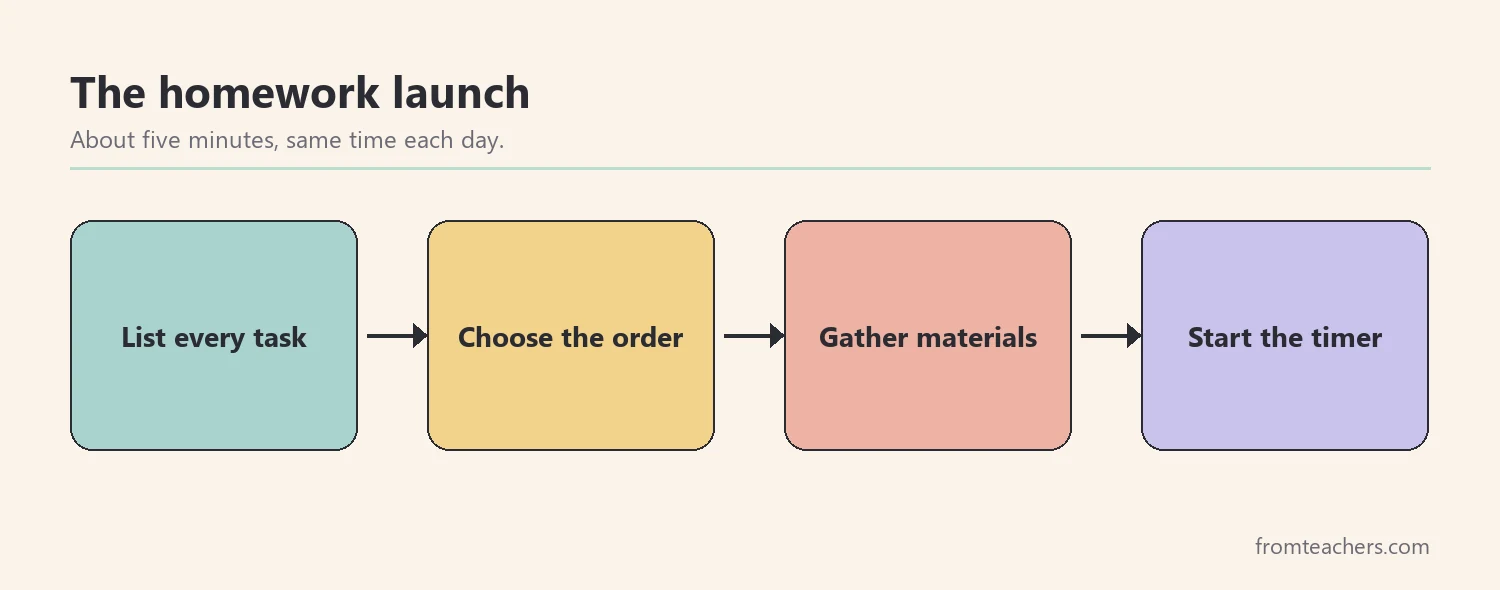
Jonah’s parents set homework launch for 4:30, right after a snack. In the first week, his mother sat with him for the full five minutes. By week three, he did the launch alone and called her over only to show his plan.
Moreover, keep the tone light. A launch routine is a support, not an inspection. Praise the plan itself, even if the work afterward is messy. That way, executive function homework help feels like teamwork instead of surveillance.
3. Use executive function homework help to break tasks into steps
Long tasks feel impossible when they sit as one big block. Therefore, break each task into three to five concrete steps. For instance, “write a history paragraph” can become: read the prompt, find two facts in the notes, write a topic sentence, write three supporting sentences, check spelling.
Next, estimate time for each step. Many children with executive function challenges underestimate or overestimate how long work takes. Writing an estimate, then recording the real time, builds awareness over weeks.
A structured sheet makes this easier. The executive functioning sheet for student task planning and self-monitoring includes space to define the task, break it into up to five steps, estimate time for each, record start and end times, check materials, and reflect on challenges. Using it at home gives your child the same structure many teachers use at school.
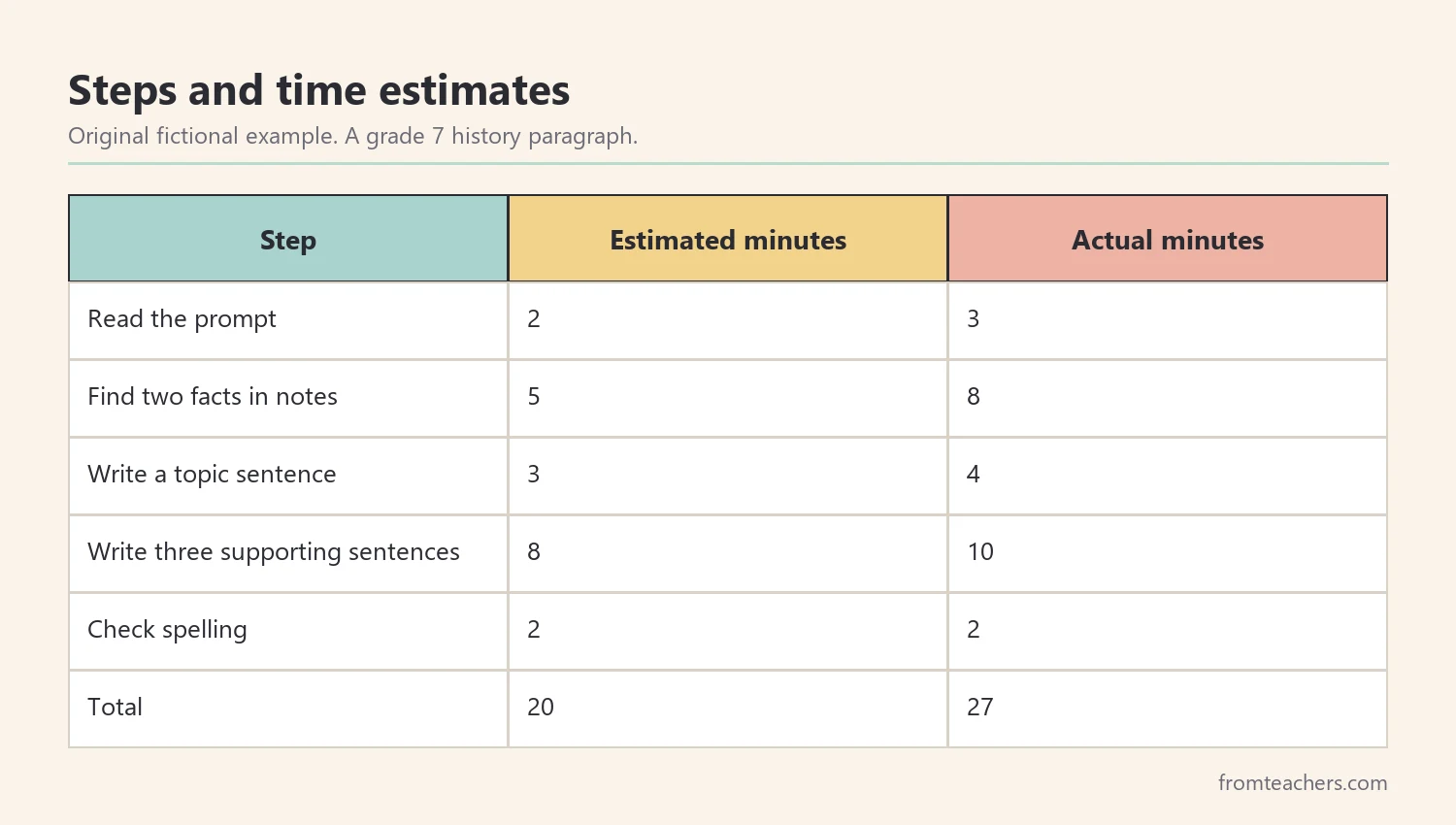
In Jonah’s case, he estimated twenty minutes for his paragraph and took twenty-seven. The next week, his estimate for a similar paragraph was twenty-five minutes and the real time was twenty-six. That small change showed him that he could plan his evenings more realistically.
For weekly projects, add a Sunday planning step. Spread the big task across the week so each evening holds one or two small steps. This turns a looming deadline into a series of short, doable sessions, and it shows your child how planning ahead actually feels.
Also, use the steps as a checklist. Crossing off each step gives a sense of progress and makes it clear what to do next if your child gets distracted. Many children find that visible progress is motivating in itself.
4. Organize materials and space
Missing materials derail homework quickly. A forgotten worksheet, a dead laptop, or a missing textbook can end a session before it starts. So, part of executive function homework help is building simple organization systems.
Start with one folder for “to do” and one for “done.” Teach your child to put every new assignment in the “to do” folder at school and to move finished work to “done” at home. Then, the next morning, the “done” folder goes straight into the backpack.
Next, try a short backpack check each evening. A list taped inside the front door can help: planner, folders, charged device, lunch card, sports kit. The check takes two minutes and often prevents morning panic.
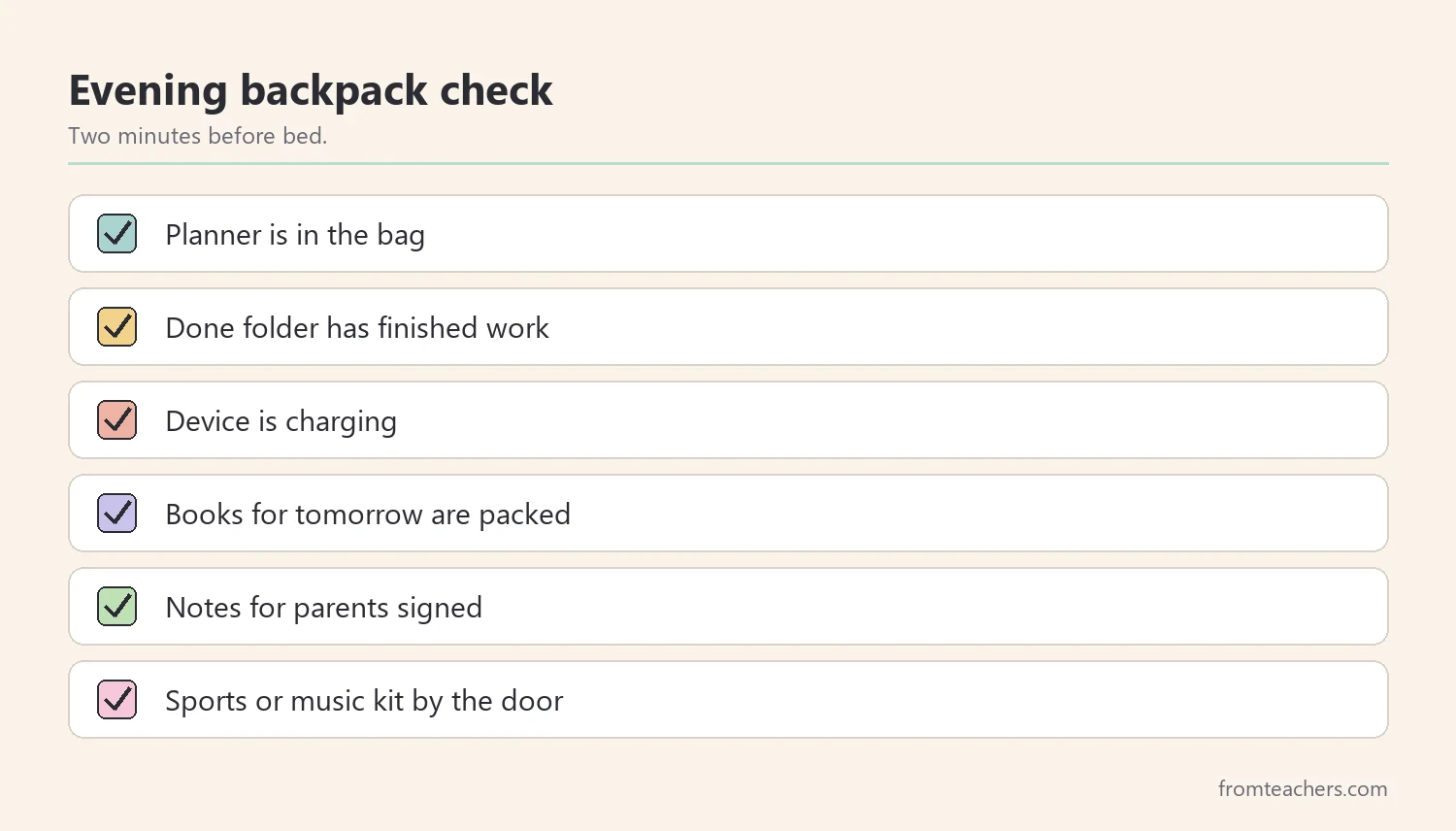
In addition, keep the workspace clear. A tidy table with only the materials for the current task reduces distraction. Phones can live in another room or in a basket during work blocks, if your family agrees on that rule.
Similarly, use one calendar for the whole family. A paper calendar on the fridge or a shared phone calendar can hold test dates, project deadlines, and practices. When your child can see the week at a glance, executive function homework help extends beyond tonight and into planning ahead.
Jonah’s family added a basket by the door for his backpack and a sticky list on the door frame. Within two weeks, the number of forgotten items dropped noticeably, and mornings became calmer for everyone.
5. Give executive function homework help without hovering
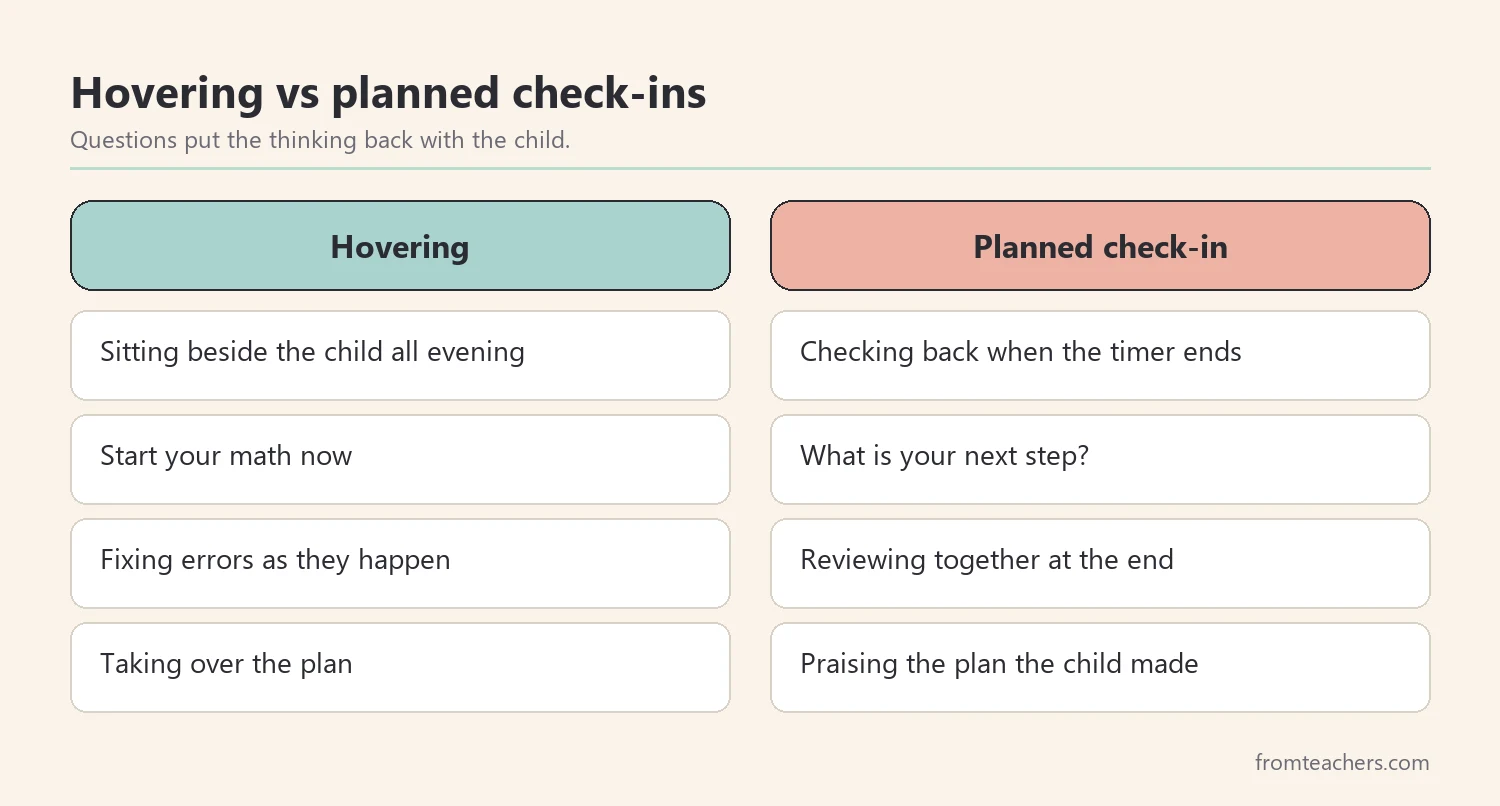
Sitting beside a child for the entire homework session can create dependence and frustration on both sides. On the other hand, leaving them completely alone may mean nothing gets done. The answer is planned check-ins.
For example, after the launch routine, agree to check back at the end of the first timer. During the check-in, ask two questions: “What step are you on?” and “Do you need anything?” Then, leave again. This approach supports executive function homework help without taking over.
Also, use questions instead of instructions. Instead of “Start your math,” try “What is your next step?” Questions put the thinking back with your child, which is exactly the skill you want to build.
Moreover, plan for breaks. Short movement breaks between work blocks help many children reset. A five-minute break with a timer, such as a walk to the mailbox or a quick stretch, can keep energy up for the next step.
Finally, end with reflection. A short question, such as “What went well tonight?” or “What would you change next time?”, helps your child notice what works. Over time, these reflections build self-monitoring, one of the core executive skills.
6. Step back as independence grows
The goal of executive function homework help is that your child eventually needs less of it. Therefore, plan to fade support in small steps. Start by doing the launch together, then let your child lead while you watch, then let them launch alone and show you the plan.
Next, keep a simple record of how much help was needed each week. This helps you see progress and decide when to step back further. It also gives you useful information to share with teachers.
| Week | Parent role | Child role |
|---|---|---|
| Weeks 1 to 2 | Sits through the launch | Follows the steps |
| Weeks 3 to 4 | Watches, prompts if needed | Leads the launch |
| Weeks 5 to 6 | Reviews the plan only | Launches alone |
| Week 7 onward | Planned check-ins | Plans and self-checks |
In addition, involve your child in deciding when to fade. Ask, “Which part do you feel ready to do alone?” Children who choose the next step toward independence often take more ownership of it, and the conversation itself is practice in self-monitoring.
However, expect setbacks. A busy week, a new class, or a big project may require more support for a while. That is normal. Step back in again, then fade once more when things settle.
By the end of the term, Jonah was launching homework on his own most evenings. He still needed help with big projects, so his parents kept a weekly planning session on Sundays to break long assignments into nightly steps.
Also, share progress with the school. A short email to teachers or the case manager about what is working at home can help them reinforce the same strategies in class.
Common mistakes and how to avoid them
- Doing the work for your child. It solves tonight but not tomorrow. Fix: help with planning, then step back.
- Long, unbroken sessions. Focus fades. Fix: use short timed blocks with planned breaks.
- Vague plans like “do math.” Starting stays hard. Fix: break tasks into three to five concrete steps.
- Skipping the launch on busy nights. The habit slips. Fix: keep a two-minute version for tight evenings.
- Treating struggle as laziness. Conflict grows. Fix: see the missing skill and support it.
Questions teachers and parents ask about executive function homework help
Is my child just unmotivated?
Sometimes motivation plays a role, but many children who seem unmotivated are actually stuck on planning or starting. Watching where homework breaks down can help you tell the difference. If you are concerned, talk with the school about your observations.
How long should homework sessions be?
This depends on your child’s age, the workload, and school guidance. Short work blocks with breaks are often easier to manage than one long session. Ask teachers how long assignments are expected to take.
Should I contact the teacher if homework takes much longer than expected?
Yes. Teachers often want to know if homework regularly takes far longer than planned. Sharing time records can help them adjust expectations or supports.
Does this help children with ADHD?
Many of these strategies, such as breaking tasks into steps, using timers, and planned check-ins, are commonly recommended for children with attention difficulties. Your child’s doctor, psychologist, or school team can advise on what fits your child.
When should I step back?
Step back gradually when your child can complete the launch routine with little prompting for a week or two. Keep checking in, and be ready to step back in during busier times.
Related reading: ADHD Children Support Strategies, ADHD Classroom Strategies for Student Success, and Parent-Teacher Collaboration in Special Education.
You may also need: Daily Reflection Journal for Students SEL Check In and Goal Setting Sheet.
A companion resource for executive function homework help:
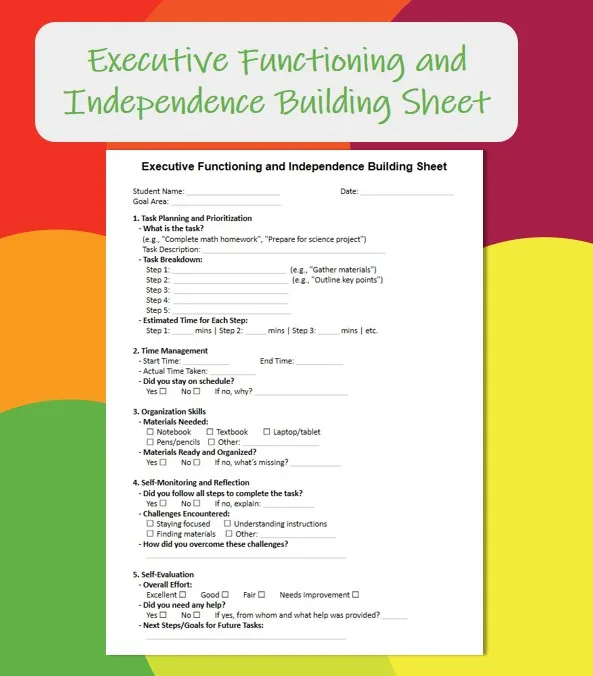
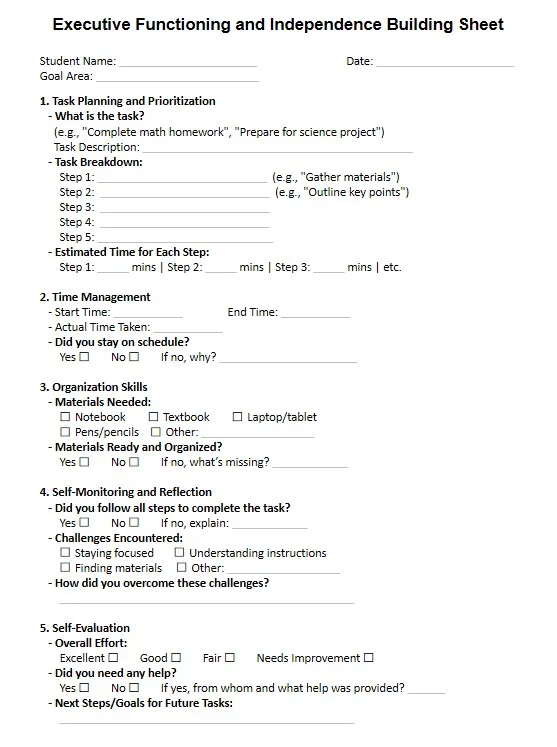
Executive Functioning Sheet: Student Task Planning and Self-Monitoring Tool: one page that guides students through defining a task, breaking it into up to five steps, estimating and tracking time, checking materials, and reflecting on how it went.
Sources and scope
- CDC information on ADHD: general guidance for families, including behavior and school supports.
- Understood.org: family-friendly explanations of executive function and homework strategies.
- IRIS Center, Vanderbilt University: free modules on self-regulation strategies for students.
- IDEA, U.S. Department of Education: guidance on IEPs and supports for students with disabilities.
This guide covers practical home routines for homework planning and organization. It does not diagnose ADHD or other conditions, and it does not replace advice from your child’s doctor, psychologist, or school team.
Key takeaways
- Executive function homework help starts with seeing the missing skill, not a lack of effort.
- A five-minute launch routine makes starting homework a habit.
- Steps, time estimates, and real-time checks build planning and time awareness.
- Simple folders and an evening backpack check prevent lost materials.
- Planned check-ins and gradual fading build lasting independence.








Leave a Comment