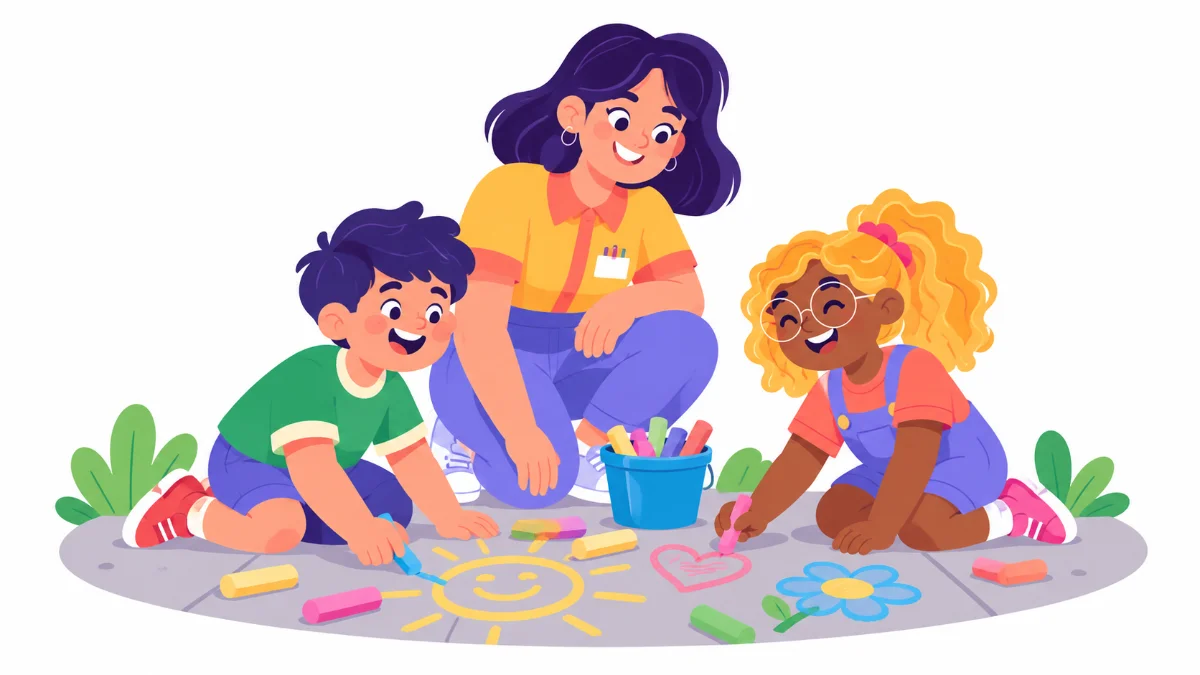

Summer social skills get tested the moment a child walks into a new camp group. Picture a nine-year-old standing at the edge of a kickball game, holding his water bottle, watching everyone else laugh at a joke he did not hear. He wants to join, but he has no idea how to start, and by lunch he has decided camp is “boring.”
This guide shows parents, counselors, and summer program staff a five-step way to help kids connect at camp, at the park, and on playdates. By the end, you will be able to choose the right situations to practice, give a child simple words to use, coach them through joining in and repairing mistakes, and debrief in a way that builds confidence instead of pressure.
Examples are fictional. Adapt to the child’s goals and agreed supports. This is guidance, not a diagnosis.
At a glance
- Pick one or two real situations to practice instead of “being more social.”
- Give the child a short opening line they can actually say out loud.
- Joining a game is a sequence: watch, wait, ask, and follow the rules.
- Mistakes are normal, and a simple repair routine keeps friendships going.
- Short, warm debriefs and noticing small wins build confidence over the summer.
1. Choose the summer situations that matter most
First, narrow the focus. “Make friends at camp” is too big to practice. Instead, think about the specific moments where the child gets stuck. Summer brings new groups, less structure, and lots of unscripted play, so the tricky moments are often different from the ones at school.
Make a short list with the child, or with the parent if you are a counselor. Common summer moments include greeting a new group, joining a game that has already started, being interrupted, handling an awkward silence, and fixing a hurtful comment. Then, pick one or two to start with.
| Summer moment | Skill to practice |
|---|---|
| First day with a new group | A simple greeting and name |
| Game already in progress | Asking to join at a pause |
| Someone talks over you | Waiting, then calmly finishing |
| Quiet moment with a peer | One easy question to ask |
| A comment hurt someone | Owning it and repairing |
Choosing well makes everything else easier. When the target is clear, practice is short and specific, and everyone can tell when it works. In addition, small targets protect the child’s confidence, because success comes quickly.
If you are a counselor, a quick conversation with the family at drop-off can help a lot. Ask which moments were hard last summer or at school, and share what the first week of camp usually looks like. Together, you can spot the one or two moments most likely to come up. Likewise, parents can tell staff about any supports that already work at home, such as a heads-up before transitions.
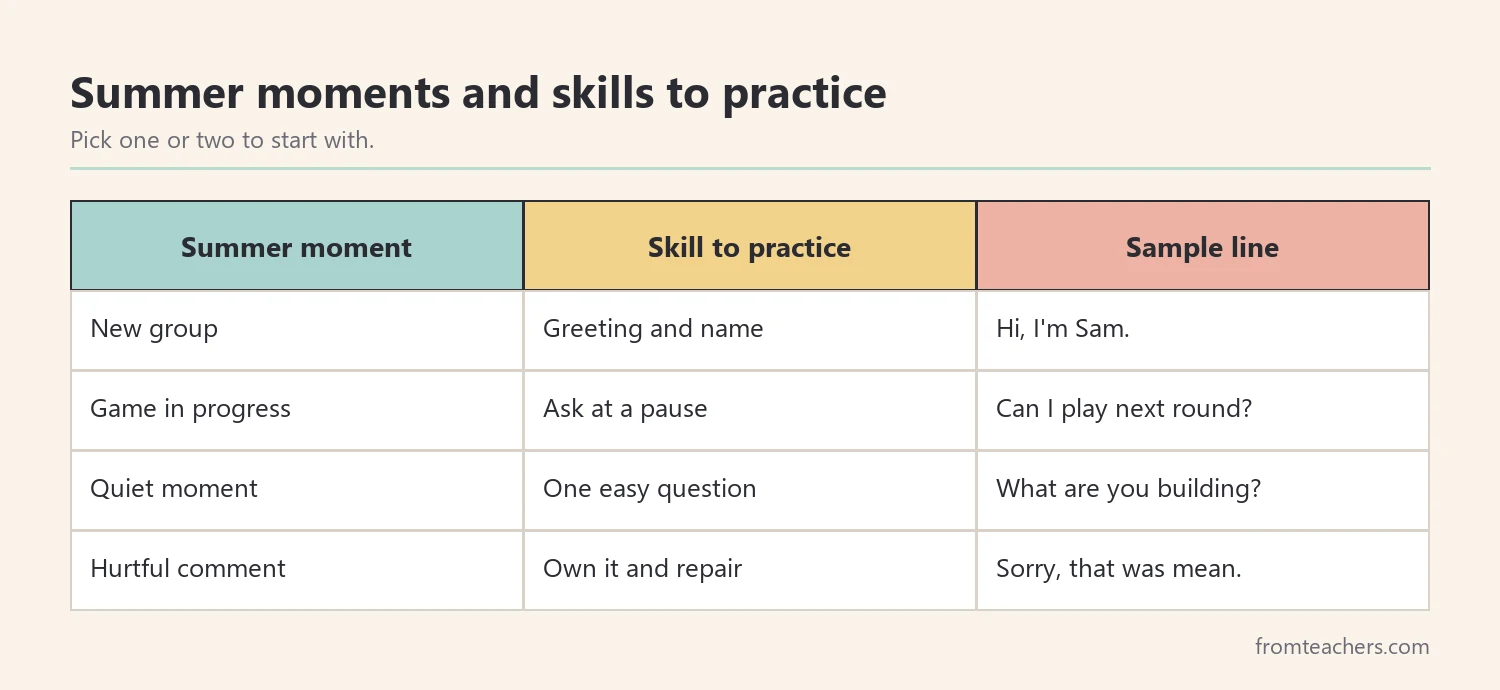
Worked example. Sam is a fictional nine-year-old starting a four-week day camp. His parent and his camp counselor agree on two targets: greeting his group on arrival, and joining a game that has already started. Everything else can wait until these feel easier.
To keep the plan visible, Sam’s parent writes both targets on an index card that stays in his backpack. The counselor keeps a copy on her clipboard. As a result, everyone uses the same words, and Sam hears the same short reminders at home and at camp.
2. Practice greetings and opening lines before camp
Next, give the child words. Many kids want to connect but freeze because they do not know what to say first. A short, natural opening line removes that blank moment, and it is one of the simplest skills to teach.
Keep lines short and real. “Hi, I’m Sam. What are you building?” works better than a long, formal script. Offer two or three choices and let the child pick the one that sounds like them. A line they choose is a line they will use.
Then, practice in low-pressure ways. Role-play at the kitchen table, take turns being the new kid, or practice on a family member at the park. Keep each practice to a few minutes. Afterward, notice what went well before you suggest any change.
It also helps to plan what happens after the opener. Many conversations stall after the first line, which can feel awkward. A follow-up question, such as “Have you been to this camp before?”, gives the child a second move ready to go.
Worked example. Sam chooses “Hi, I’m Sam. Can I sit here?” for the morning circle and “What are you playing?” for games. He practices each one three times at home with his parent, then once with his counselor on the first morning.
3. Teach how to join a game, and how to invite others
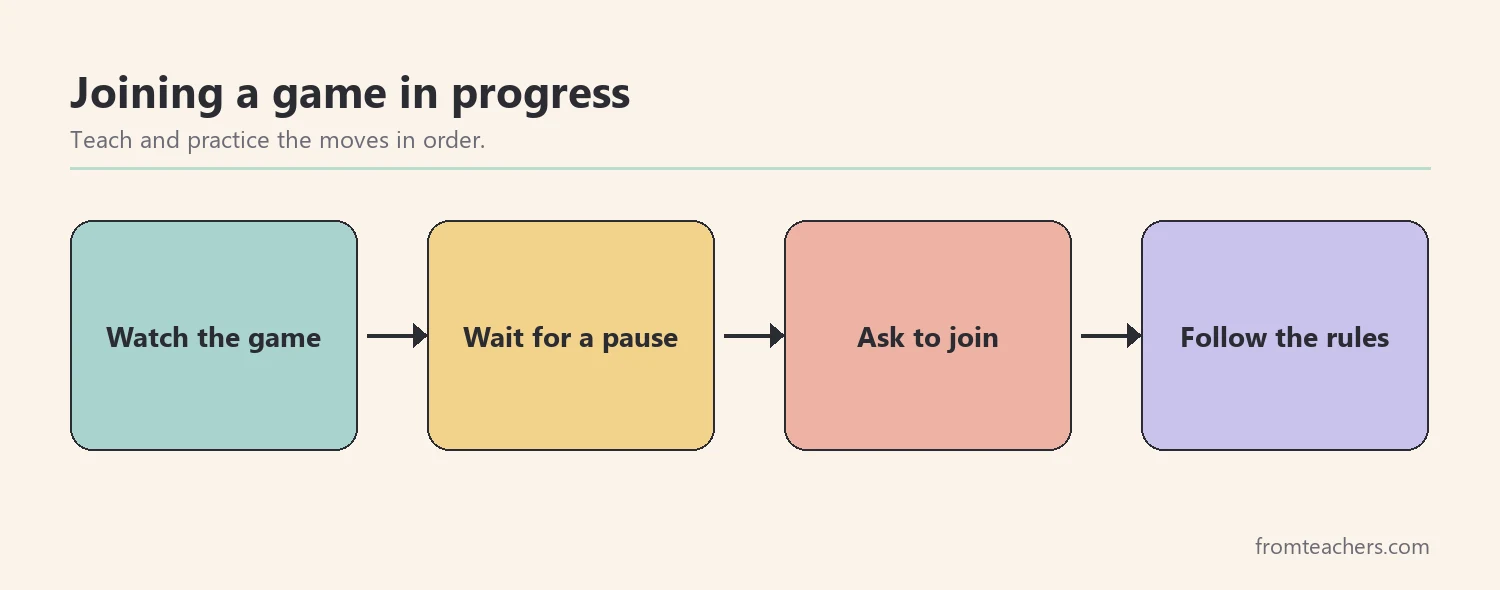
Joining a game that is already going is one of the hardest moments at camp and on the playground. Kids who barge in often get pushed out, while kids who wait too long never get in. The good news is that joining is a sequence you can teach step by step.
Teach it as four moves. Watch the game for a minute to learn the rules. Wait for a natural pause, such as between rounds. Ask a simple question, like “Can I play next round?” Then, follow the group’s rules once you are in, even if you would play differently.
Prepare the child for a “no,” too. Sometimes a group is full or a game is about to end. A calm plan B, such as “Okay, maybe later” and finding another activity, protects confidence. Similarly, a counselor can quietly help by setting up games that welcome new players.
The flip side matters just as much. Kids who learn to invite someone in (“Do you want to be on our team?”) build friendships quickly. Strategy pages like the ones in this summer social skills practice set for parents and counselors include a table on helping a peer join a summer game, which makes a good discussion starter.
Worked example. On day two, Sam watches a tag game for a minute, waits until a new round starts, and asks, “Can I play this round?” The group says yes. On day four, he asks a quieter camper to join his team. His counselor makes a point of noticing both moments.
4. Repair social mistakes calmly
Every child makes social mistakes. They interrupt, say something hurtful without meaning to, or keep talking about one favorite topic. What matters is the repair. Kids who learn a simple repair routine keep their friendships, while kids who freeze or argue often lose them.
Teach the repair as a short sequence. First, notice the signal, such as a friend going quiet or walking away. Next, pause instead of pushing on. Then, own it in a few words: “Sorry, that was mean.” After that, offer a fix, like changing the subject or asking the other person’s choice. Finally, move on without dwelling on it.
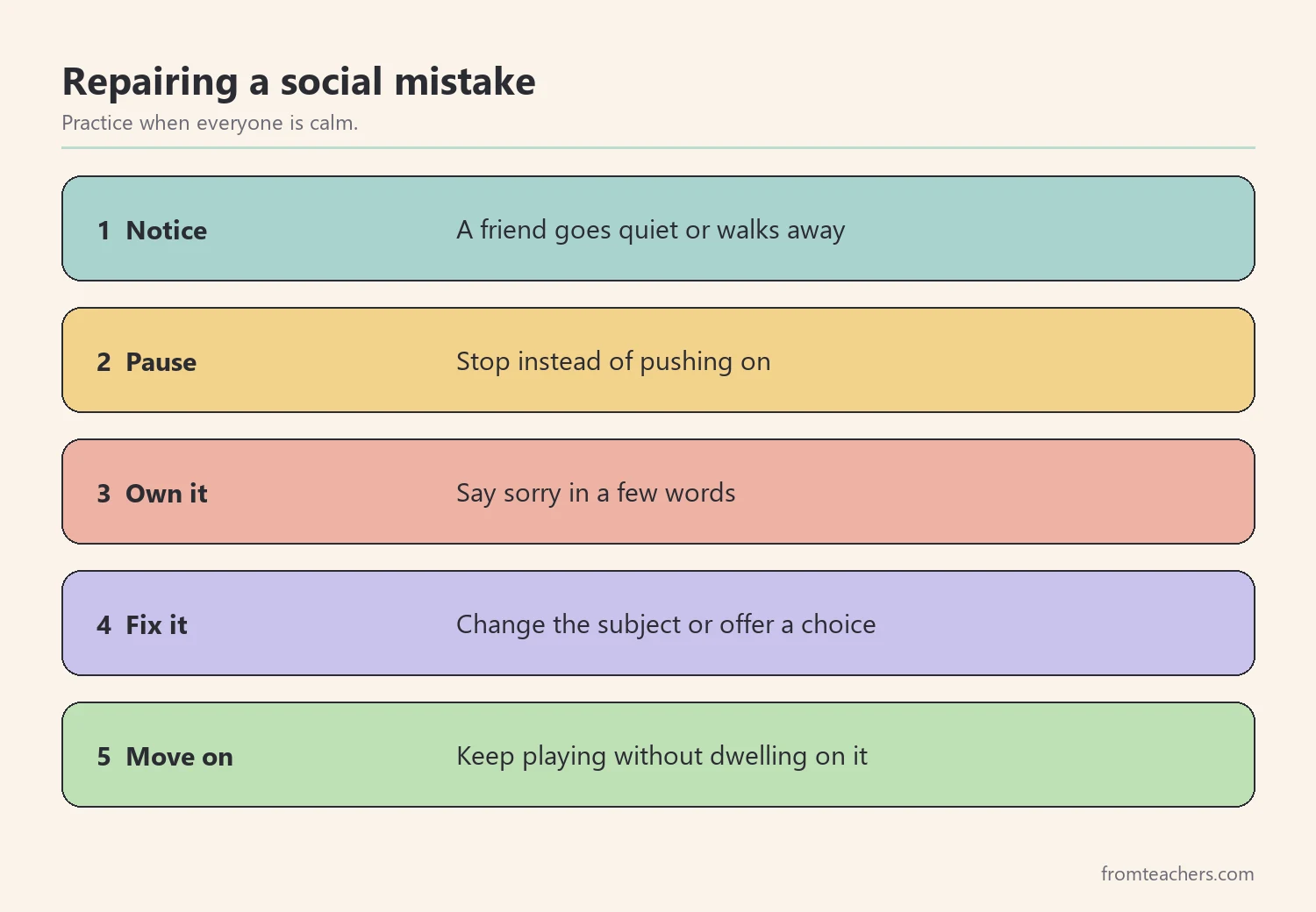
Practice repairs when everyone is calm, not in the heat of the moment. Role-play common summer mix-ups, such as calling out a teammate’s mistake or talking over a friend. Moreover, model repairs yourself. When an adult says, “I interrupted you, go ahead,” kids see that repair is normal.
Some kids feel a lot of shame after a mistake. For them, emphasize that everyone gets it wrong sometimes and that fixing it is a sign of a good friend. In short, the goal is quick recovery, not perfection.
Books and short videos can also open the topic gently. After a story where a character hurts a friend’s feelings, ask, “What could they say to fix it?” Talking about someone else’s mistake is often easier for a child than talking about their own, and the words carry over to real moments.
Worked example. During a craft, Sam laughs at another camper’s drawing, and the camper goes quiet. His counselor quietly reminds him of the repair steps. Sam says, “Sorry, I didn’t mean to laugh. I like the colors.” The two keep working side by side.
5. Debrief and celebrate small wins
Finally, help the child look back on the day. A short debrief turns experiences into learning. However, the tone matters. Kids shut down quickly if pickup turns into a list of questions about who they played with and why not.
Keep it light and specific. Ask one or two open questions, such as “What was the best part of today?” or “Did you try your opening line?” Then, listen more than you talk. If a hard moment comes up, ask what they could try next time instead of telling them.
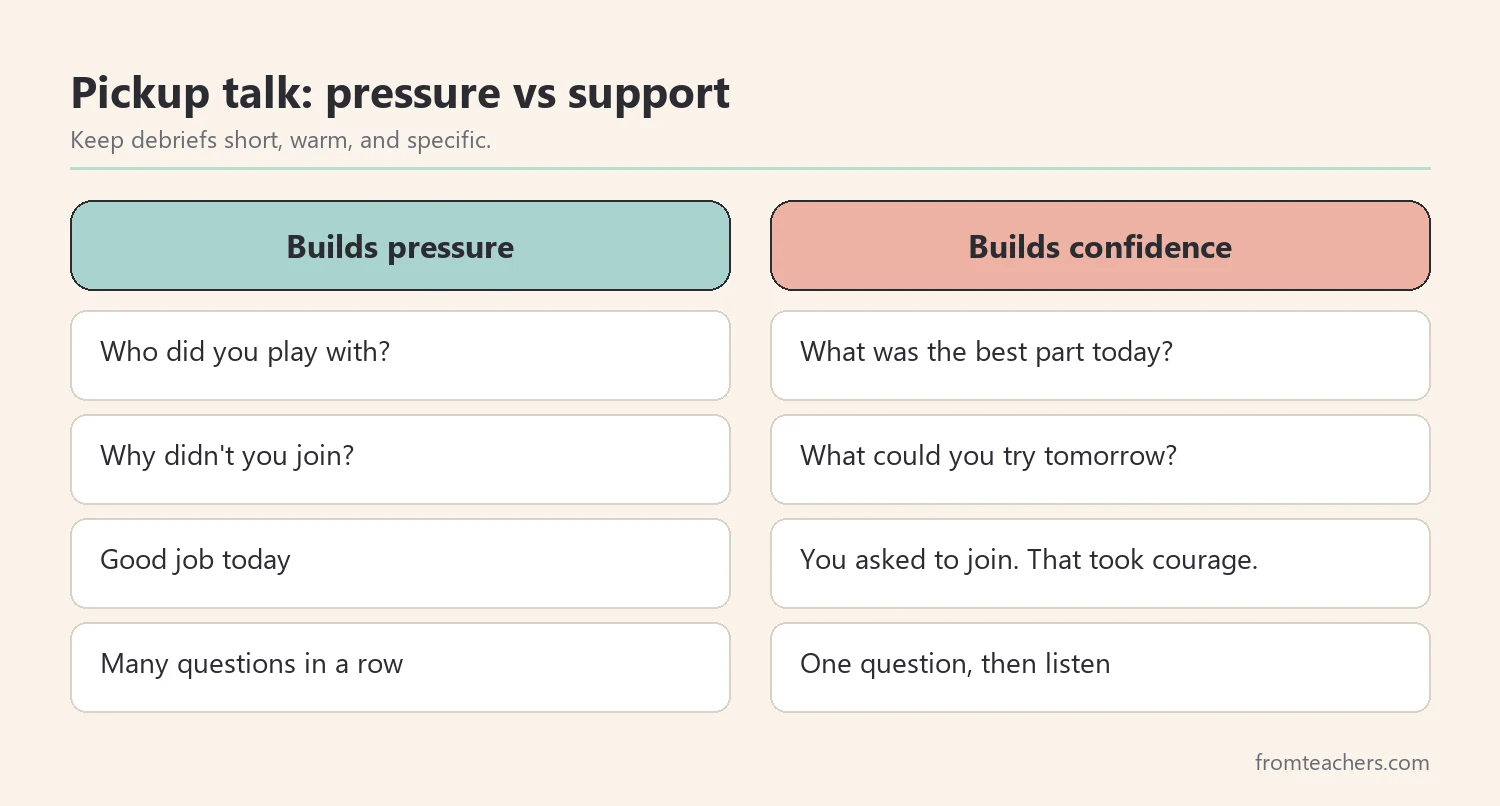
Celebrate small, concrete wins. “You asked to join the tag game. That took courage” is more useful than “Good job today.” Specific praise tells the child exactly what to repeat. Over a summer, these small moments add up to real progress.
It can also help to keep a simple tally. A sticky note on the fridge with a mark for each time the child tried a target skill makes progress visible to everyone. Keep the focus on trying, not on how the other kids responded.
Worked example. Over the first five camp days, Sam tries his greeting on four days and asks to join a game on three days. His parent marks each try on a fridge note, for seven marks in total. At the end of week one, they choose a small treat together to celebrate.
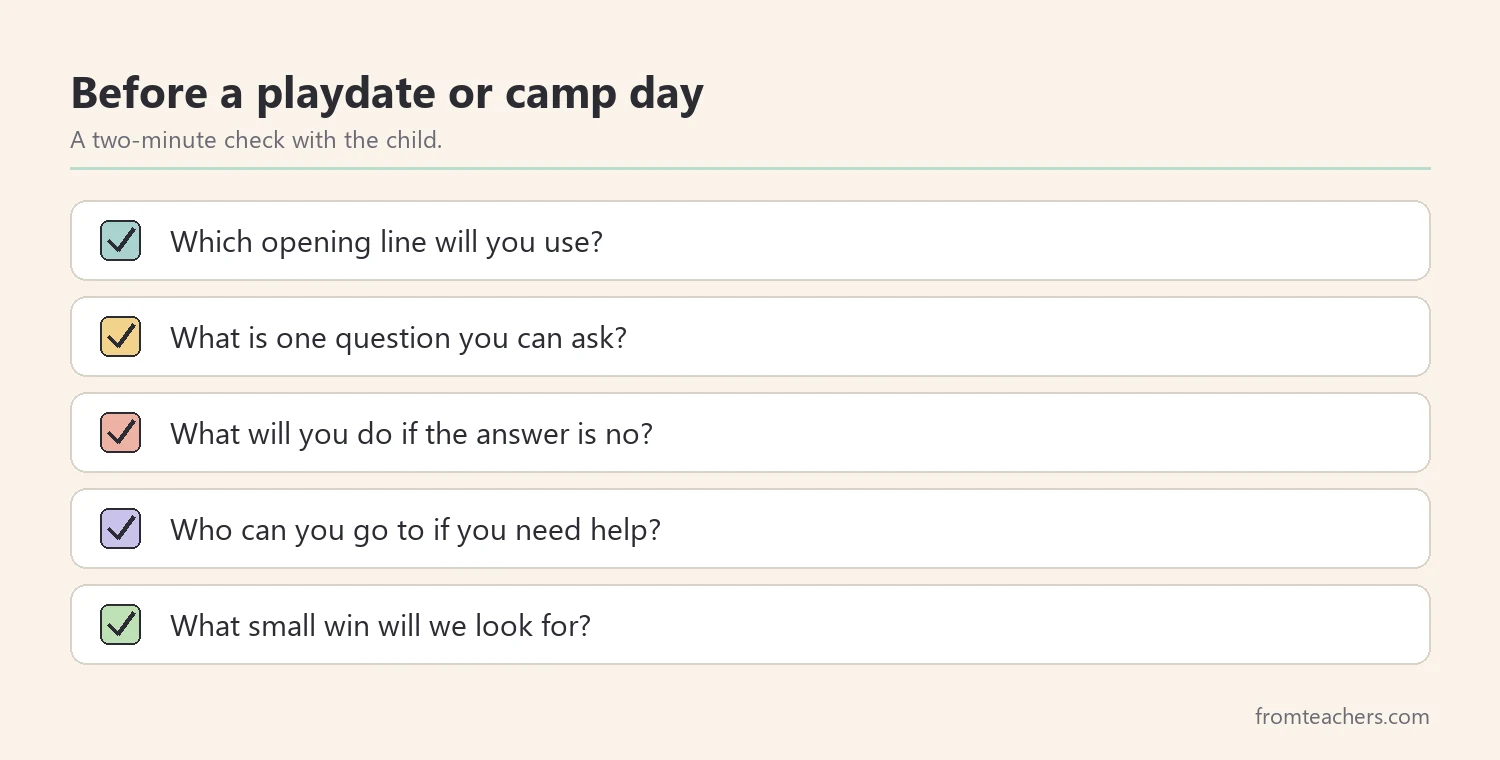
Common mistakes and how to avoid them
- Practicing everything at once. Too many targets overwhelm kids. Fix: choose one or two situations and add more only when those feel easier.
- Writing scripts that sound like an adult. Kids will not say lines that feel strange. Fix: offer choices and let the child pick or reword the line.
- Rescuing every awkward moment. Adults who step in too quickly take away practice. Fix: give a quiet reminder, then step back.
- Turning pickup into an interview. Many questions feel like a test. Fix: ask one open question and listen.
- Praising only outcomes. Kids cannot control whether others say yes. Fix: praise the attempt, such as asking to join.
Questions teachers and parents ask about summer social skills
Why are summer social skills different from school social skills?
Summer settings are often less structured, with new groups and more free play. That means more moments where kids have to start conversations and join games on their own. As a result, skills like greetings and joining in get used much more.
How can I help a shy child at a new camp?
Start with one small target, such as a greeting, and practice it before the first day. Talk with the counselor about a buddy or a simple role in the group. Then, celebrate each attempt, even small ones.
What should I do if my child says nobody plays with them?
First, listen and stay calm. Next, ask gently about one specific moment, such as lunch or free play, and plan one small step together. Also, share the concern with the camp staff so they can watch and support.
Can counselors use these strategies with a whole group?
Yes. Group games that welcome new players, a shared greeting at morning circle, and modeling repairs help every child. Short role-plays during downtime work well, too.
How do I know if summer social skills practice is working?
Look for small changes in what the child tries, not big changes in friendships. Count attempts, such as greetings or invitations. When attempts go up and the child seems more relaxed, the practice is working.
Related reading: Autism Social Skills Development: Practical Strategies for Growth, Building Stronger School Counseling Programs: A Framework for Student Success, and Managing Sensory Overload: Practical Strategies for Autism and ADHD.
A companion resource for summer social skills:
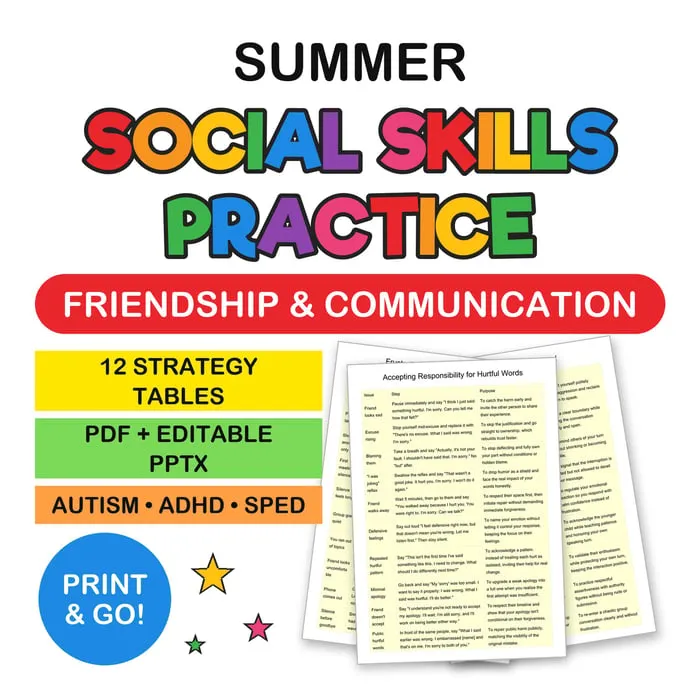
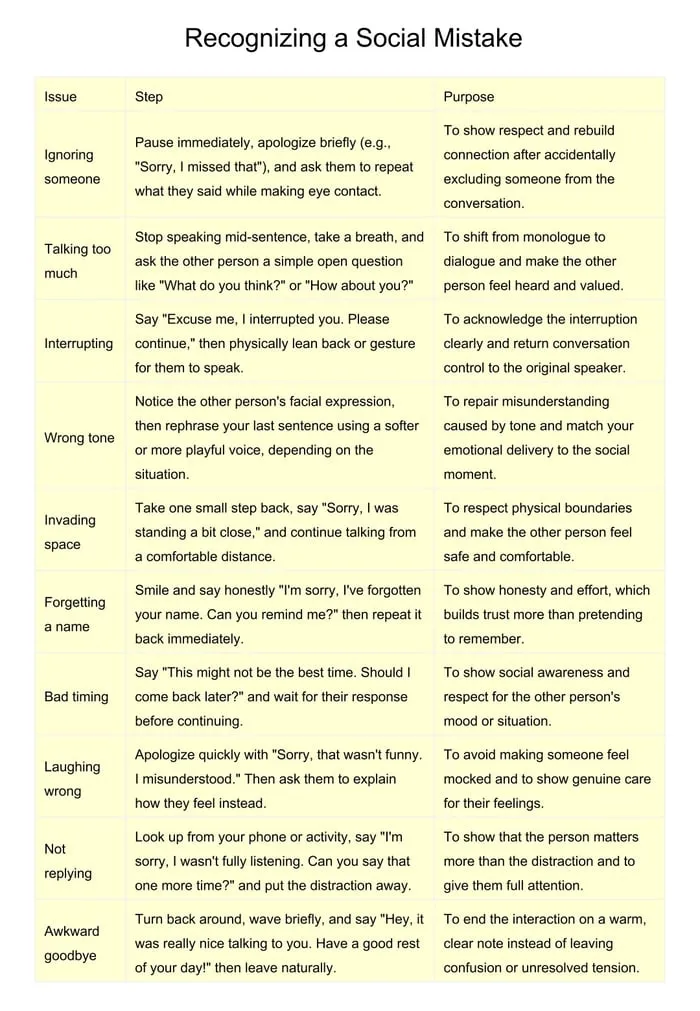
Summer Social Skills Practice: Friendship, Communication and Interaction Strategies: a set of 12 strategy tables for parents, counselors, and summer program staff, each focused on one real situation such as recognizing a social mistake, helping a peer join a summer game, or celebrating a successful interaction. Includes a PDF and an editable PowerPoint version.
Sources and scope
- CASEL: the widely used framework for social and emotional learning, including relationship skills.
- American Camp Association: resources for camp staff and families on youth development at camp.
- Centers for Disease Control and Prevention: general guidance for parents on child development and positive parenting.
- Understood.org: practical articles for families on social skills and friendships.
This guide covers everyday coaching of social skills in summer settings. It does not cover evaluation of social or developmental differences, which belongs to qualified professionals.
Key takeaways
- Summer social skills grow fastest when you target one or two real situations.
- Short, child-chosen opening lines remove the blank first moment.
- Joining a game is a teachable sequence: watch, wait, ask, follow the rules.
- A simple repair routine keeps friendships going after mistakes.
- Light debriefs and specific praise for attempts build confidence all summer.





Leave a Comment