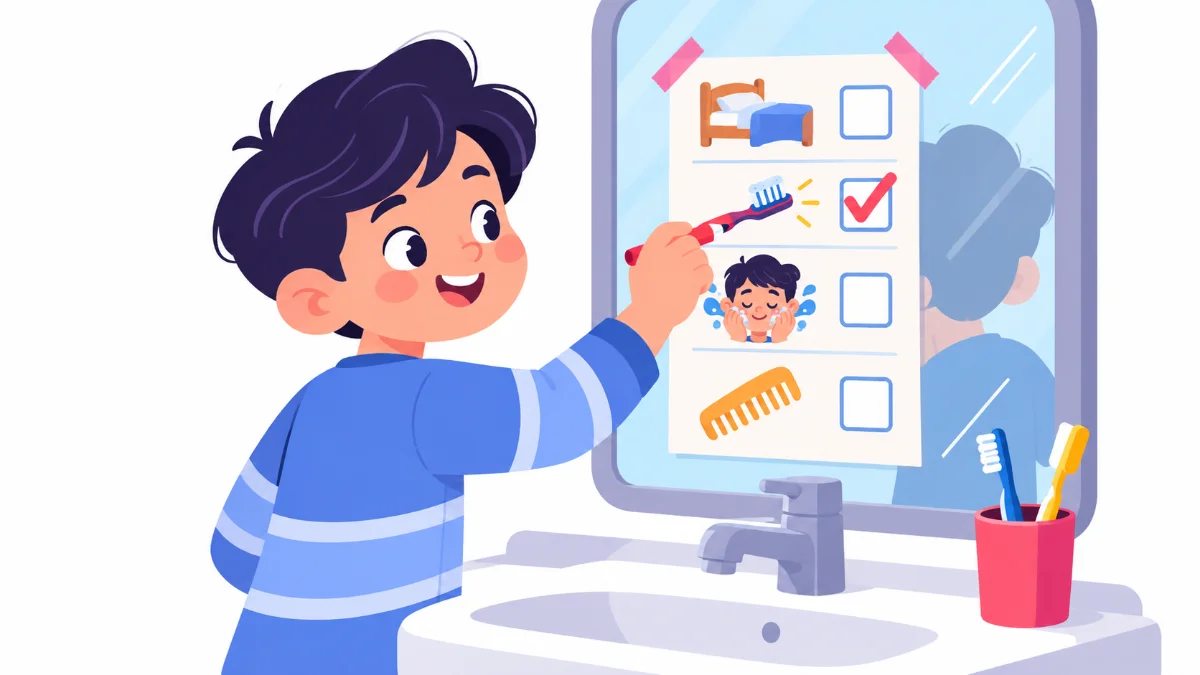

A home routine checklist can turn a loud, rushed morning into a calmer one. Picture a seven-year-old standing in the hallway in pajamas ten minutes before the bus, while a parent repeats “shoes, teeth, backpack” for the fourth time. He is not ignoring anyone. He simply cannot hold six spoken steps in his head while the house is busy.
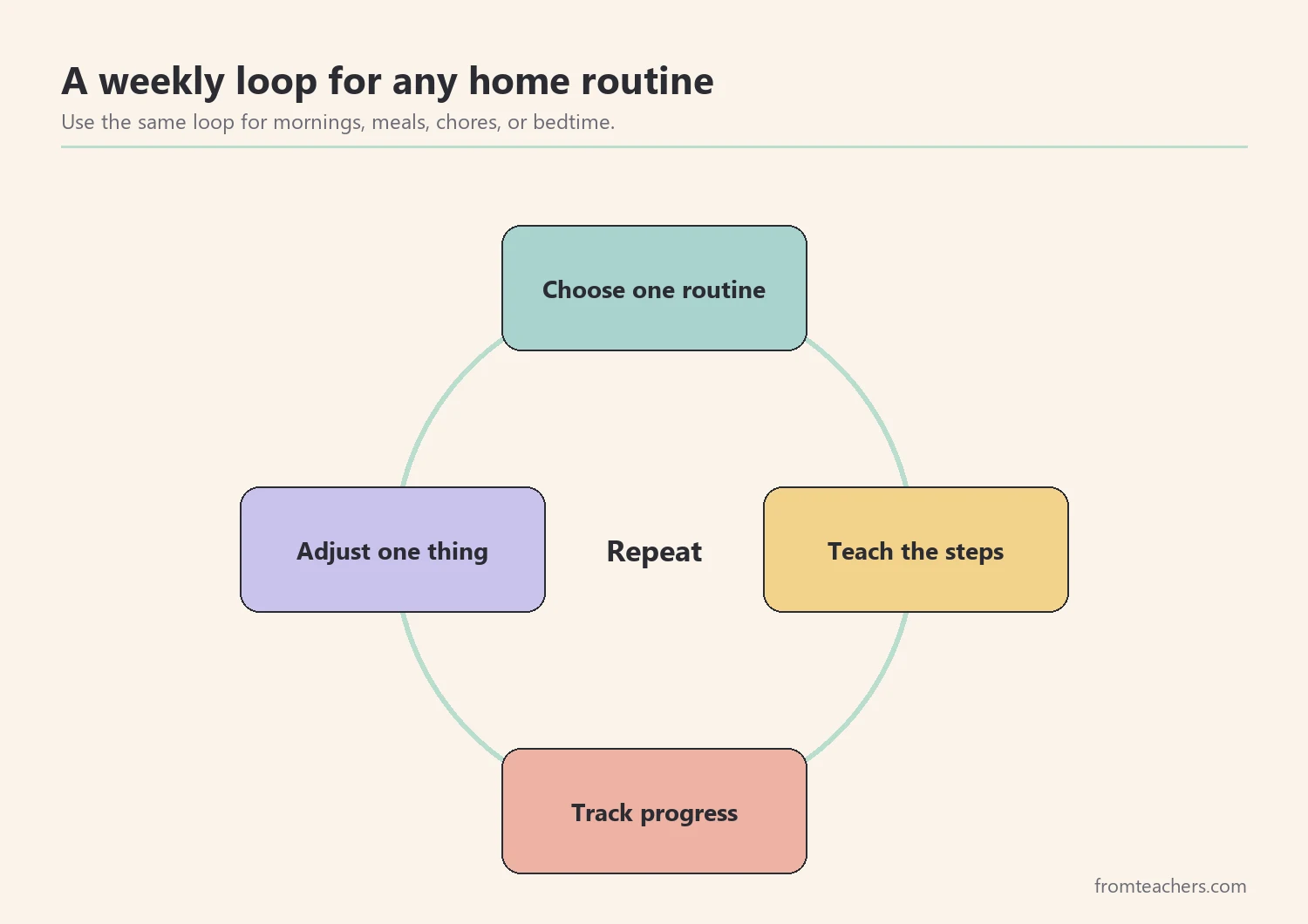
This guide walks you through a five-step process: choose one routine and watch where it breaks, split it into small picture steps, build and place the checklist, teach it with fading prompts, then track progress and adjust. By the end, you will have one working home routine checklist and a method you can reuse for meals, chores, homework, and bedtime.
Examples are fictional. Adapt to the child’s goals and agreed supports. This is guidance, not a diagnosis.
At a glance
- Start with one routine, not the whole day.
- Watch where the routine breaks before you design anything.
- Use short steps with one picture and a few words each.
- Teach the checklist while calm, then fade your reminders slowly.
- Count steps done alone each week so you can see real progress.
1. Choose one routine and watch where it breaks
First, pick a single routine. Mornings, bedtime, and getting dressed are common starting points because they happen every day and have a clear finish. A home routine checklist works best when it solves one real problem, so resist the urge to make charts for the whole day at once.
Next, watch the routine for three or four days without changing anything. Keep a sticky note on the fridge and jot down three things: which step stalls, what happens right before it, and how many reminders you give. You are looking for a pattern, not a perfect record.
Then, separate what you see from why it might happen. This step keeps your home routine checklist focused. “Stops after breakfast” is what you see. “Does not know what comes next” or “gets pulled in by the tablet” are possible reasons. Your checklist will target the reason, so keep both lists.
| What you see | Possible reason to test |
|---|---|
| Wanders off after one step | Unsure of the next step |
| Melts down at teeth brushing | Sensory discomfort or rushing |
| Forgets the backpack | No fixed spot near the door |
| Argues about getting dressed | Too many clothing choices |
Worked example. Leo is a fictional seven-year-old in second grade. His dad tracks four school mornings. Leo eats breakfast without help, but after that he drifts to the couch. On average, his dad gives about nine reminders before the bus. The pattern points to the steps after breakfast, so that is where the home routine checklist will start.
In short, a few mornings of notes tell you exactly which part of the routine needs support. As a result, the checklist you build will be smaller and more useful.
2. Break the home routine checklist into small picture steps
Once you know the problem, write the routine as a list of steps. Each step should describe one action the child can see and finish, such as “Put on shoes,” rather than a broad idea like “Get ready.” Therefore, a good home routine checklist uses verbs and objects, not goals.
Start with five to seven steps on a home routine checklist for most young children. Fewer steps may be better for a child who is just learning, while an older child may handle a few more. If a step still causes trouble, split it again. For example, “Get dressed” can become “Shirt, pants, socks.”
Next, pair each step with one picture. Photos of your own child’s items often work well because they match exactly what the child sees. Clear drawings or icons also work. Above all, keep the words short and the same every day.
Step-writing checklist
- One action per step, starting with a verb.
- One picture per step that matches the real object.
- Steps in the order the child actually does them.
- A clear last step that means “finished.”
- Words the whole family will use the same way.
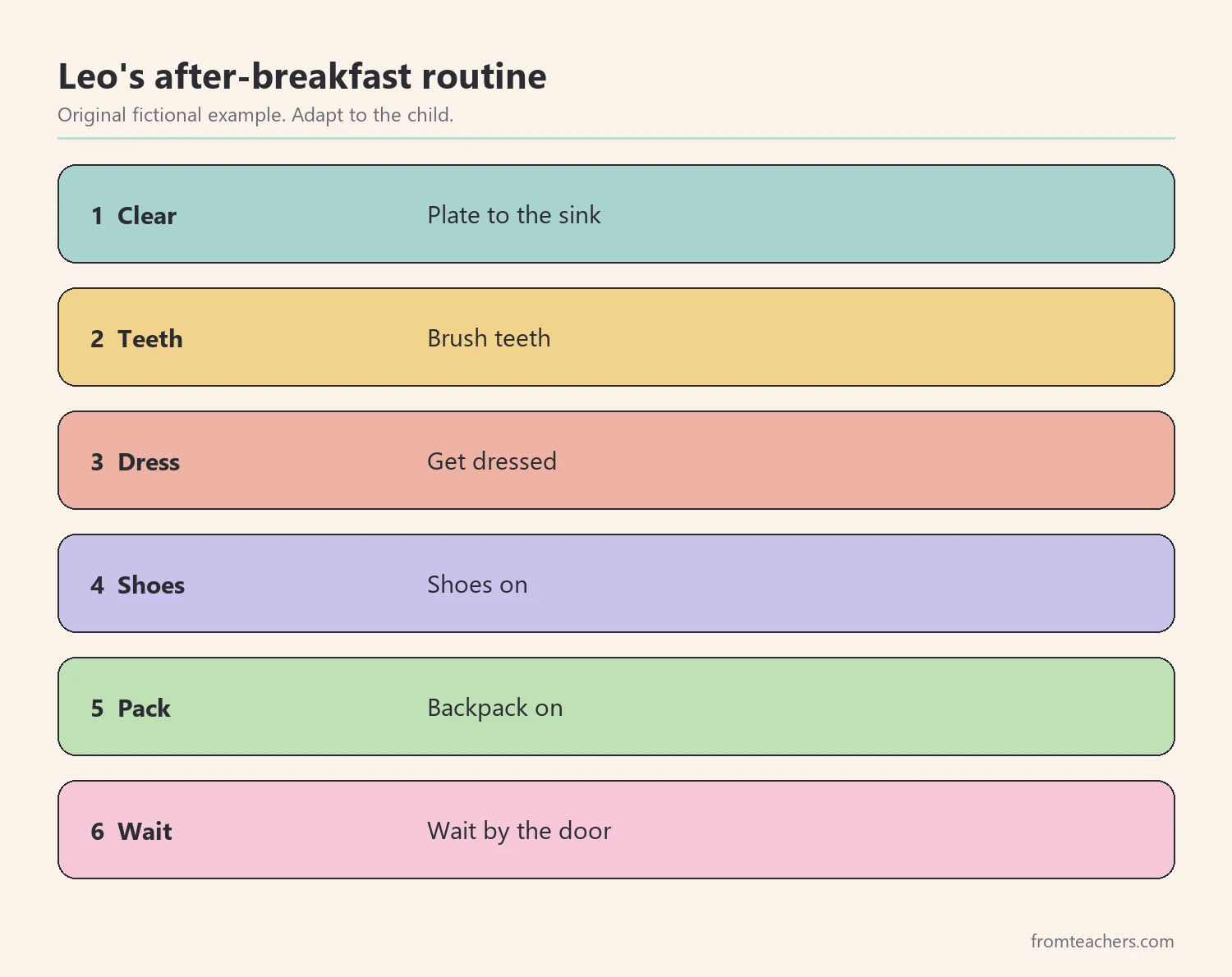
Worked example. Leo’s dad writes the after-breakfast part of the morning as six steps: plate to sink, brush teeth, get dressed, shoes on, backpack, wait by the door. He takes a photo of each item in their real spot. The last step, “Wait by the door,” shows Leo’s spot on the bench next to his backpack hook.
Finally, read the list aloud while you walk through the routine yourself. If you skip or merge a step, the child probably will too, so fix the order now.
3. Build and place your home routine checklist
Now, turn the steps into a home routine checklist the child can use without you. Lay the steps out top to bottom or left to right, with plenty of space around each picture. A home routine checklist should be readable from where the child stands when they need it.
Placement matters as much as design. A bathroom routine belongs near the sink, a dressing routine belongs near the closet, and a leaving-the-house routine belongs by the door. In other words, put the checklist where the action happens, at the child’s eye level.
Also, decide how the child will mark a step as done. Common options include a dry-erase check, a flip card, a clothespin that slides down, or a picture that moves from a “to do” strip to a “done” pocket. Pick the one your child enjoys and can manage alone.
| Format | Works well for | Watch out for |
|---|---|---|
| Laminated strip with dry-erase marks | Mornings and bedtime | Marker going missing |
| Hook-and-loop picture cards | Children who like to move pieces | Lost cards |
| Clip or clothespin that slides | Small hands, quick checks | Clip falling off |
| Small booklet, one step per page | Children who get overwhelmed by a full list | Pages skipped |
If you would rather not design every page yourself, the Home Routine Visual Supports pack of 12 checklists and trackers includes morning, bedtime, getting dressed, hygiene, chores, transitions, and homework pages that you can print or edit to fit your child.
Worked example. Leo’s dad prints the six steps on one strip and laminates it. He tapes it at Leo’s eye level on the wall by the front door, which Leo passes after breakfast. A dry-erase marker hangs on a string beside it. Leo checks each box as he finishes the step.
4. Teach the checklist and fade your reminders
A home routine checklist is a skill the child learns, not a rule you announce. So, teach it on a calm afternoon first, not on a rushed school morning. Walk through every step together, point to each picture, and let the child check the box.
Then, practice two or three times before you rely on it. On real mornings, start with more help and step back over time. A common order is to model the step, then point to the picture, then simply glance at the checklist, then say nothing at all.
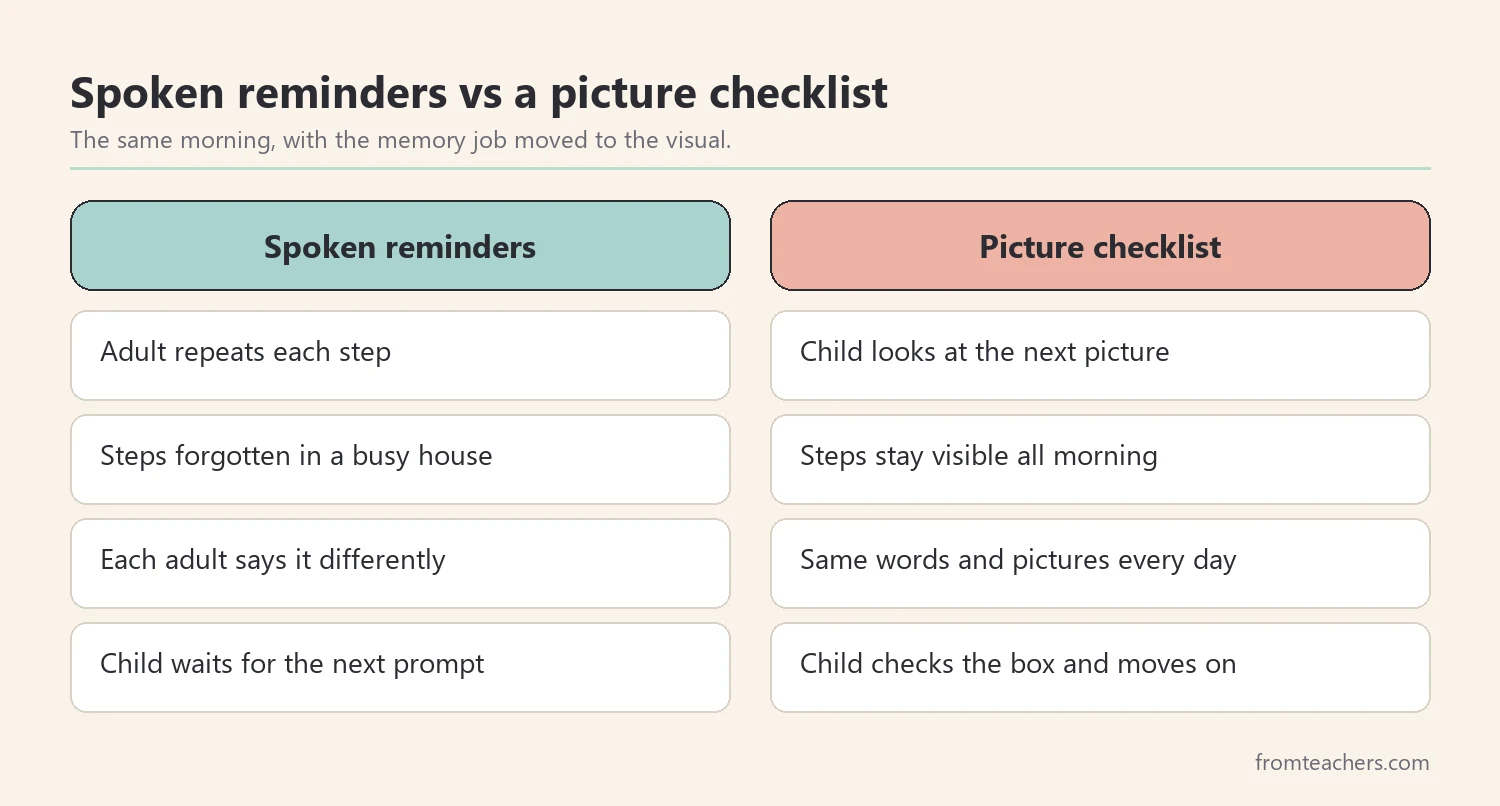
Instead of repeating the step out loud, ask “What does your checklist say?” This small change moves the job of remembering from you to the visual. In addition, praise the specific action: “You checked off shoes by yourself.” Specific praise tells the child exactly what worked.
However, expect some bumpy days. Illness, late nights, and schedule changes can make any routine harder. On those days, add back a little help without dropping the checklist. Consistency over weeks matters more than any single morning.
Make sure every caregiver uses the home routine checklist the same way. If one adult points to the picture and another lists the steps aloud, the child gets two systems. Therefore, show grandparents and sitters how it works in two minutes.
Worked example. Leo practices the strip twice on Sunday afternoon, pretending it is a school day. On Monday, his dad points to each picture. By Thursday, he only points when Leo stalls, and he asks “What is next on your list?” instead of naming the step. Leo’s mom uses the same question on her mornings.
5. Track progress on the home routine checklist and adjust
Without a simple record, it is hard to tell whether the routine is improving. So, pick one or two measures and write them down on the same days each week. For a home routine checklist, the easiest measures are steps done alone and the number of reminders given.
Keep the record quick. A tally on a sticky note or a line in your phone is enough. Also, write a short note when something unusual happens, such as a late bedtime or a holiday. Those notes explain dips that would otherwise look like the plan failing.
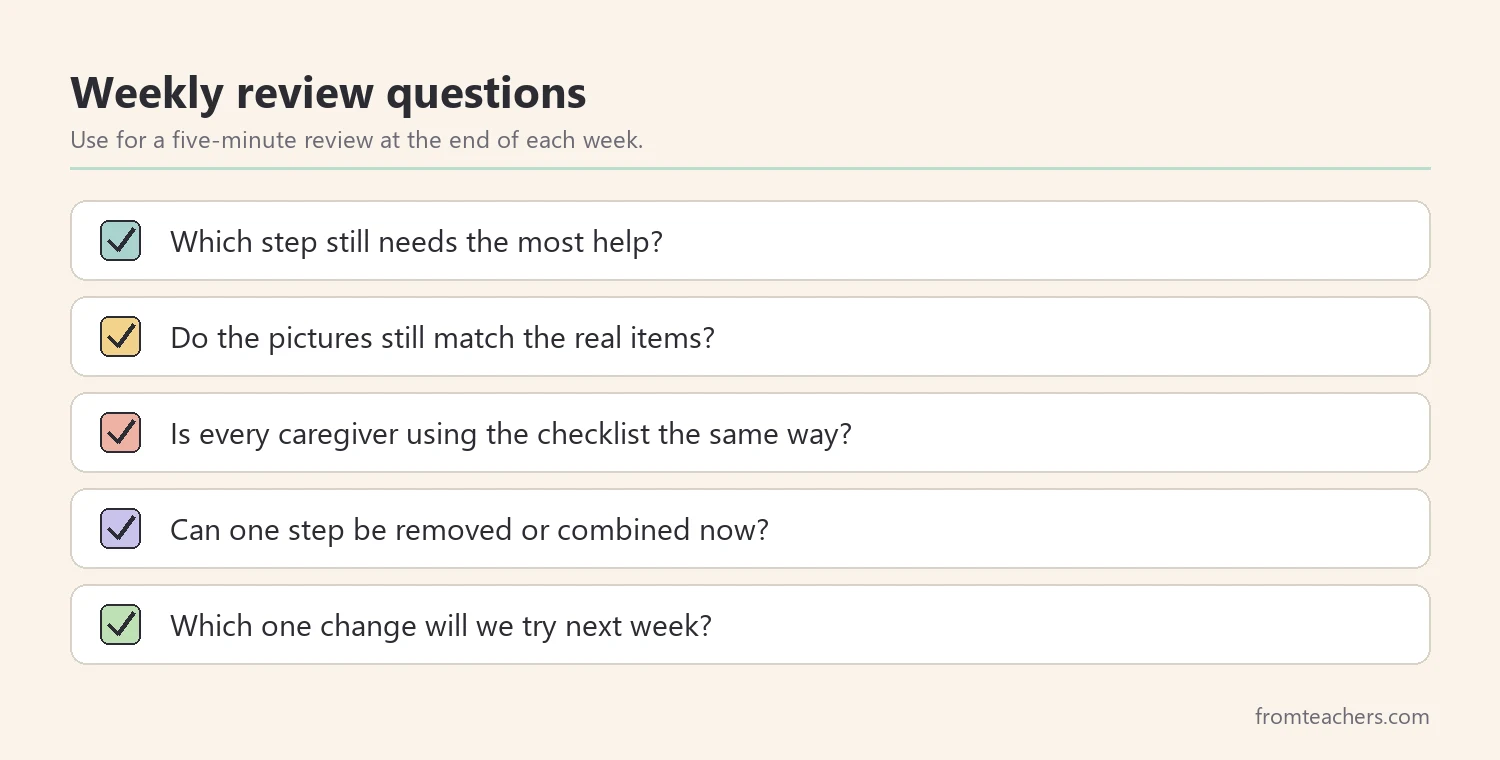
Then, review every week or two. Ask which step still needs help, whether the pictures still make sense, and whether it is time to remove a step the child now does automatically. Change one thing at a time so you know what helped.
Once a routine runs smoothly, add a second home routine checklist for the next one. Many families move from mornings to bedtime, then to chores or homework. The method stays the same each time: watch, write steps, build, teach, and track.
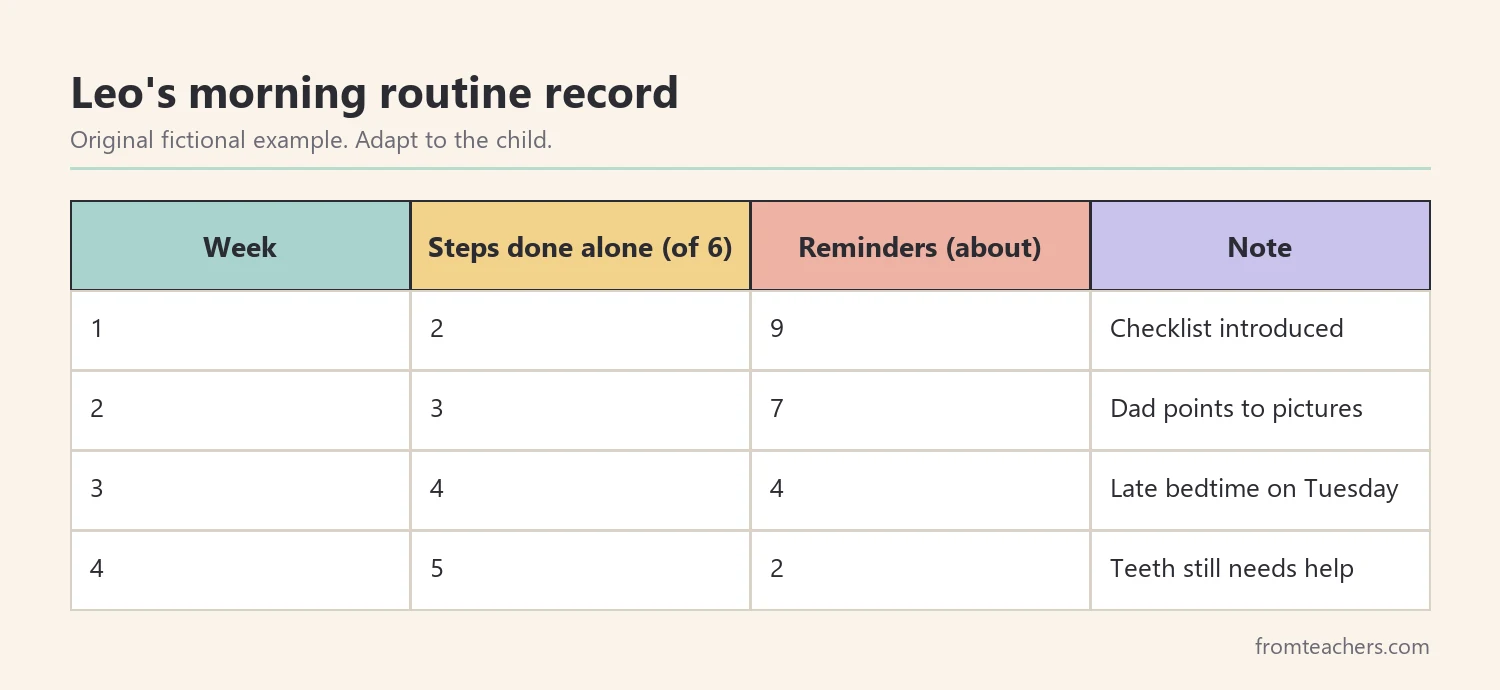
Worked example. Leo’s dad records steps done alone and reminders on school mornings. In week 1, Leo does 2 of 6 steps alone with about 9 reminders. By week 4, he does 5 of 6 steps alone with about 2 reminders. Brushing teeth is still the hard step, so his dad adds a two-minute sand timer by the sink and keeps everything else the same.
Common mistakes and how to avoid them
- Starting with the whole day. Too many charts at once overwhelm children and adults. Fix: begin with one routine and add the next only when the first runs smoothly.
- Steps that are too big. “Get ready” means nothing concrete to a child. Fix: write one visible action per step.
- Posting the chart in the wrong place. A checklist on the fridge does not help in the bathroom. Fix: place each checklist where the action happens.
- Talking over the home routine checklist. Repeating every step aloud teaches the child to wait for your voice. Fix: point to the picture or ask what the list says.
- Using it as a punishment tool. A checklist tied to lost privileges can turn into a fight. Fix: keep it neutral and praise specific steps.
- Giving up after a bad week. Routines take time and dip during changes. Fix: look at several weeks of notes before deciding.
Questions teachers and parents ask about a home routine checklist
How many steps should a home routine checklist have?
Most young children do well with five to seven steps. If your child stalls often, try fewer, larger pictures. For older or more independent children, a slightly longer list can work.
Should I use photos or drawings?
Both can work. Photos of your child’s real items are often easiest to understand at first. Clear icons are quicker to make and easier to reuse across routines.
How long until a routine feels automatic?
It varies a lot from child to child. Some children follow a new checklist within days, while others need weeks of practice. Your weekly record will show you the trend better than any fixed timeline.
Can a school use the same checklist style?
Yes, and that can help. Ask your child’s teacher which pictures and words they use for similar routines. Matching them at home makes each setting feel more familiar.
When should we stop using the checklist?
Fade the home routine checklist slowly once the child does every step alone for a few weeks. Remove one step at a time, or shrink the chart to a small card. Bring it back during busy or stressful periods.
Related reading: Navigating the Path to Adulthood: Building Essential Life Skills, ADHD in Children: A Guide to Effective Classroom and Home Support, and Meltdowns vs Tantrums: A Guide to Understanding and Responding.
A companion resource for a home routine checklist:
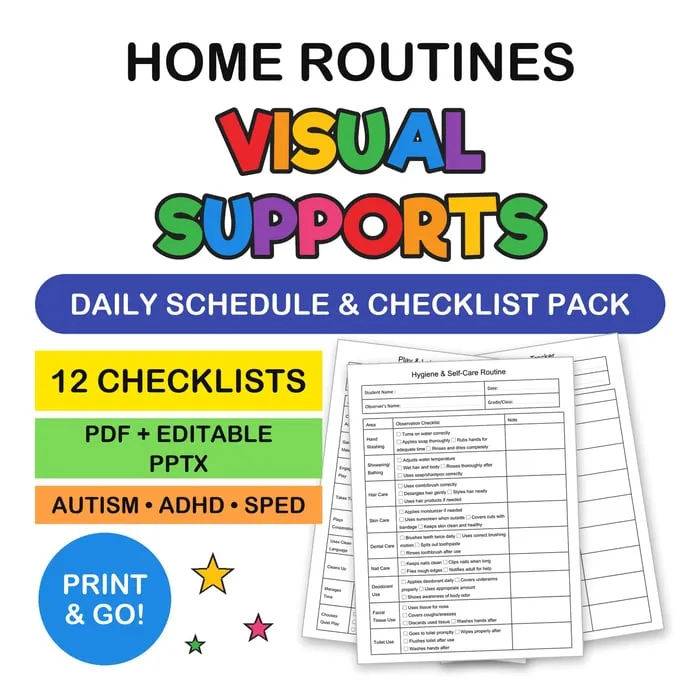
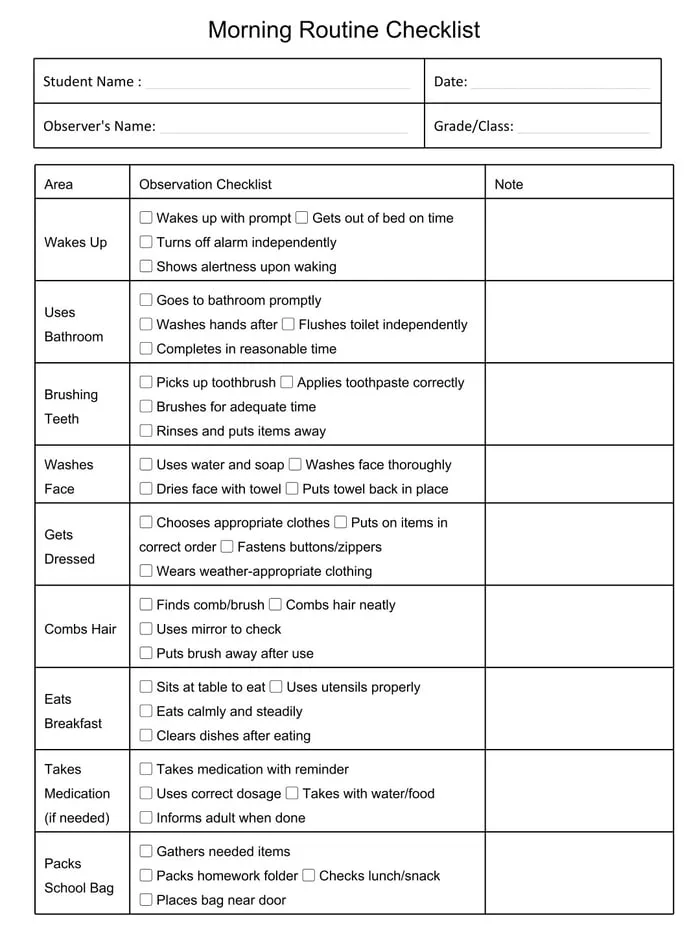
Home Routine Visual Supports: Daily Schedule and Checklist Pack: 12 checklists and trackers for parents and caregivers, covering morning, bedtime, getting dressed, meals, hygiene, chores, transitions, play, homework, evening wind-down, and weekends, plus a daily task completion tracker. Includes a PDF and an editable PowerPoint file.
Sources and scope
- AFIRM, University of North Carolina: free learning modules on evidence-based practices, including visual supports.
- IRIS Center, Vanderbilt University: free modules on routines, behavior, and supporting students with disabilities.
- CDC parenting information: general guidance for families on everyday parenting and child development.
- Understood.org: practical articles for families on learning and thinking differences.
This guide covers building and teaching visual routines at home for everyday tasks. It does not cover diagnosis, therapy plans, or medical concerns, which belong to qualified professionals and the child’s care team.
Key takeaways
- A home routine checklist works best when it targets one routine and one real sticking point.
- Write one visible action per step and pair it with a matching picture.
- Place the checklist where the action happens, at the child’s eye level.
- Teach it while calm, then fade from modeling to pointing to silence.
- Track steps done alone and reminders each week, and change one thing at a time.







Leave a Comment