

Paraprofessional training scripts give classroom aides clear words for the moments that matter most. Picture a new aide kneeling beside a second grader who has just pushed his worksheet off the desk and said, “I’m not doing it.” She wants to help, but she has never been told what to say, so she tries three different things in thirty seconds and the moment gets louder.
This guide shows teachers and coaches how to build, teach, and review a small set of scripts that aides can use with confidence. You will choose the key moments, write short scripts with the reason behind each line, rehearse them, coach in real time, and update them as a team. By the end, you will have a working script bank and a simple coaching routine.
Examples are fictional. Adapt to the student’s goals and agreed supports. This is guidance, not a diagnosis.
At a glance
- Start with the three or four moments where aides feel least sure.
- Keep each script short and explain why it works.
- Rehearse scripts before aides need them with students.
- Coach with quick, private feedback during and after the lesson.
- Review the script bank with the team every few weeks.
1. Pick the moments where aides need words most
First, find the moments that cause the most stress. Paraprofessional training scripts are most useful when they target real, repeated situations, not every possible scenario. So, ask your aides directly: “When do you feel unsure what to say?”
Common answers include a student refusing work, a student getting agitated, a student mumbling or shutting down, and a student who seems to zone out. Another frequent one is the adult’s own mistake, such as correcting a student in front of peers or giving the wrong direction.
Next, observe for a few days. Note when each moment happens, what the aide says, and how the student responds. In addition, look for patterns across students. A moment that happens daily is a better first target than one that happens once a month.
Also, check each student’s plan before you write anything. Paraprofessional training scripts should match the supports, goals, and behavior strategies the team has already agreed on. If a student has a behavior plan, the script must use the same language and steps, not a new approach.
| Moment | What it can look like |
|---|---|
| Refusal | Pushes work away, says “no” |
| Agitation | Louder voice, tense body, pacing |
| Mumbling | Quiet, unclear answers, eyes down |
| Zoning out | Staring, no start after directions |
| Adult mistake | Wrong direction or public correction |
Worked example. Ms. Rivera is a fictional paraprofessional in a second grade classroom. She supports Jalen, a fictional student who often refuses written work. Over one week, his teacher notes that refusal happens during writing on four of five days. Ms. Rivera says she usually repeats the direction louder. Therefore, refusal during writing becomes the first script to build.
In short, a few focused observations tell you where paraprofessional training scripts will help most. As a result, you start small and relevant.
2. Write short scripts with a reason behind each line
Once you know the moments, write the words. Good paraprofessional training scripts are short, calm, and easy to remember under pressure. Aim for one or two sentences per step, using simple language the student understands.
Just as important, add the “why.” When aides understand the reason behind a line, they can adapt it without losing the purpose. For example, offering a choice works because it gives the student some control while keeping the task in place.
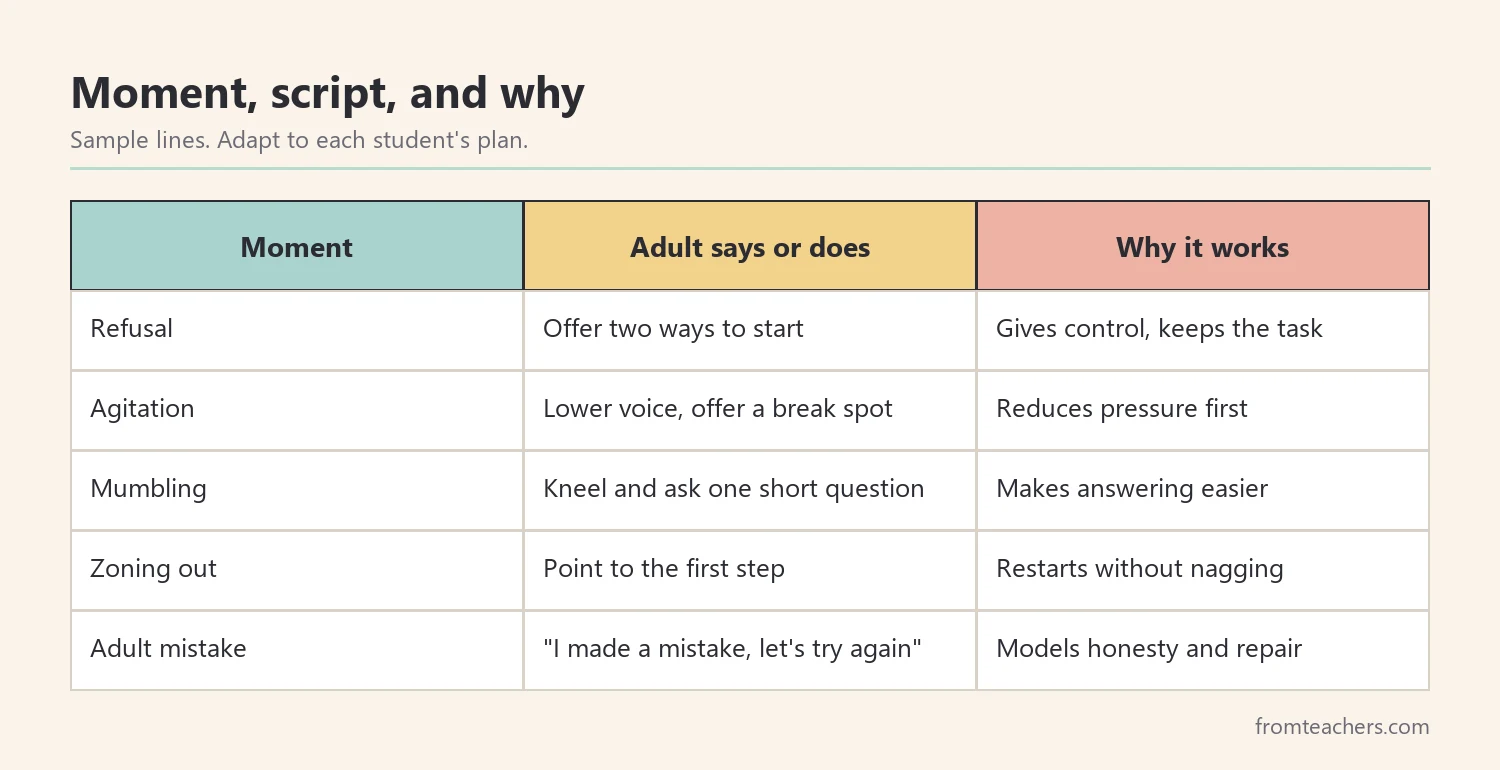
Then, keep the format of your paraprofessional training scripts consistent. A simple three-column table works well: what the student does, what the adult says or does, and why. In addition, write scripts in the voice of your team, not a textbook. If a line feels unnatural to say, rewrite it.
Also, include scripts for adult mistakes. Saying “I made a mistake, let’s try again” models honesty and repairs trust quickly. Many aides find this the most freeing script of all.
Moreover, keep each set of paraprofessional training scripts to one page per moment. One page is easy to scan before a lesson and easy to update later. When a script grows longer than a page, it usually means two different moments have been mixed together.
If you want a ready-made starting point, the Paraprofessional Training Guides with Behavior, Support, and Why tables include everyday scripts for refusal, agitation, mumbling, and zoning out, plus language for owning a mistake.
Worked example. Jalen’s teacher writes a three-line refusal script for Ms. Rivera. First: “You can start with the first sentence or the picture.” Second, after a short pause: “I’ll check back in one minute.” Third, when he starts: “You started. That’s the hardest part.” The why column explains choice, space, and specific praise.
3. Model and rehearse paraprofessional training scripts
Next, practice the paraprofessional training scripts before the real moment. Reading a script is not the same as saying it to a frustrated child. Therefore, plan short rehearsals, about ten minutes, before or after school.
A simple order works well. First, the teacher models the script while the aide plays the student. Then, they switch roles. After that, the aide practices alone while the teacher gives one or two pointers. Finally, they agree on when the aide will try it in class.
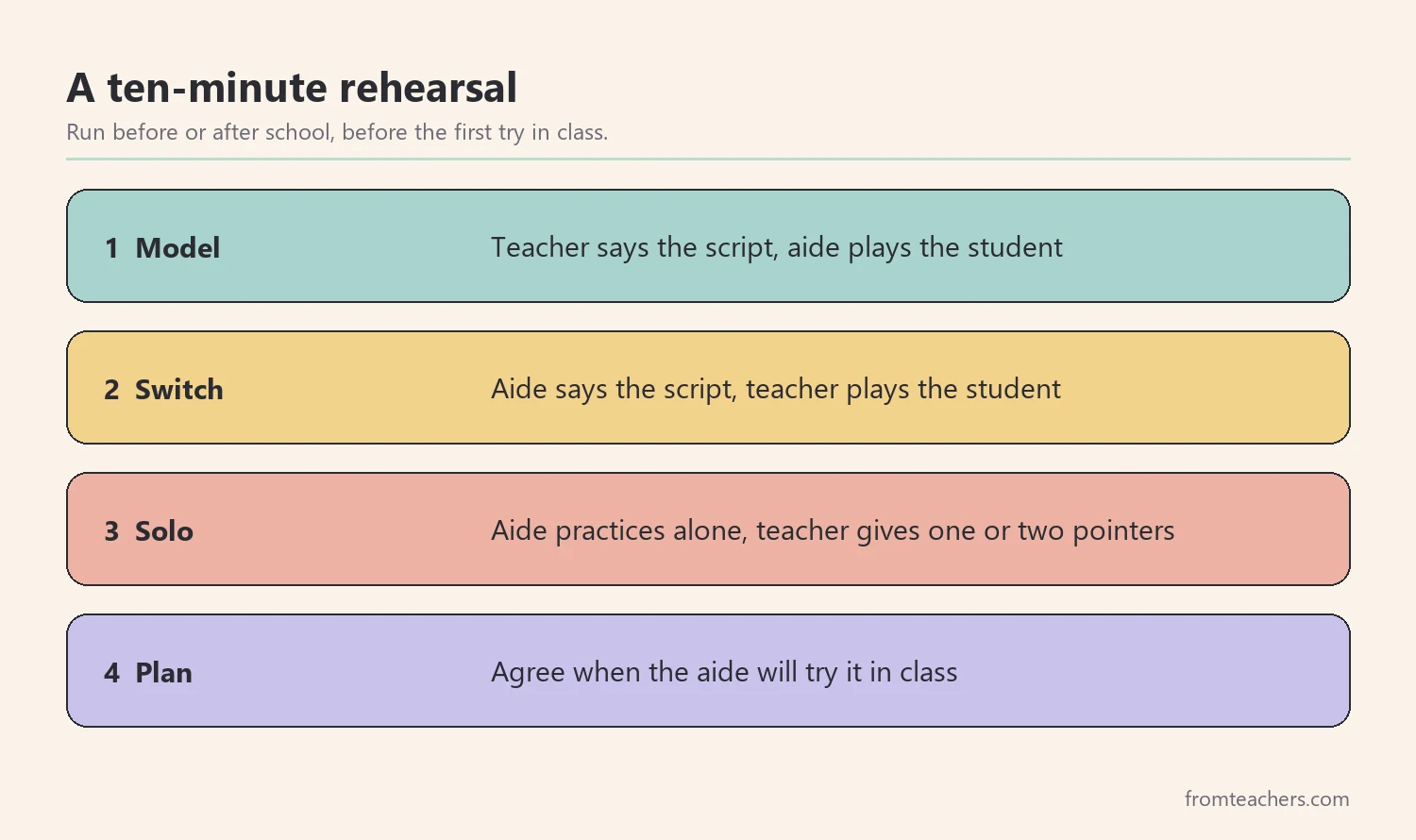
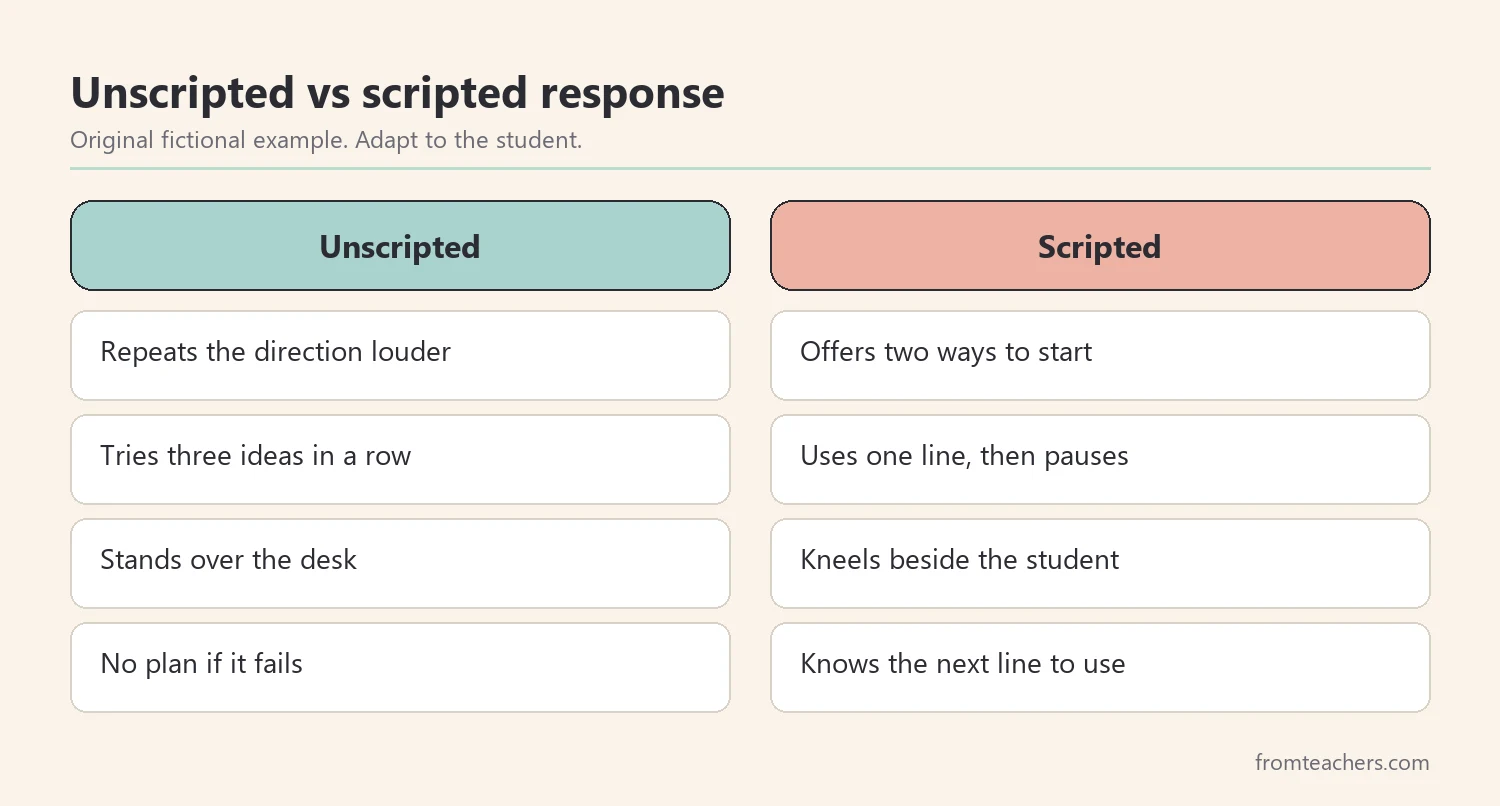
During rehearsal, pay attention to tone, volume, and body position as much as words. A calm voice, a lower body position beside the student, and a short pause often matter more than the exact sentence. In addition, practice what to do if the first line does not work.
Also, keep the script bank visible. A one-page card on a clipboard or lanyard gives aides a quick reminder. Over time, they will need it less.
Then, rehearse the hard follow-ups too. What should the aide say if the student refuses the choice, or if another student joins in? Paraprofessional training scripts that include a second and third line prevent the aide from improvising under pressure. As a result, the response stays calm even when the first line does not land.
Worked example. Before school on Monday, Jalen’s teacher plays Jalen while Ms. Rivera practices the refusal script. On the first try, Ms. Rivera talks too fast. On the second, she kneels, pauses, and offers the choice slowly. They agree she will use it during writing that day.
4. Coach in the moment with quick feedback
Paraprofessional training scripts become habits through feedback. So, plan when and how you will coach. The goal is support, not evaluation, and aides should know that from the start.
During the lesson, keep feedback quiet and brief. A thumbs-up or a short whisper such as “Nice pause” is enough. Avoid correcting an aide in front of students, since that undercuts their authority and confidence.
After the lesson, take two minutes. Name one thing that went well and one thing to try next time. Then, ask the aide what they noticed. Aides often see details about the student that the teacher missed.
However, keep the feedback balanced over time. If every conversation focuses on what went wrong, aides may stop trying new lines. A steady mix of specific praise and one clear next step builds both skill and trust, and it shows that coaching is a partnership.
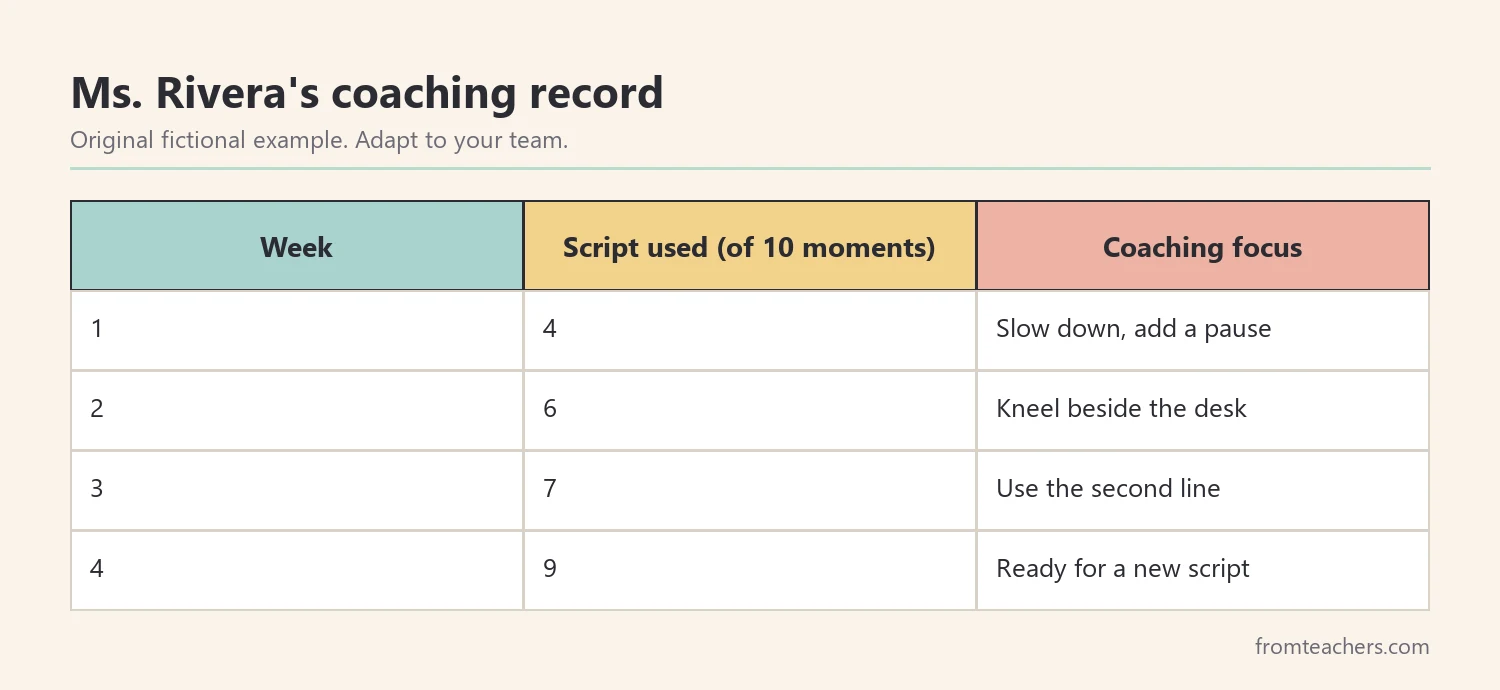
In addition, track something simple. For example, count how many times the aide used the script during a key moment, out of the number of moments observed. This shows growth without turning coaching into a test. Share the count with the aide so they can see their own progress with the paraprofessional training scripts.
Worked example. Jalen’s teacher watches ten refusal moments each week across writing lessons. In week 1, Ms. Rivera uses the script in 4 of 10 moments. By week 4, she uses it in 9 of 10. After each lesson, they spend two minutes on one success and one next step.
5. Review and update the script bank together
Finally, treat your paraprofessional training scripts as living documents. Students change, classrooms change, and some lines simply do not work. So, set a short review every three to four weeks.
During the review, ask which scripts aides use most, which ones feel awkward, and which moments still have no script. Then, rewrite one or two lines and rehearse them again. Keep changes small so everyone can learn them.
Also, share the bank with the whole team. When teachers, aides, and related service staff use the same words, students hear a consistent message. In addition, new staff and substitutes can learn the basics quickly.
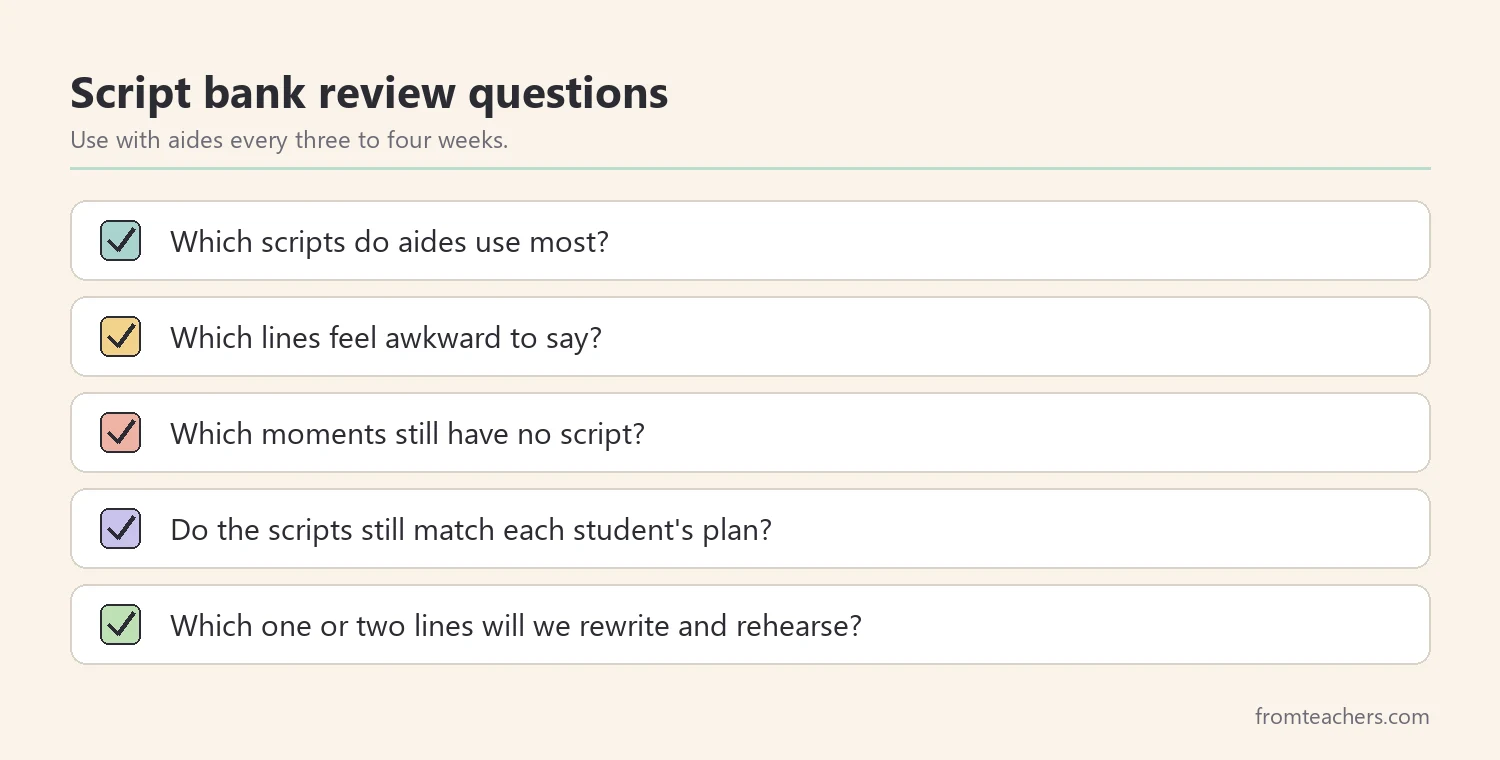
Above all, ask aides to contribute. They are with students for long stretches and often know what works. A script bank built together is more likely to be used.
In addition, store the paraprofessional training scripts where everyone can find them, such as a shared binder in the classroom or a shared folder online. Date each version so the team knows which lines are current. Old versions can stay in the back of the binder as a record of what changed and why.
Worked example. At the four-week review, Ms. Rivera says the refusal script works but the “I’ll check back” line feels too vague for Jalen. The team changes it to “I’ll check back when the timer beeps,” and adds a one-minute sand timer. They also start a new script for zoning out during math.
Common mistakes and how to avoid them
- Too many scripts at once. Aides cannot learn twenty scripts in a week. Fix: start with three or four key moments.
- Long scripts. Long speeches are hard to remember under stress. Fix: keep each line to one or two short sentences.
- No reason given. Without the why, scripts get used in the wrong place. Fix: add a short reason to every line.
- Skipping rehearsal. Reading a script is not practice. Fix: rehearse with role-play before using it in class.
- Public correction of aides. It undermines their authority with students. Fix: give quiet signals during class and feedback afterward.
- Never updating paraprofessional training scripts. Old scripts stop fitting the students. Fix: review the bank every few weeks.
Questions teachers and parents ask about paraprofessional training scripts
Will scripts make aides sound robotic?
Not if they understand the purpose. Scripts give a starting point, and the why column lets aides adapt the words to the student. With practice, the language becomes natural.
Who should write the scripts?
Usually the supervising teacher drafts them, ideally with input from aides and related service staff. Building them together increases buy-in. The team should also check that scripts match each student’s plan.
How much time does training take?
Short, frequent sessions work well. Ten minutes of rehearsal and two minutes of feedback after a lesson add up quickly. Over a few weeks, most aides gain confidence with a small script bank.
Can paraprofessional training scripts help with substitutes?
Yes. A one-page card with key moments and scripts helps substitute aides respond the same way as regular staff. That consistency can make the day calmer for students.
What if a script does not work for a student?
First, check that it was used as planned. Then, look at the why: is the reason still right for this student? If not, rewrite the line with the team and practice the new version.
Related reading: Moving Beyond Shame and Behavior Charts: Positive Alternatives for Effective Classroom Management, Special Education Strategies: 10 Powerful Ways Teachers Can Succeed, and Meltdowns vs Tantrums: A Guide to Understanding and Responding.
A companion resource for paraprofessional training scripts:
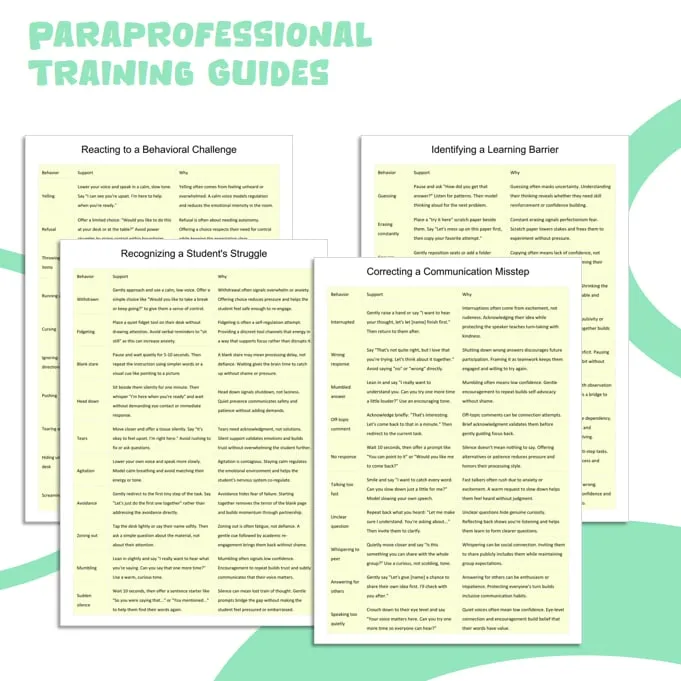
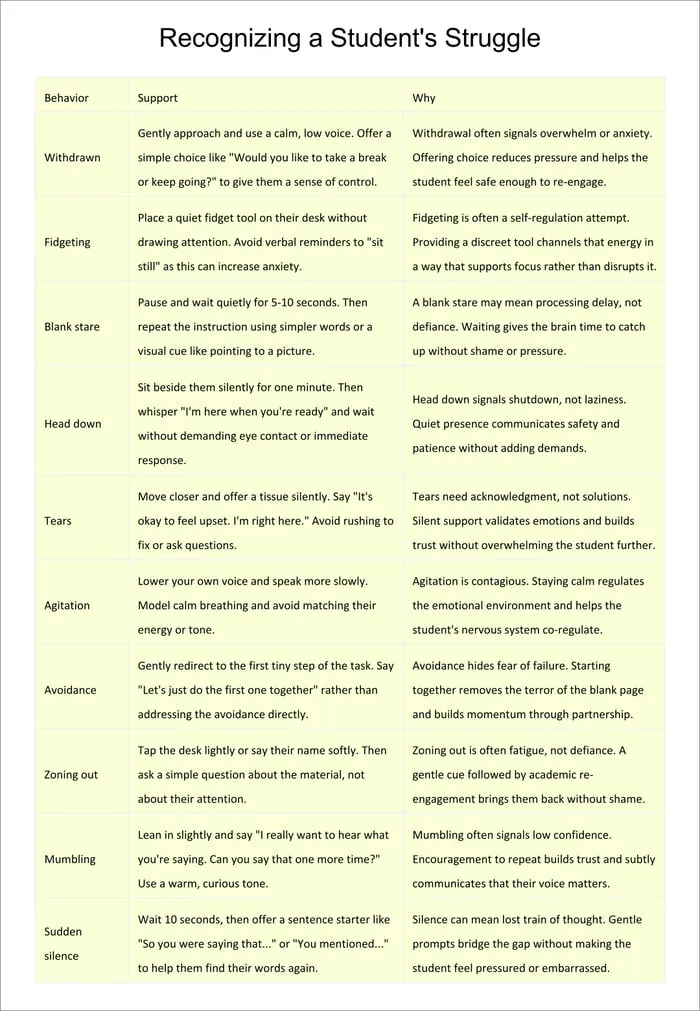
Paraprofessional Training Guides: 12 pages of Behavior, Support, and Why tables covering behavioral challenges, learning barriers, and signs a student is struggling, with everyday scripts for refusal, agitation, mumbling, and zoning out, and honest language for owning a mistake.
Sources and scope
- IRIS Center, Vanderbilt University: free modules on classroom behavior and working with paraprofessionals.
- Council for Exceptional Children: a professional organization for special educators, with standards and professional learning.
- Center on PBIS: information on positive behavioral interventions and supports in schools.
- IDEA, U.S. Department of Education: the law behind special education services, including personnel requirements.
This guide covers building and coaching everyday classroom scripts for aides. It does not cover crisis intervention, physical restraint, or formal behavior plans, which require district policy and trained professionals.
Key takeaways
- Paraprofessional training scripts work best for a few real, repeated moments.
- Keep every line short and pair it with the reason it works.
- Rehearse with role-play before aides use scripts with students.
- Coach privately and track script use with a simple count.
- Review and update the script bank with aides every few weeks.










Leave a Comment