

Routines for autistic children can turn a chaotic morning into a calmer one, but only when the routine fits the child. Picture a seven-year-old who knows he needs to get dressed, brush his teeth, and put on his shoes, yet stalls at the bathroom door every day. The adults repeat the same reminders, voices rise, and everyone arrives at school already tired.
This guide gives you a five-step process you can use at home or in a classroom. You will learn to observe your child, break a routine into small steps, make it visual, teach it with gradually fading help, and plan for the days when things change. By the end, you will have one working routine and a method you can reuse for others.
Examples are fictional. Adapt to the student’s goals and agreed supports. This is guidance, not a diagnosis.
At a glance
- Start with one routine that causes daily stress, not every routine at once.
- Break the routine into small, clear steps your child can see and check off.
- Use pictures or written lists so the routine does not depend on spoken reminders.
- Teach with as much help as needed, then fade that help slowly.
- Prepare for changes ahead of time so a new day does not undo the progress.
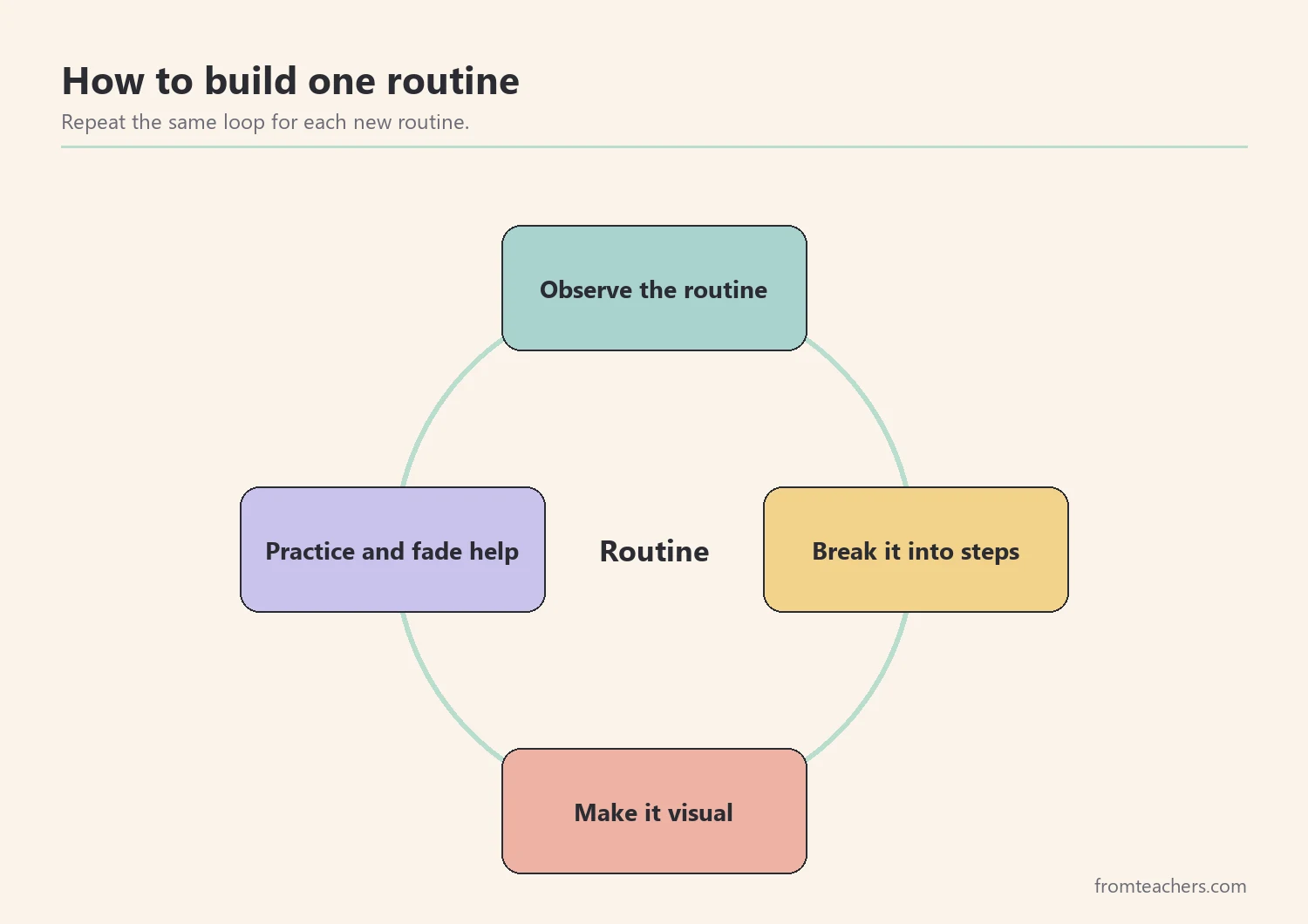
1. Observe your child before building routines for autistic children
First, pick one routine to work on. Many families want to fix mornings, meals, homework, and bedtime all at once. That usually overwhelms both the child and the adults. Instead, choose the routine that causes the most stress right now.
Next, watch that routine for a few days without changing anything. Notice where it goes smoothly and where it breaks down. Is the problem starting, a specific step, a sensory issue such as a scratchy shirt, or the transition at the end? Write short notes after each try.
Then, think about your child’s strengths, since the best routines for autistic children build on what the child already enjoys. Many autistic children are strong visual learners, enjoy predictability, or love a particular topic. These strengths can become part of the routine. For instance, a child who loves trains may enjoy a routine chart designed like a train line, with each step as a station.
Consider a fictional example. Omar is seven and in grade 2. His parents choose the morning routine, because it causes daily arguments. After three mornings of watching, they notice a clear pattern:
| Step | What they observe |
|---|---|
| Waking up | Usually fine |
| Getting dressed | Stalls, dislikes tags in shirts |
| Brushing teeth | Forgets after leaving the room |
| Shoes and bag | Fine with one reminder |
Finally, note anything in the environment that adds difficulty. A noisy kitchen, a missing item, or a sibling’s routine overlapping with your child’s can all play a part. Observation gives you a starting point, so you are solving the real problem rather than the one you assumed.
2. Break the routine into small steps
Once you know where the routine breaks down, break it into small steps. This is where routines for autistic children often succeed or fail. A step like “get ready for school” hides many smaller actions. For a child who finds sequencing hard, each hidden action is a place to get stuck.
A useful test is to ask: could my child do this step on its own, or does it contain several actions? “Get dressed” might become “take clothes from the chair,” “put on shirt,” “put on pants,” and “put on socks.” Keep breaking a step down until each one is clear.
At the same time, avoid making the list so long it becomes overwhelming. For most routines for autistic children, four to eight steps per routine works well. If you need more, split the routine into two parts, such as “upstairs” and “downstairs.”
For Omar, his parents settle on six steps for the morning:
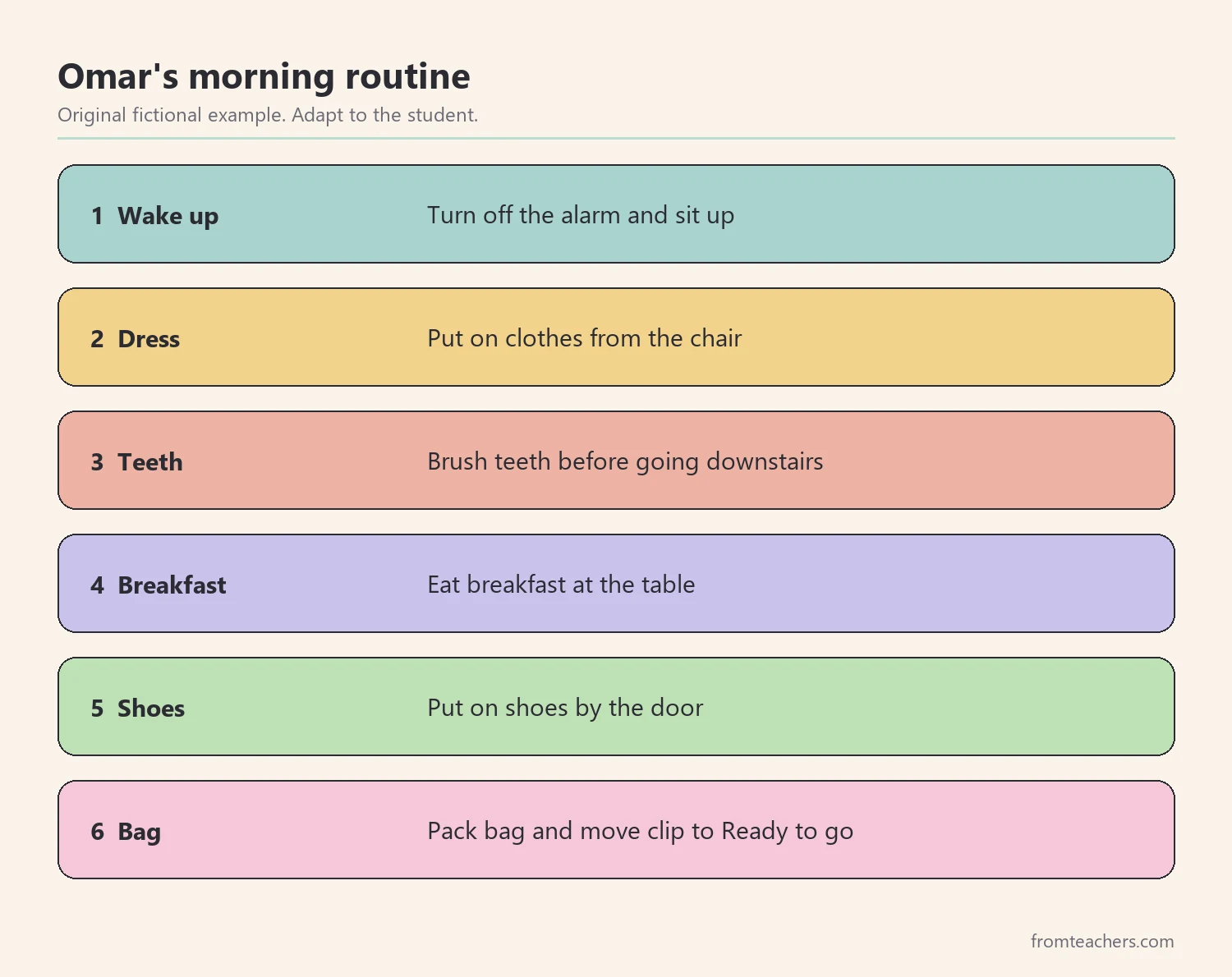
In addition, they fix the clothing issue directly. They cut out shirt tags and lay out clothes the night before on a chair. This small change removes a sensory barrier, so the routine can focus on the sequence rather than discomfort.
Also, think about where each step happens. If a step moves the child to a new room, that is a common place for the routine to fall apart. Omar forgets to brush his teeth after leaving the bathroom, so his parents move toothbrushing to right after dressing, while he is still upstairs.
3. Make routines for autistic children visual
Now make the routine visible. Visual supports are at the heart of many routines for autistic children. Spoken reminders disappear the moment they are said, and they often turn into nagging. A visual schedule stays in place, so your child can check it as many times as needed without asking an adult.
Choose a format that matches your child. Younger children or children who do not yet read may need photos or simple drawings. Others do well with icons and words, or with a short written checklist. Some children prefer a strip they can carry, while others like a chart on the wall.
Then, place the visual where the routine happens. A morning chart belongs in the bedroom or bathroom, not on the kitchen fridge. If the routine moves between rooms, use a small chart in each place or a portable card.
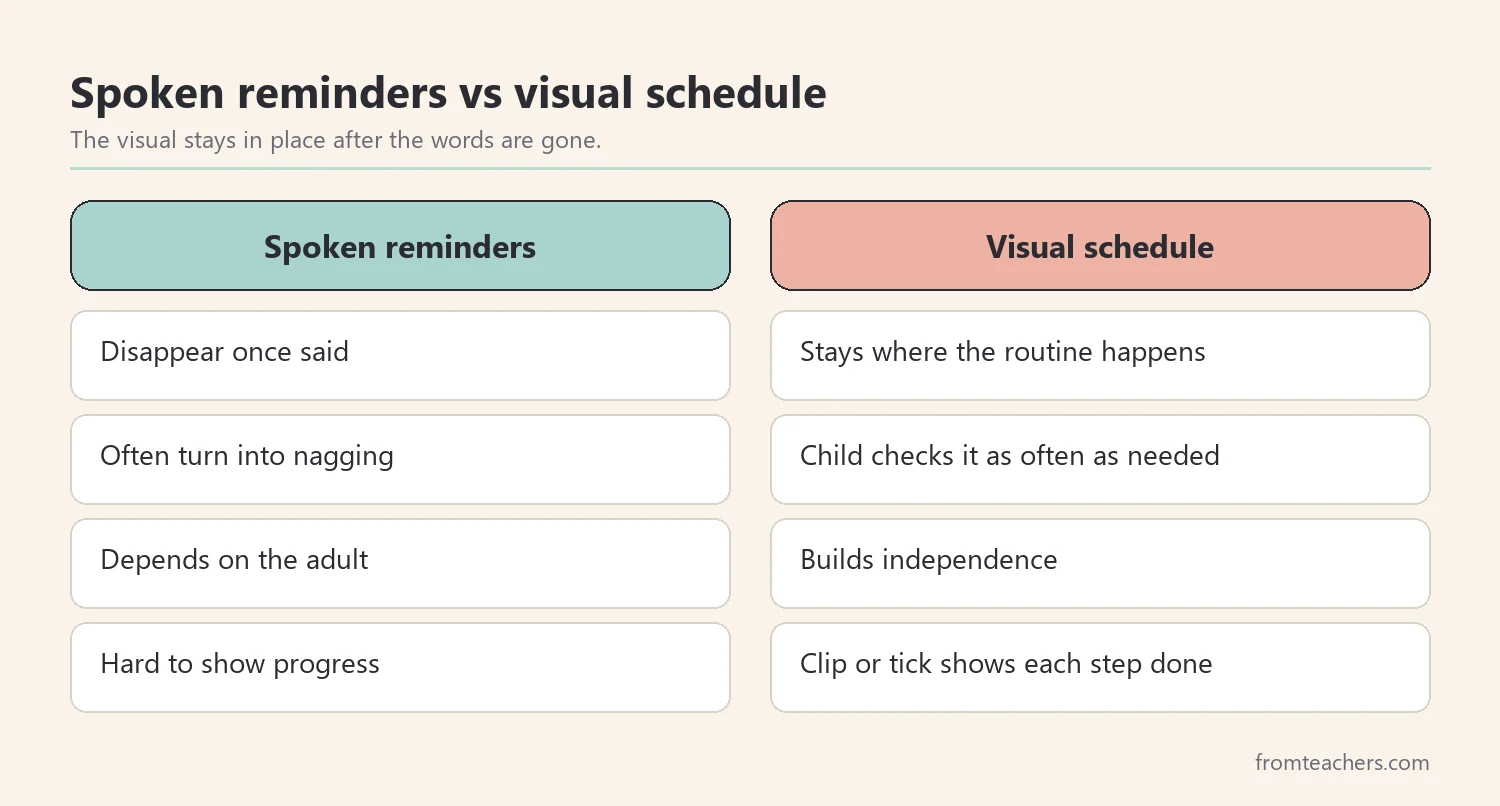
Next, add a way to mark progress. Velcro pictures that move to a “done” pocket, a tick box, or a clip that slides down the list all work. Finishing each step becomes visible, which many children find satisfying.
For Omar, his parents use photos of Omar himself doing each step, taped beside the bathroom sink and on his bedroom door. He moves a small clip down the list as he goes. Because he loves trains, the final step shows a train picture labeled “Ready to go.”
If you want guidance on building these supports across the whole day, the Autism Routine Building Guide for daily independence covers assessing the child, the morning routine, and building independence through routines, among other chapters.
4. Teach routines for autistic children and fade your help
A visual schedule does not teach the routine by itself. At first, walk through it together. Point to each picture, show the step, and let your child do as much as possible. Keep your words short and calm.
Then, plan to fade your help. The goal of routines for autistic children is independence, not adult-led steps forever. Many families start by standing close and pointing to each step. Next, they point only when the child pauses. After that, they stay nearby without pointing. Finally, they check in only at the end. Move to the next level when your child is successful most days at the current one.
Meanwhile, keep a simple record. You only need to note how many steps your child completed without help each morning. Over a few weeks, this shows whether the routine is becoming more independent.
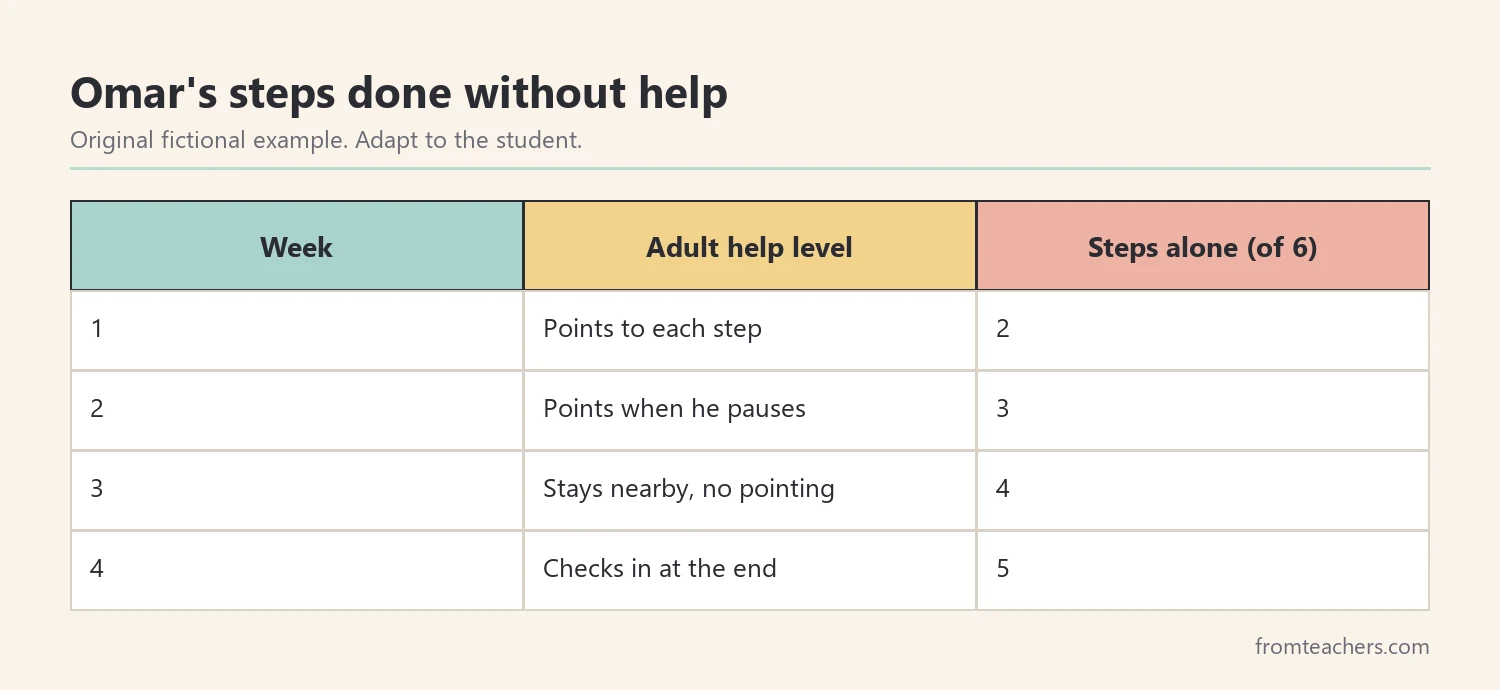
For Omar, the record tells a clear story. In week 1, with his parents pointing to each step, he usually does two of six steps without help. By week 2 that rises to three, by week 3 to four, and by week 4 to five of six. Putting on socks, part of the dressing step, is still where he needs help, so his parents practice that skill separately at a calmer time.
Also, celebrate effort. Specific praise works well: “You moved the clip all by yourself!” Some children enjoy a small reward at the end of the routine, such as a few minutes with a favorite toy before school. Over time, the satisfaction of finishing can become its own reward.
Finally, keep the routine the same while your child is learning it. Changing the order or the pictures too early can make the routine feel unpredictable again.
5. Plan for changes and review the routine
Even the best routine meets a change sooner or later. A holiday, a substitute teacher, a doctor’s appointment, or a new school year can all disrupt it. Planning for change is part of building routines for autistic children, not an extra.
First, warn your child in advance when you can. Even well-practiced routines for autistic children feel safer when a change is announced early. Show the change on the visual schedule, for example by adding a “change” card or a different picture. Then explain what stays the same, because familiar parts help the new part feel safer.
Next, practice small changes on purpose when things are calm. Swap two steps once in a while, or use a different cup for brushing teeth. Small, planned changes can build flexibility, so bigger changes feel less sudden later.
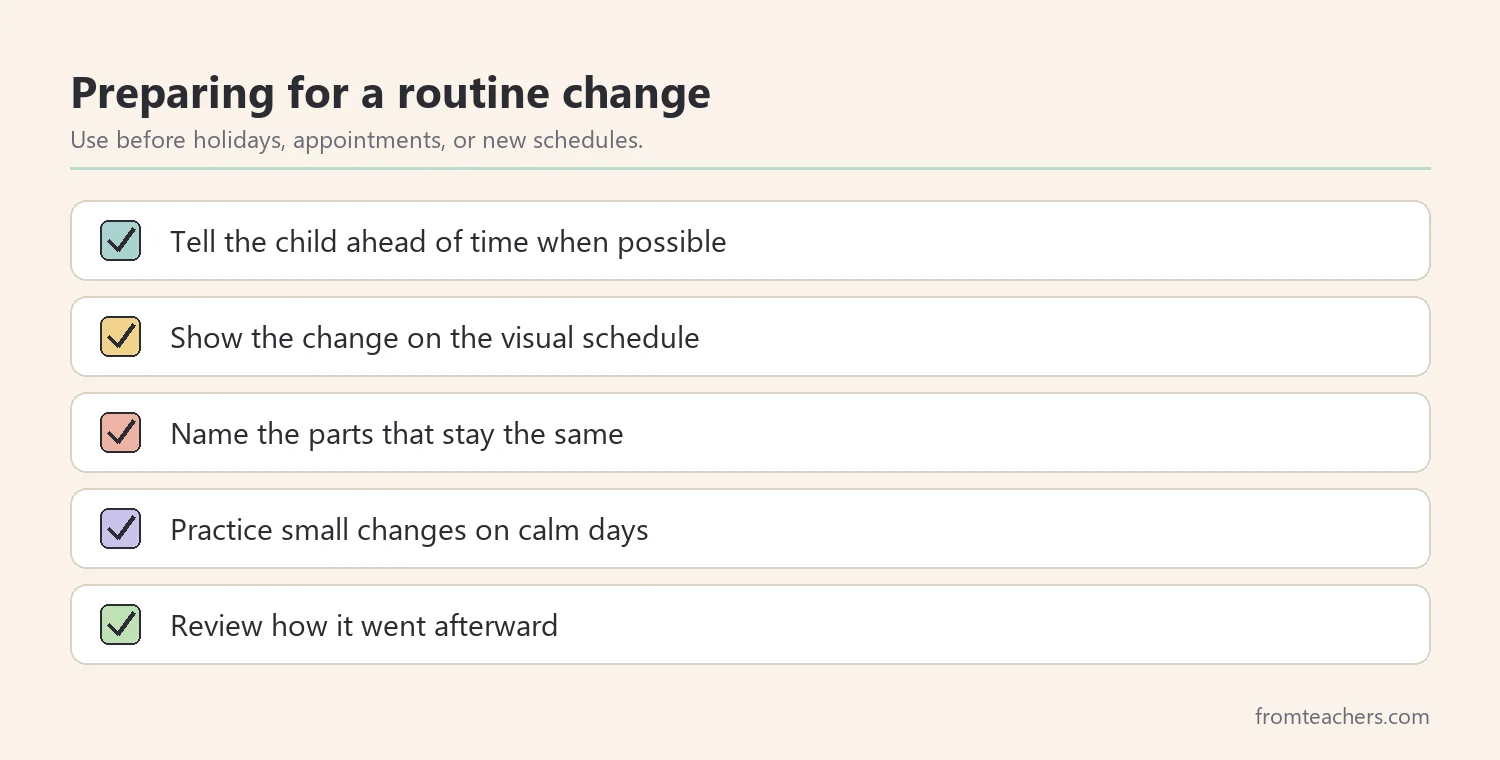
Then, review the routine every few weeks. Ask what is working, which step still needs help, and whether the visual still fits. As your child grows, the routine may need fewer steps, more written words, or more choice.
Also, share the routine with school or therapy staff if it helps. A matching picture schedule at home and school can make the whole day more predictable. For Omar, his teacher adds a similar arrival routine at school, using the same style of photos.
Finally, once one routine is steady, choose the next one. Building routines for autistic children one at a time keeps the work manageable. Many families move from mornings to bedtime, or from homework to mealtimes, using the same five steps each time.
Working as a team at home and school
Routines for autistic children are easier to keep when every adult follows them the same way. Share the visual and the current help level with grandparents, babysitters, and school staff. A short note such as “point only when he pauses” keeps everyone consistent.
Also, agree on how to report progress. A quick weekly message with the number of steps done alone is enough. When home and school routines for autistic children use similar pictures and words, the child has fewer new things to learn.
Common mistakes and how to avoid them
- Starting with every routine at once. Fix: choose one routine and build from there.
- Steps that are too big. Fix: break each step down until your child can do it as one action.
- Relying on spoken reminders. Fix: use a visual schedule placed where the routine happens.
- Fading help too quickly. Fix: move to less help only when your child succeeds most days.
- Ignoring sensory barriers. Fix: adjust clothing, noise, or lighting before blaming the routine.
- Surprising the child with changes. Fix: show changes on the schedule and practice small ones when calm.
Questions teachers and parents ask about routines for autistic children
How long does it take for a new routine to stick?
It varies by child and routine. Some children follow a new routine within days, while others need several weeks of steady practice. A simple weekly record helps you see progress that is easy to miss day to day.
Should routines for autistic children ever change?
Yes. Routines should grow with the child. As skills improve, you can reduce steps, add choices, or move from pictures to words. Planned changes also help build flexibility.
What if my child refuses to follow the visual schedule?
First, check whether a step is too hard or uncomfortable. Then, make the schedule more appealing, for example with your child’s interests or photos of your child. Starting with a short routine your child can finish successfully often helps too.
Can teachers use the same routines at school?
Many teachers use visual schedules for arrival, transitions, and work time. Sharing your home format with the teacher can make the school version feel familiar. Agree together on which pictures or words to use.
Are routines for autistic children only for young kids?
No. Older children and teens also benefit from clear routines, especially for complex tasks like homework, chores, or getting ready for work. The format simply becomes more grown-up, such as a phone checklist instead of pictures.
Related reading: Autism Spectrum Disorder: A Guide to Early Signs, Support, and Effective Strategies, Managing Sensory Overload: Practical Strategies for Autism and ADHD, and Navigating the Path to Adulthood: Building Essential Life Skills.
A companion resource for routines for autistic children:

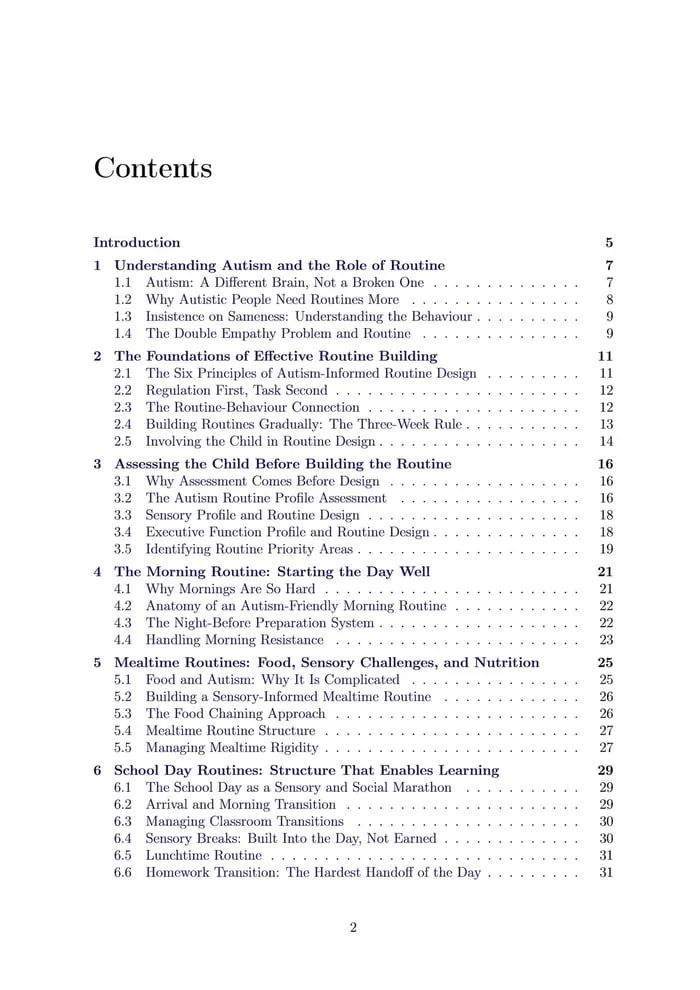
Autism Routine Building Guide for Daily Independence & Life Skills: a 79-page PDF guide for parents, caregivers, and teachers covering morning, mealtime, school, homework, social, community, and bedtime routines, managing changes, and building independence.
Sources and scope
- CDC autism information: general background on autism in children and family resources.
- IRIS Center, Vanderbilt University: free modules on autism, visual supports, and evidence-based practices.
- AFIRM, UNC Frank Porter Graham Child Development Institute: free learning modules on evidence-based practices for autistic learners.
- Understood.org: practical articles for families and teachers on learning and thinking differences.
This guide covers practical steps for building everyday routines at home and school. It does not cover diagnosis, therapy plans, or medical concerns such as sleep or feeding disorders, which belong to qualified professionals.
Key takeaways
- Routines for autistic children work best when you start with one routine.
- Break the routine into small steps your child can do one at a time.
- Make it visual and place the schedule where the routine happens.
- Teach with support, then fade it slowly while tracking progress.
- Plan for changes and review the routine every few weeks.










Leave a Comment