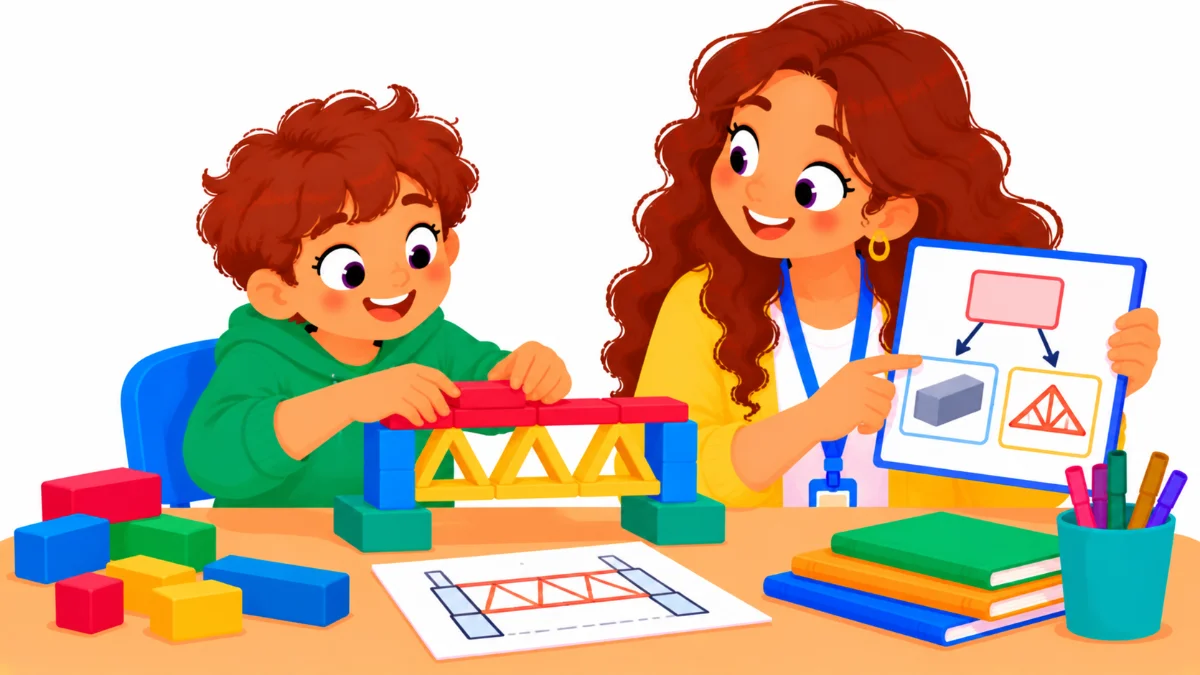

Visual-spatial learners often surprise their teachers. A fifth grader who can build a detailed model bridge from memory, sketch a map of the school, or solve a puzzle faster than anyone in the room may still struggle to read a paragraph aloud, write a short summary, or finish a timed worksheet. When a learning disability is part of the picture, that gap between strengths and struggles can feel confusing for everyone, including the student.
This guide gives you five steps to support these students: see the strengths clearly, show ideas visually, support reading with pictures and structure, open new routes into writing, and give time and review progress. By the end, you will have a practical plan that uses the student’s strengths to reach the skills that are harder.
Examples are fictional. Adapt to the student’s goals and agreed supports. This is guidance, not a diagnosis.
At a glance
- Visual-spatial learners often think in pictures, patterns, and the big picture.
- Many also struggle with reading, written expression, or processing speed.
- Use diagrams, models, and graphic organizers to teach new ideas.
- Offer visual routes into writing, such as sketching before drafting.
- Give time, reduce copying, and review progress with the student and family.
1. See the strengths of visual-spatial learners clearly
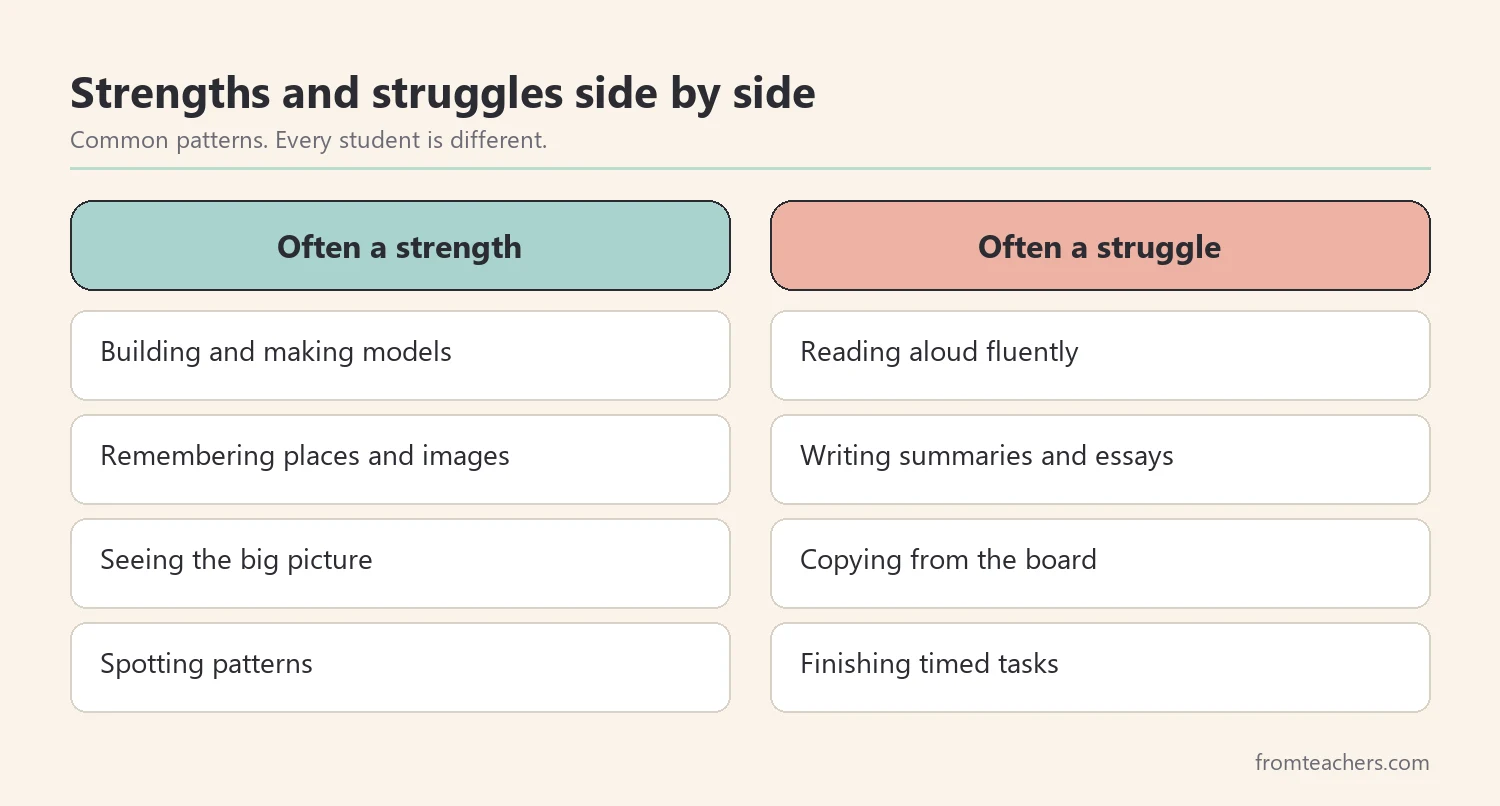
First, take stock of what the student does well. Visual-spatial learners often notice details in images, remember places, build things, and understand how parts fit into a whole. They may prefer seeing the finished picture before learning the steps. These strengths are real, and they are your best teaching tools.
At the same time, some of these students also have a learning disability that affects reading, writing, or the speed of working. That combination is sometimes called “twice exceptional” when a student has both high ability and a disability. Only qualified professionals can evaluate a student, but noticing both sides helps you plan well.
Meet our fictional student, Theo, a fifth grader. Theo builds complex structures with blocks, draws accurate maps, and explains science diagrams with ease. However, he reads slowly, avoids writing, and rarely finishes timed tasks. His teacher made a simple two-column list.
| Theo’s strengths | Theo’s struggles |
|---|---|
| Builds detailed models | Reads aloud slowly |
| Draws accurate maps | Avoids written summaries |
| Explains diagrams clearly | Loses time on copying from the board |
| Spots patterns in math | Rarely finishes timed tasks |
As a result, the plan started from Theo’s strengths. Instead of only asking “How do we fix his reading?”, the team asked “How can his visual skills help him read and write?” That shift changed the tone of every meeting.
Also, share the strengths list with Theo. Many visual-spatial learners with learning disabilities believe they are “bad at school” because the tasks they struggle with are the ones most often graded. Seeing their strengths in writing can rebuild confidence and willingness to try.
In addition, look for strengths outside academics. Theo’s teacher learned from his family that he spends weekends designing block cities and drawing floor plans of imaginary houses. These interests became hooks for later lessons, from measuring area in math to describing a setting in writing. Interests give you ready-made, motivating content.
2. Show ideas visually before words
Next, teach new ideas with pictures, diagrams, and models first. For visual-spatial learners, seeing the whole idea makes the details easier to follow. A diagram of the water cycle before the reading passage, or a timeline before a history chapter, gives the student a mental map.
- Start lessons with a picture, diagram, or short demonstration.
- Use color to group related ideas, but keep it consistent.
- Show the finished product before explaining the steps.
- Use real objects and models when possible.
- Draw relationships with arrows, boxes, and simple maps.
For Theo, his science teacher began each unit with a large labeled diagram on the board. Theo copied a smaller version into his notebook during the first lesson. Then, he used it as a reference for the rest of the unit. He started asking more questions, because he could see where each new idea fit.
In addition, graphic organizers help visual-spatial learners organize information without long blocks of text. Concept maps, Venn diagrams, and flow charts turn words into shapes. Teach one organizer at a time and use it often, so the format becomes familiar.
Matching organizers to tasks
| Task | Organizer to try |
|---|---|
| Compare two ideas | Venn diagram or T-chart |
| Show a sequence | Numbered boxes or a timeline |
| Connect related facts | Concept map with arrows |
| Plan a story | Story map or comic strip |
Finally, keep visual materials clean. Too many colors, icons, or borders can overwhelm any student. A simple layout with clear labels usually works best.
Hands-on work fits here too. Let the student build a model, act out a process, or arrange cards on a table before explaining an idea in words. Physical models give the student something concrete to point at, which makes explaining easier.
If you want ready-made ideas, the visual learning strategy tables give a clear form of help and the result it brings for common reading, writing, and processing speed difficulties.
3. Support reading with pictures and structure
Then, look at reading. Many visual-spatial learners with learning disabilities find decoding and reading speed difficult. They may understand a story well when it is read aloud, yet struggle to read the same text alone. Support both decoding and understanding, and keep them separate.
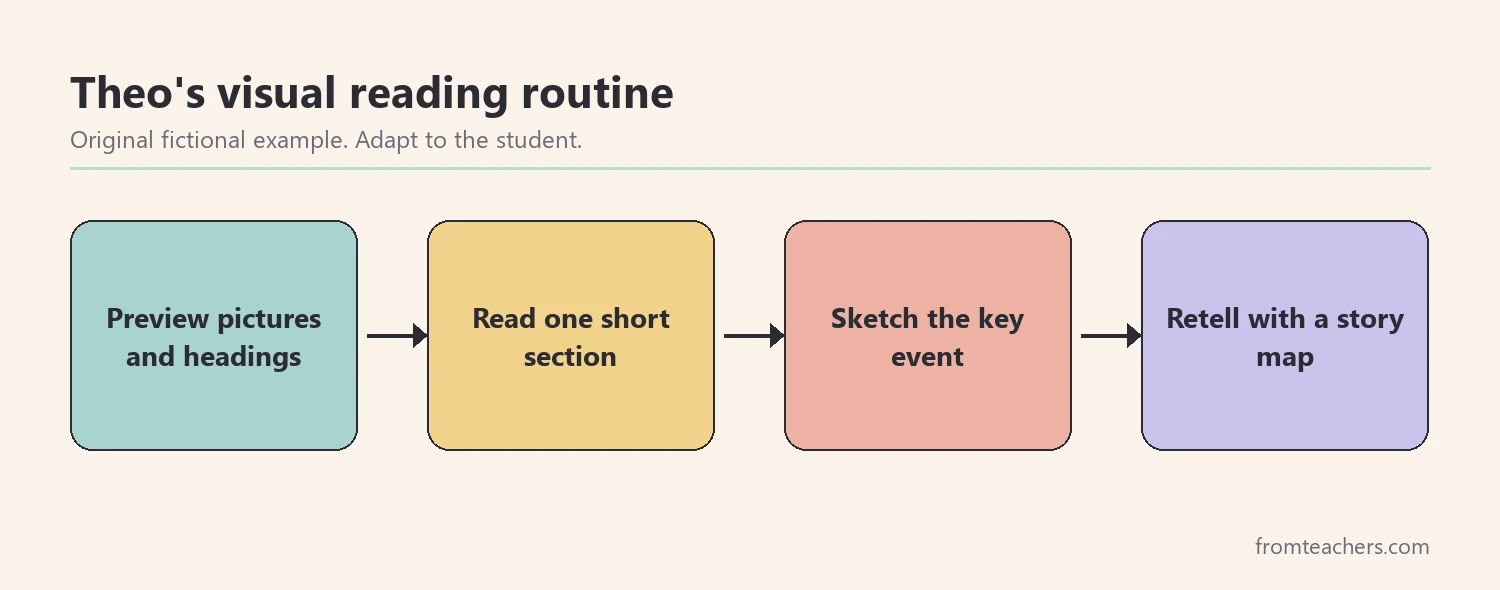
For decoding, follow the reading plan from the student’s team, which may include structured literacy instruction. For understanding, use visual supports. Before reading, preview pictures, headings, and diagrams. During reading, let the student sketch quick images of key events. After reading, use a story map to retell.
Also, consider access to grade-level content. Audiobooks or text-to-speech tools can let the student learn the same ideas as peers while reading skills continue to grow. Discuss these options with the team, since they are often written into plans as accommodations.
For Theo, his teacher used audiobooks for long science texts and kept shorter passages for reading practice. As a result, Theo kept up with class discussions and still practiced reading every day. Visual-spatial learners often do best when access and skill practice both have a place.
Vocabulary deserves attention too. When a new word appears, pair it with a picture or a quick sketch and a short, student-friendly definition. Keep a visual word wall or a personal picture dictionary. Over time, these images become anchors the student can recall when the word shows up again in reading.
4. Open visual routes into writing
Many visual-spatial learners know what they want to say but struggle to get it onto paper. The blank page, spelling, and sentence order all compete for attention. Therefore, give them a visual way in before asking for full sentences.
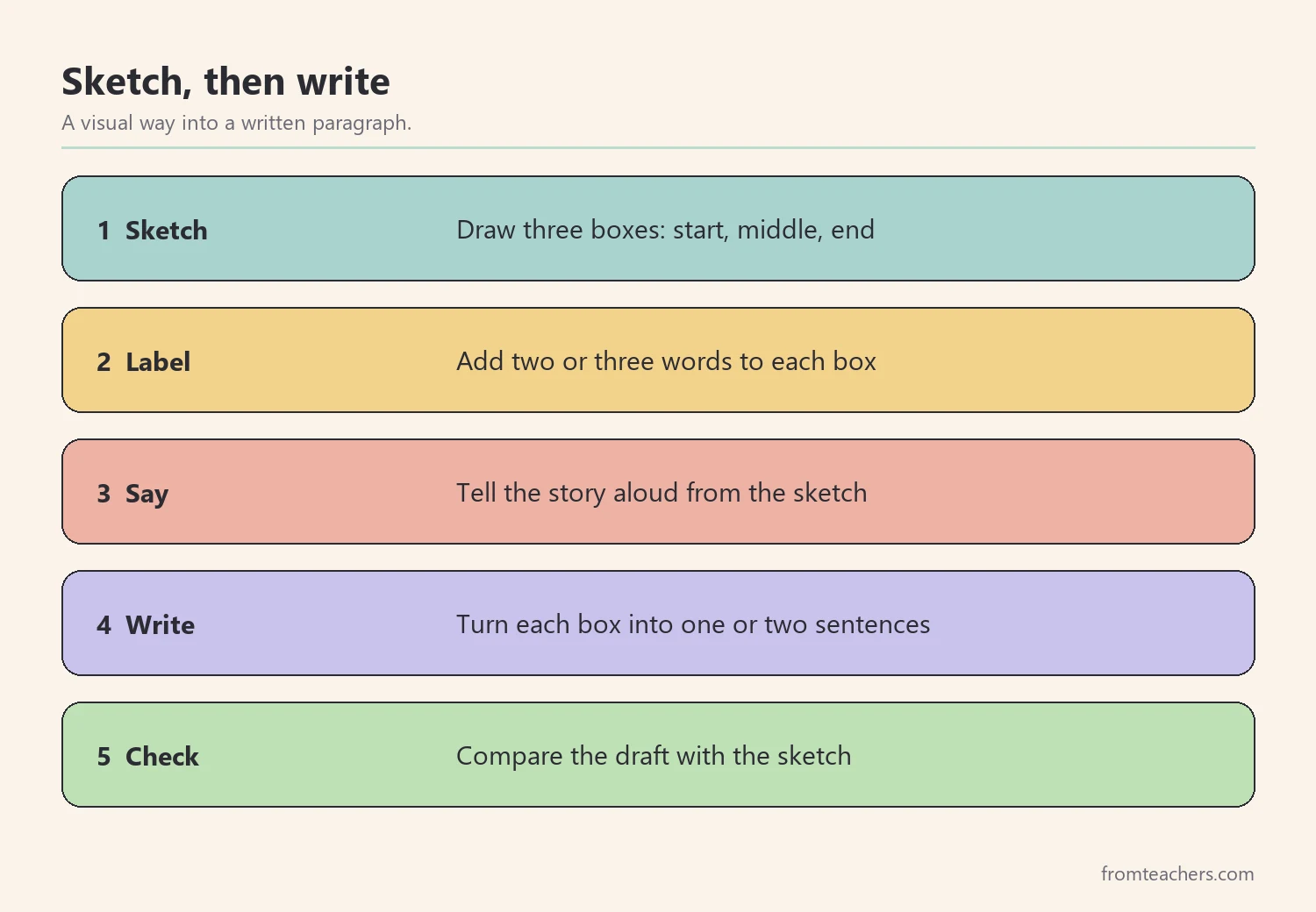
One useful approach is “sketch, then write.” The student draws a quick plan, such as a comic strip or a labeled picture, then turns each part into a sentence. Another approach uses a graphic organizer with boxes for the beginning, middle, and end.
In addition, reduce copying and handwriting load where possible. Provide printed notes instead of asking the student to copy from the board. Allow speech-to-text or typing for longer pieces, if the team agrees. These changes save energy for the thinking part of writing.
Theo’s first sketch-then-write paragraph took two sessions. By the third week, he finished a paragraph in one session and added details he never included before. His teacher noticed that his ideas were strong all along; he simply needed a visual starting point.
Also, give feedback in two parts. First, comment on ideas, details, and organization. Then, separately, point out one spelling or punctuation pattern to practice. Keeping these apart protects the student’s motivation to share ideas, which many visual-spatial learners lose after years of red-marked pages.
Math writing can follow the same pattern. Let the student draw the problem first, then write the number sentence, then explain in words. Many visual thinkers solve problems in their heads through images, so the drawing is often the natural first step.
5. Give time and review progress for visual-spatial learners
Finally, address processing speed. Some visual-spatial learners work slowly on timed tasks, even when they understand the content well. Extra time, shorter assignments that still cover the key skills, and fewer items per page can reduce pressure. Talk with the team about which supports belong in the student’s plan.
Look closely at where time goes. Is the student slow to start, slow to read the directions, or slow to write the answer? Each needs a different fix. For example, reading the directions aloud saves time at the start, while a word bank or a partly filled organizer saves time during writing. For Theo, most time was lost copying from the board, so printed notes made the biggest difference. Small, targeted changes like these often help more than simply adding extra minutes to every task.
Choose one or two simple measures to track. For Theo, the team tracked paragraphs completed in one session and long texts he could retell using a story map. They reviewed the record every four weeks.
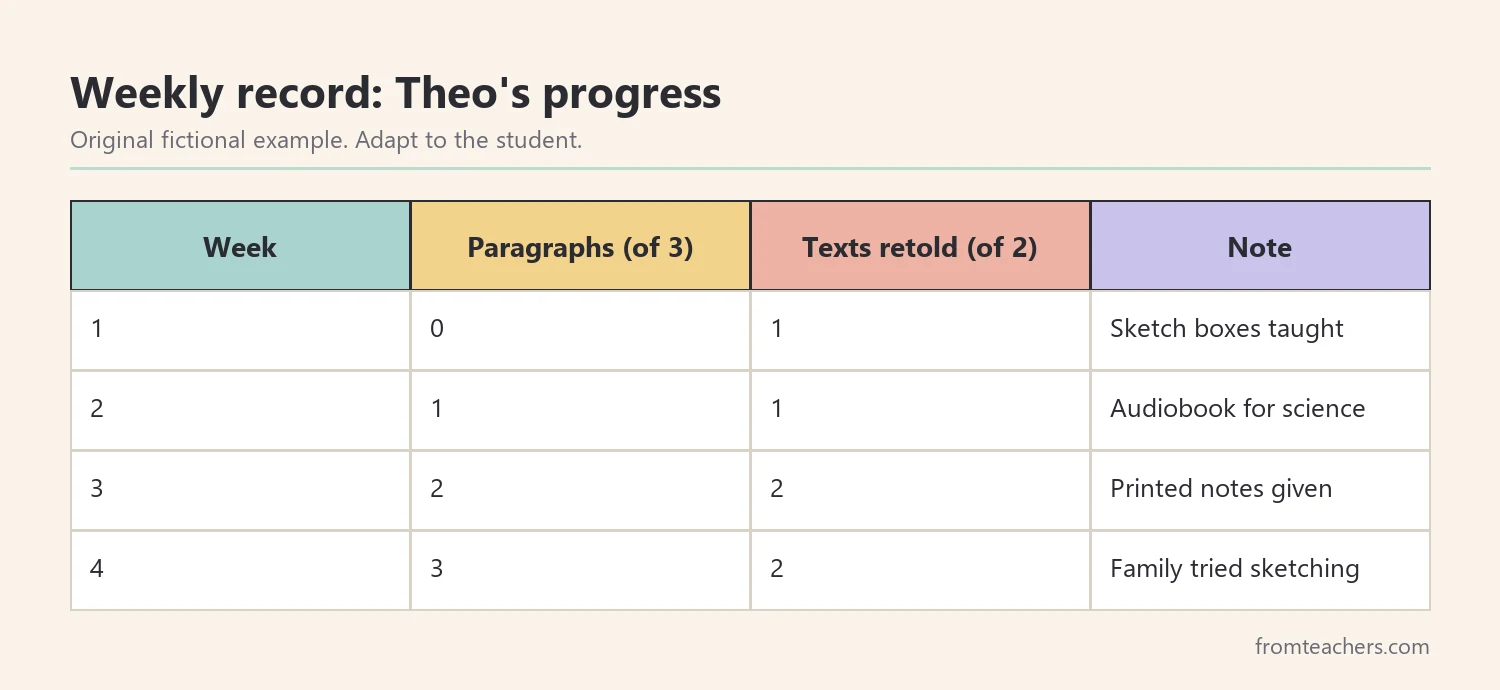
Include the student in the review. Ask which visual tools help most and which feel unnecessary. Visual-spatial learners often have clear opinions about how they learn, and their answers can guide the next step. Also, share progress with the family and suggest one or two strategies to try at home, such as sketching before homework writing.
Change one support at a time, so you can see what works. When a support becomes a habit, keep it and add the next one. Over time, the student builds a personal toolkit that will help in every grade.
Finally, pass the toolkit on. A one-page summary of what works, such as “diagram first, sketch-then-write, printed notes, audiobooks for long texts,” helps next year’s teachers start strong. Visual-spatial learners lose less time each fall when their supports travel with them.
Remember that progress may look uneven. A student can leap ahead in written ideas while reading speed grows slowly. That is normal, and it is a reason to track more than one measure so that real gains are not hidden.
Common mistakes and how to avoid them
- Focusing only on weaknesses. Start with strengths and use them to teach harder skills.
- Using too many colors and visuals. Keep visual tools simple and consistent.
- Mixing reading practice with content learning. Give access to content while skills grow.
- Grading ideas by handwriting. Separate the quality of ideas from spelling and neatness.
- Ignoring speed. Plan time supports with the team instead of hoping the student catches up.
Questions teachers and parents ask about visual-spatial learners
Is being a visual-spatial learner a diagnosis?
No. It describes a way of thinking and learning, not a diagnosis. Some visual-spatial learners also have a learning disability, which only qualified professionals can identify through evaluation.
Are learning styles the same thing?
Not exactly. Research has not shown that matching teaching to a single preferred learning style improves results. However, visual supports such as diagrams and graphic organizers are widely used and can help many students understand and remember content.
How can I support reading without lowering expectations?
Give access to grade-level ideas through audiobooks or read-alouds, and keep separate, targeted reading practice. Both matter, and they work well together.
What can parents do at home?
Parents can encourage building, drawing, and puzzles, and let the child sketch ideas before writing homework. Reading aloud together also supports understanding and vocabulary.
Can these supports go into an IEP or 504 plan?
Yes, supports such as extra time, printed notes, or text-to-speech are often included. Talk with the student’s team about what fits their plan.
Related reading: Dyslexia in Education: Understanding, Innovating, and Empowering, Accommodations vs Modifications in Special Education: The Difference Explained, and Best Assistive Technology for Special Education Classrooms.
A companion resource for visual-spatial learners:
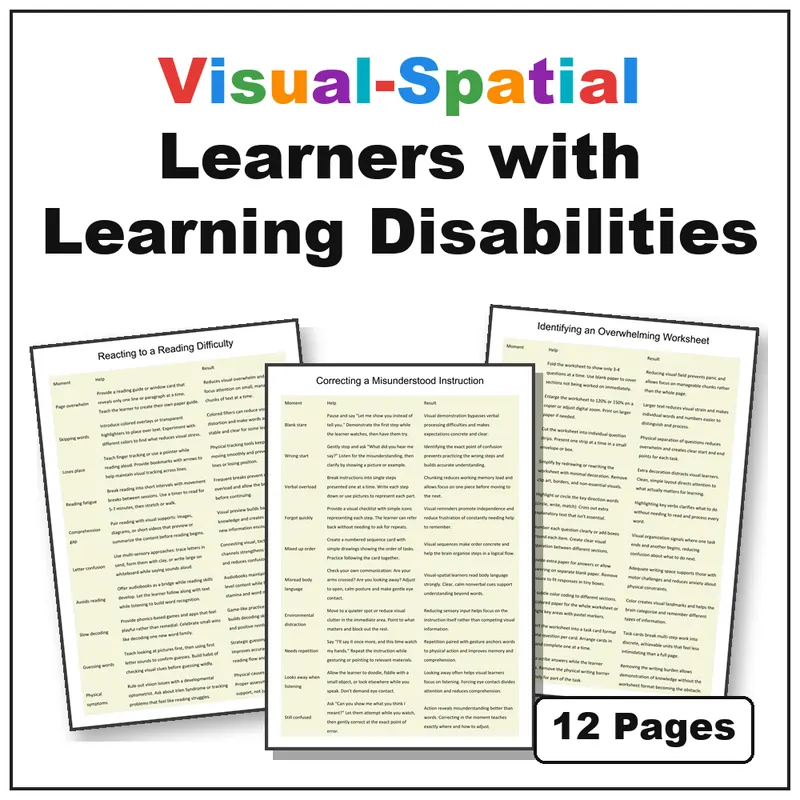
Visual-Spatial Learners with Learning Disabilities | Visual Learning Strategies: 12 printable strategy tables that give a clear form of help and the result it brings for students who show visual strengths while struggling with reading, written expression, and processing speed.
Sources and scope
- Understood.org: practical articles for families and teachers on learning differences, reading, and writing.
- Learning Disabilities Association of America: information and support related to learning disabilities.
- CAST: the Universal Design for Learning framework, including multiple ways to represent information.
- IRIS Center, Vanderbilt University: free modules on accommodations and evidence-based instruction.
This guide covers everyday classroom and home strategies for students who think visually and have learning difficulties. It does not cover diagnosis or reading intervention programs, which belong to qualified professionals and the student’s team.
Key takeaways
- Start with strengths: visual-spatial learners often see patterns and the big picture.
- Teach new ideas with diagrams, models, and graphic organizers.
- Support reading with previews, sketches, and story maps, plus access tools.
- Use sketch-then-write routines and reduce copying.
- Plan time supports and review progress with the student and family.





Leave a Comment