

Special education planning time disappears in small, quiet ways. Picture Ms. Rivera, a K-5 resource teacher with a caseload of students on IEPs. Her schedule shows a 45-minute planning block every day. Yet on Monday she covers a class for an absent colleague, on Tuesday she runs a progress check, and on Wednesday an IEP meeting runs long. By Friday, she has planned almost nothing during the school day.
This guide helps you make that hidden workload visible and do something about it. You will learn how to list what planning really includes, track where your time goes, compare demands to the time you are given, protect the minutes you have, and bring clear data to your administrator. By the end, you will have a short, fact-based case for protected time.
Examples are fictional. Adapt to your own school, contract, and local policies. This is guidance, not legal or employment advice.
At a glance
- Planning in special education includes far more than lesson plans.
- Track your planning blocks for two weeks before you ask for change.
- Compare caseload demands with the time your schedule actually protects.
- Batch routine tasks and use templates to make every protected minute count.
- Bring one clear summary and one specific request to your administrator.
1. Name what special education planning time really covers
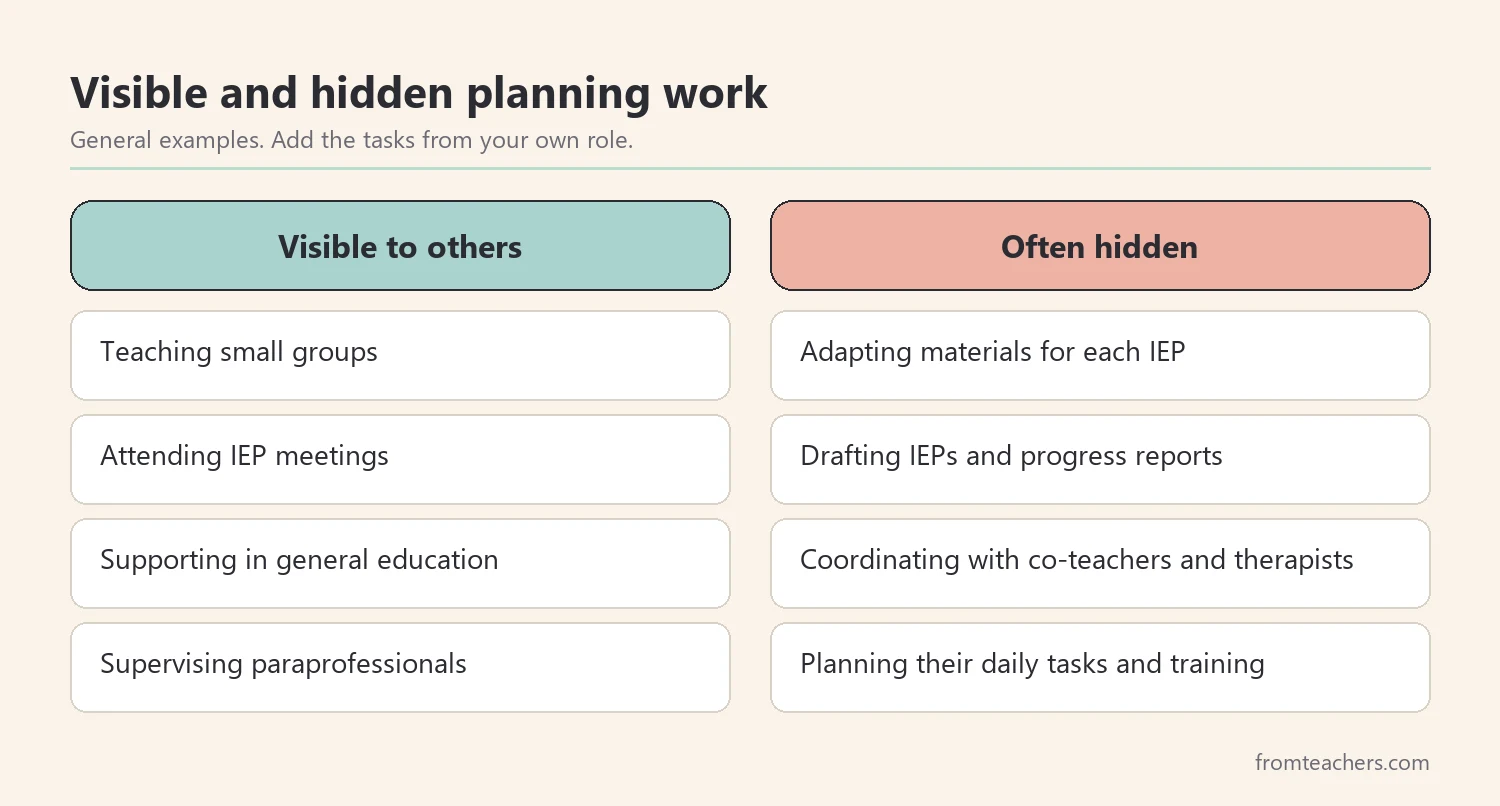
First, write down everything that planning means in your role. Many people outside special education picture lesson plans and copies. However, special educators also adapt materials, write IEP drafts, prepare progress reports, coordinate with therapists, plan for paraprofessionals, and communicate with families.
In other words, the work has a visible part and a hidden part. Colleagues see you teach small groups and attend meetings. They rarely see the hours spent adjusting a reading passage to three levels, scoring data, or rewriting a behavior plan after a hard week.
| Visible to others | Often hidden |
|---|---|
| Teaching small groups | Adapting materials for each IEP |
| Attending IEP meetings | Drafting IEPs and progress reports |
| Supporting in general education | Coordinating with co-teachers and therapists |
| Supervising paraprofessionals | Planning their daily tasks and training |
For example, Ms. Rivera made a list during one quiet afternoon. She found eleven regular tasks that depended on special education planning time, and only three of them appeared anywhere in her written job description. That list became the foundation for everything that followed.
Therefore, start your own list today. Keep it simple: one line per task, with a rough note on how often it happens. You will use this list in every later step. Once the hidden tasks are written down, special education planning time stops looking like a luxury and starts looking like part of the job.
2. Track special education planning time for two weeks
Next, collect your own data. Feelings of overload are real, but numbers are easier to discuss calmly. A two-week log is long enough to show a pattern and short enough to finish.
Use four columns: minutes scheduled for planning, minutes lost to coverage or other duties, minutes used for compliance paperwork, and minutes used for instructional planning. In addition, keep a separate note of planning you did before or after school. Fill in the log at the end of each day, not at the end of the week.
Also, decide on simple rules before you start. Count coverage as any time you supervise or teach a group that is not on your schedule. Count paperwork as IEP drafting, progress reports, and required forms. Clear rules make your special education planning time log easier to explain later.
Keep the categories honest. Paperwork is important work, so do not hide it. Instead, show how it competes with instructional planning inside the same limited block.
For Ms. Rivera, each week had five 45-minute blocks, or 225 scheduled minutes. In week 1, she lost 90 minutes to coverage, spent 100 minutes on IEP paperwork, and had 35 minutes for lesson planning. In week 2, she lost 135 minutes to coverage, spent 70 on paperwork, and had 20 for lesson planning. Both weeks add up to 225 minutes. Meanwhile, she logged 240 minutes of planning outside school hours in week 1 and 300 minutes in week 2.
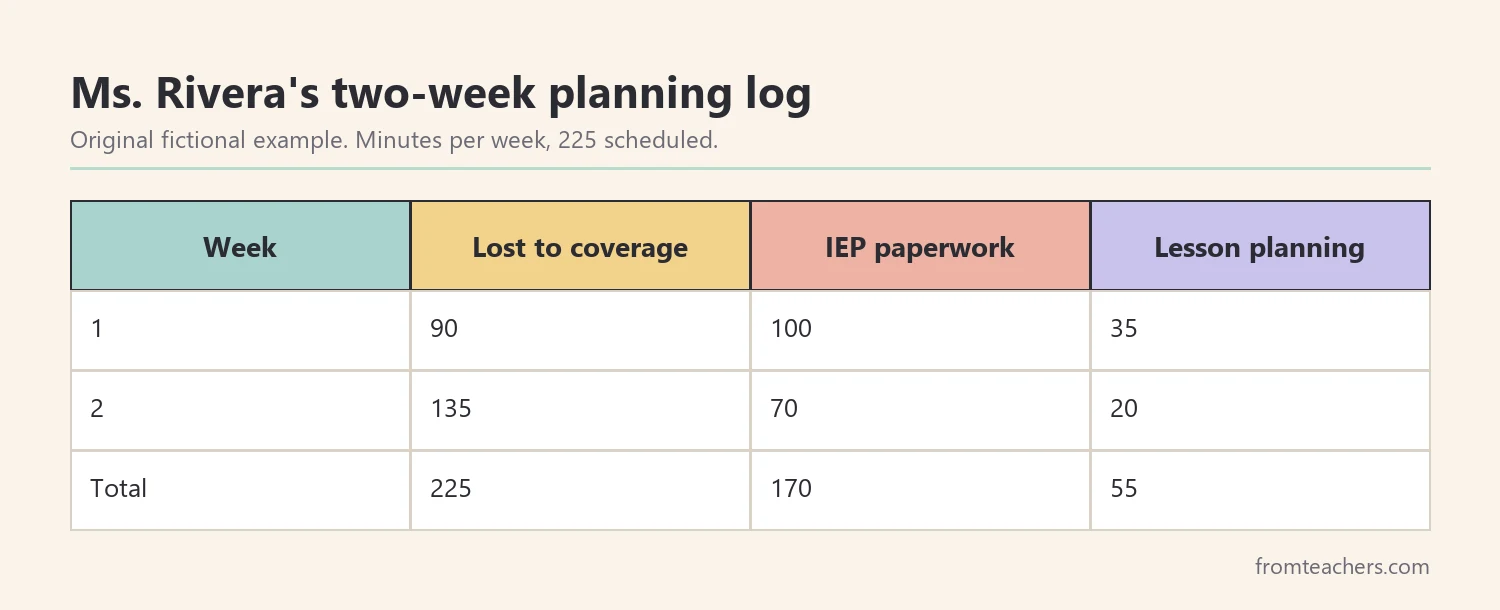
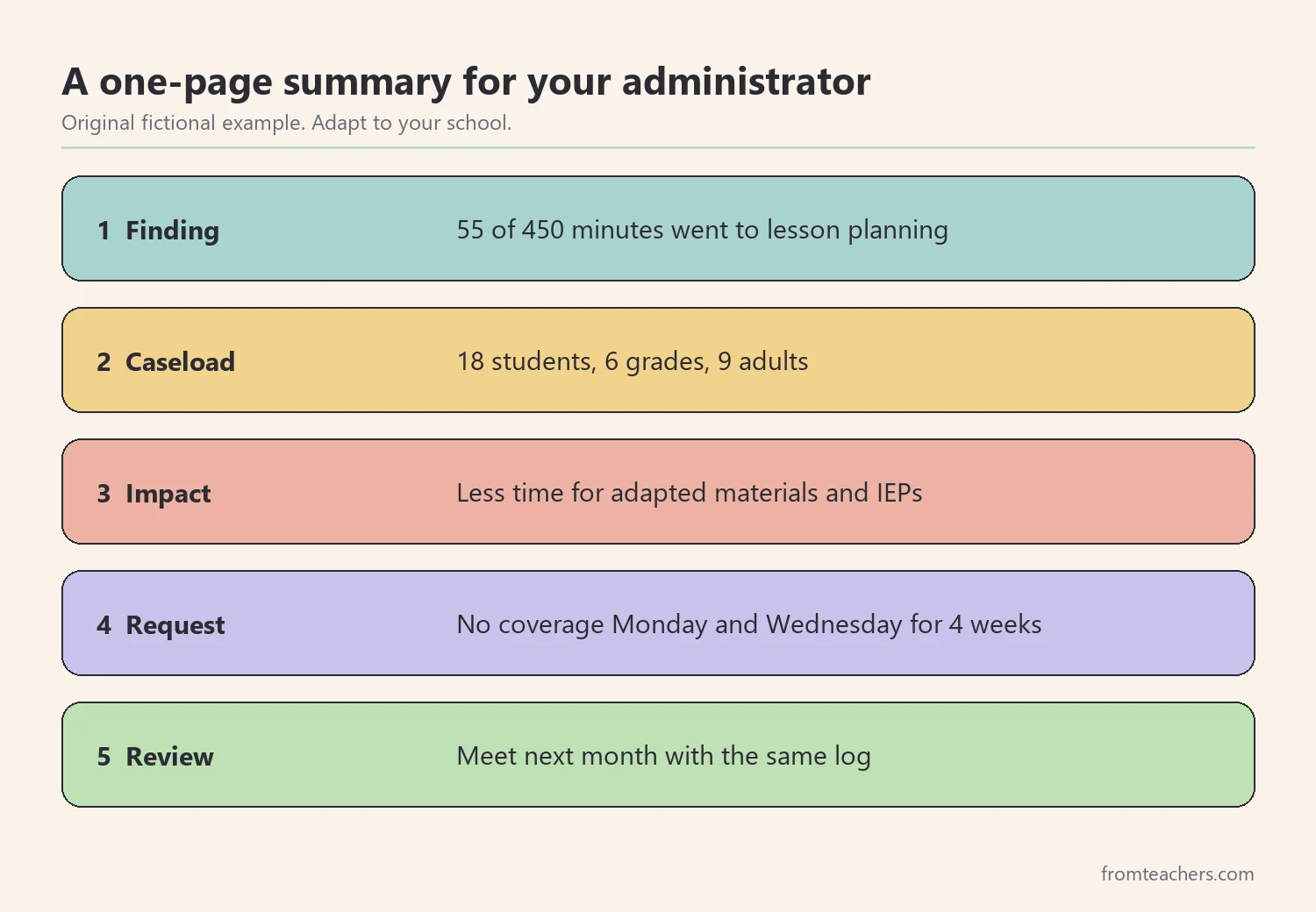
As a result, Ms. Rivera could say something specific: “Out of 450 scheduled minutes over two weeks, 55 went to lesson planning.” That sentence is far more persuasive than “I never have time.” In the same way, the 540 minutes of after-hours work across two weeks shows where the missing special education planning time actually went: into evenings and early mornings.
3. Compare caseload demands with special education planning time
Then, connect your log to your caseload. Special education planning time should match the size and complexity of the work, not only the bell schedule. A teacher with a large caseload, several grade levels, and many service minutes faces more planning than the schedule usually shows.
List the main demands that come from your caseload: number of students, number of IEPs due this year, number of grade levels and subjects you adapt for, and the number of adults you coordinate with. Next to it, write how much protected time you actually received, based on your log.
| Demand | Ms. Rivera’s caseload |
|---|---|
| Students on caseload | 18 |
| Annual IEPs due this year | 18 |
| Grade levels supported | K to 5 (6 grades) |
| Adults coordinated weekly | 7 teachers, 2 paraprofessionals |
Also, look at service minutes. When coverage expectations pull you away from planning, they can also pull you away from students’ scheduled services. If that happens, it is not only a workload problem. It may affect whether students receive the services written in their IEPs, which is a question for your administrator and special education leadership.
If you want ready-made visuals for this conversation, the resource on why special education teachers lack planning time includes a caseload demands versus scheduled planning comparison and a coverage and service minutes flowchart you can adapt.
For Ms. Rivera, the comparison was striking. Eighteen IEPs, six grade levels, and nine adults to coordinate, against 55 minutes of lesson planning in two weeks. Put side by side, these numbers explained the gap better than any complaint could. In short, special education planning time had not grown with her caseload.
4. Protect and batch special education planning time
While you advocate for more time, make the most of the minutes you already have. Protecting special education planning time starts with small habits you control.
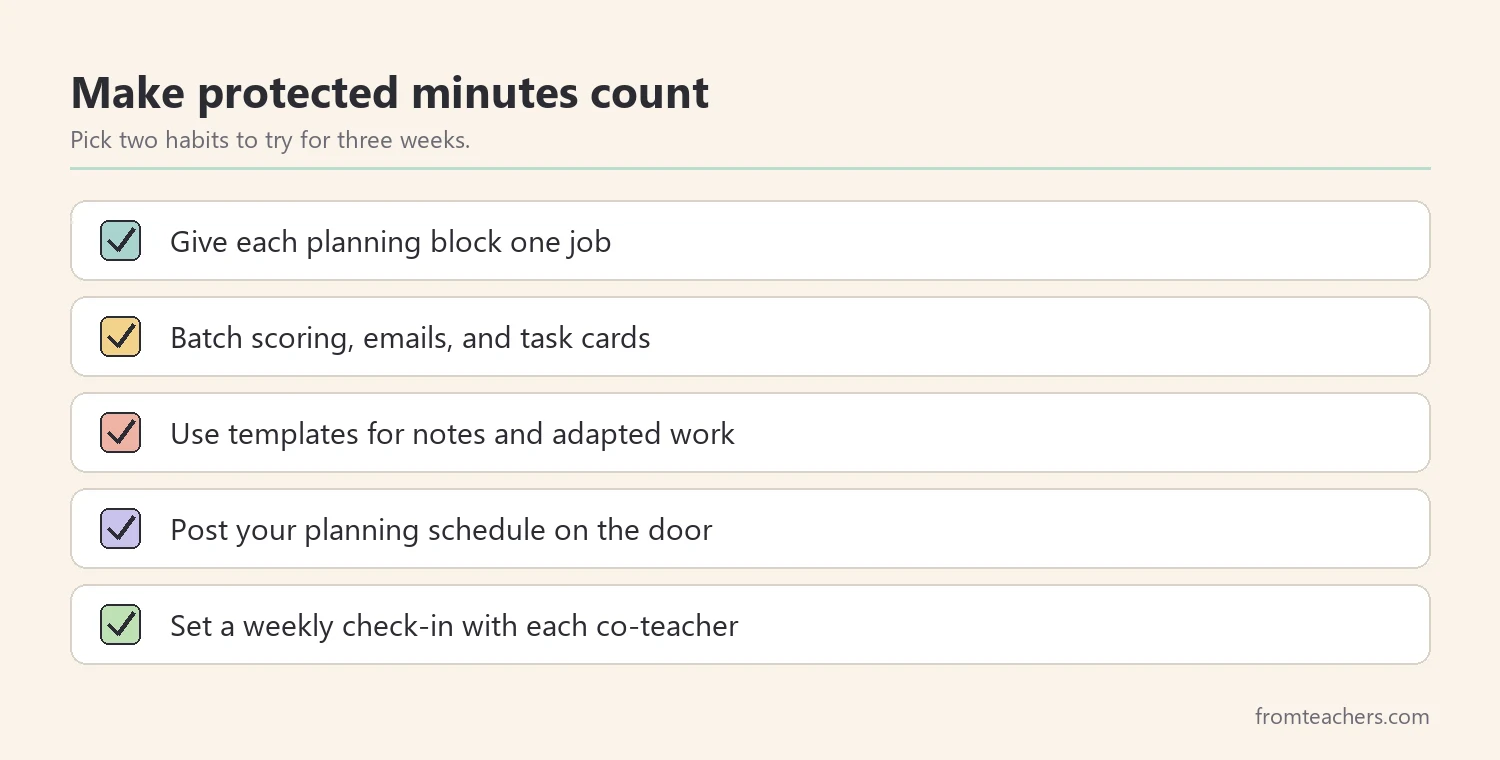
First, give each planning block one job. For example, Monday for IEP drafting, Tuesday for adapting materials, Wednesday for data, Thursday for family communication, and Friday for planning with paraprofessionals. When one block is lost, you know exactly what moved.
Second, batch similar tasks. Score all data sheets at once, write all family updates in one sitting, and prepare a week of paraprofessional task cards together. Batching reduces the time lost to switching between very different jobs.
Third, build templates. A standard progress note, a short email for families, and an adapted worksheet format can save many minutes every week. Also, share templates with colleagues, because the whole team benefits.
Finally, post your planning schedule on your door or shared calendar. Many interruptions happen simply because others do not know the time is protected. A visible schedule invites respect without a confrontation.
In addition, protect time with colleagues, not only from them. A ten-minute weekly check-in with each co-teacher can replace many hallway conversations and scattered emails. When collaboration has a home on the calendar, it stops eating into special education planning time in small, unplanned pieces.
Ms. Rivera tried this for three weeks. She kept a single “planning day” label on each block and batched her family emails into Thursday. Consequently, her Thursday block alone saved her from writing emails late at night.
5. Advocate for special education planning time with data
Now you are ready to talk with your administrator. Advocacy works best when it is calm, brief, and specific. Bring data, not complaints, and bring a proposal, not only a problem.
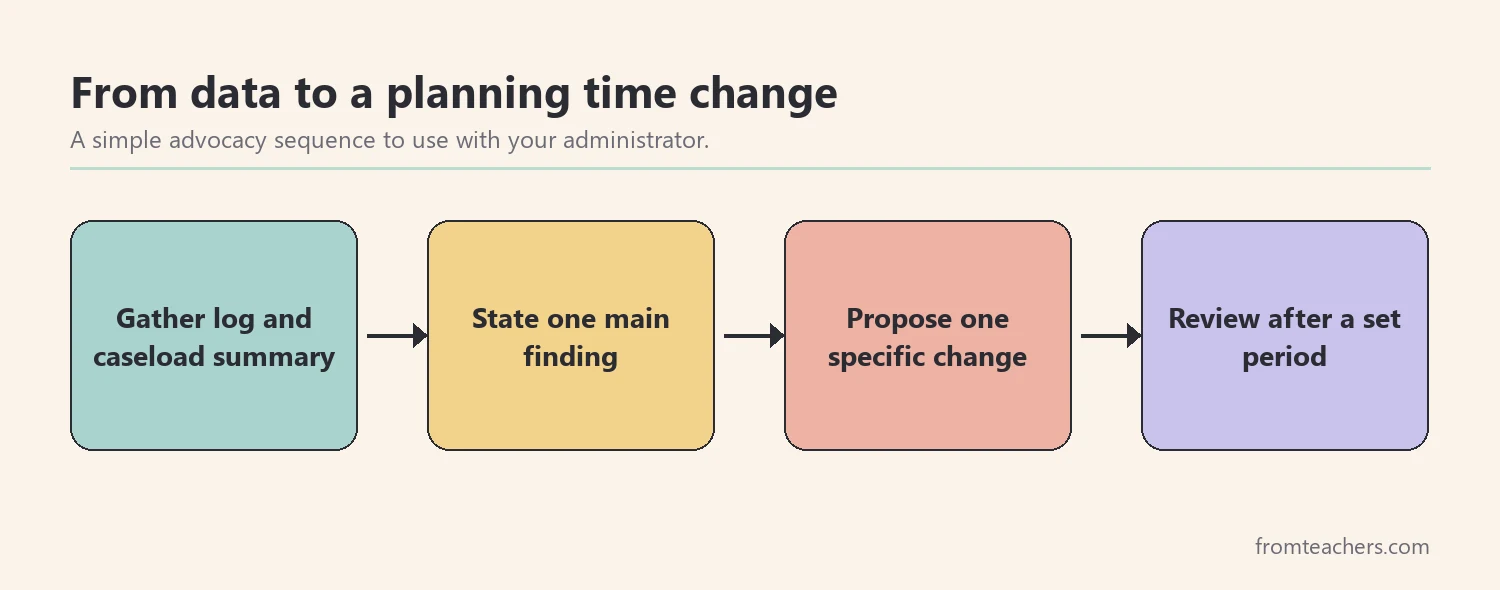
Follow a clear sequence. Start by gathering your log and caseload summary. Then, summarize the main finding in one sentence. After that, propose one specific change, such as protecting two planning blocks a week from coverage. Finally, agree on a date to review whether the change helped.
Keep the meeting focused on students. Explain how lost special education planning time affects adapted materials, IEP quality, and services. Most administrators want the same outcomes, and data helps them make the case to others.
In addition, check your local contract or district policy before the meeting. Some agreements address planning time or duty assignments. If you are unsure, your union representative or district office can tell you what applies.
Ms. Rivera brought a one-page summary to her principal. She shared the 55-out-of-450 figure, her caseload table, and one request: no coverage during her Monday and Wednesday blocks for four weeks. Her principal agreed to try it, and they set a review meeting for the following month.
At the review, bring the same log format so results are easy to compare. If the change helped, ask to keep it and consider a second step. If it did not, look at what got in the way and adjust the request. Either way, regular reviews keep special education planning time on the agenda instead of letting it slip back into the background.
Common mistakes and how to avoid them
- Arguing from frustration alone. Fix: track two weeks of data first and lead with one clear number.
- Asking for everything at once. Fix: request one specific, testable change with a review date.
- Hiding paperwork time. Fix: log compliance tasks honestly, because they are part of the job.
- Leaving blocks without a purpose. Fix: give each block one job so lost time is easy to see.
- Working in isolation. Fix: compare notes with other special educators and share templates.
Questions teachers and parents ask about special education planning time
Is special education planning time required by law?
Federal special education law focuses on students’ rights and services, not on teacher schedules. Planning time is usually set by state rules, district policy, or local contracts. Check your local agreement or ask your district office. Even so, protected special education planning time affects how well IEP services are prepared and delivered.
How much planning time should a special educator have?
There is no single answer, because caseloads and roles vary widely. A better question is whether your protected time matches your actual demands. Your two-week log helps answer that for your own role.
What if I keep getting pulled for coverage?
Log each instance with the date and minutes lost. Then share the pattern with your administrator, along with any effect on student services. A clear record often leads to a practical solution. For instance, some schools build a short substitute list or rotate coverage duties more evenly across staff once the pattern is visible.
How can parents help?
Parents can ask how the team plans for their child and thank teachers for adapted materials. In addition, they can raise questions about services at IEP meetings. Respectful questions from families often support teachers’ efforts.
Can general education colleagues help protect this time?
Yes. Co-teachers can share planning for joint lessons and agree on a regular check-in time. Also, a shared calendar helps everyone see when special educators are unavailable.
Related reading: Addressing Challenges in Special Education: Practical Strategies for Educators, The Power of Data Tracking in Special Education, and The Crucial Role of Special Educators in the USA.
A companion resource for special education planning time:
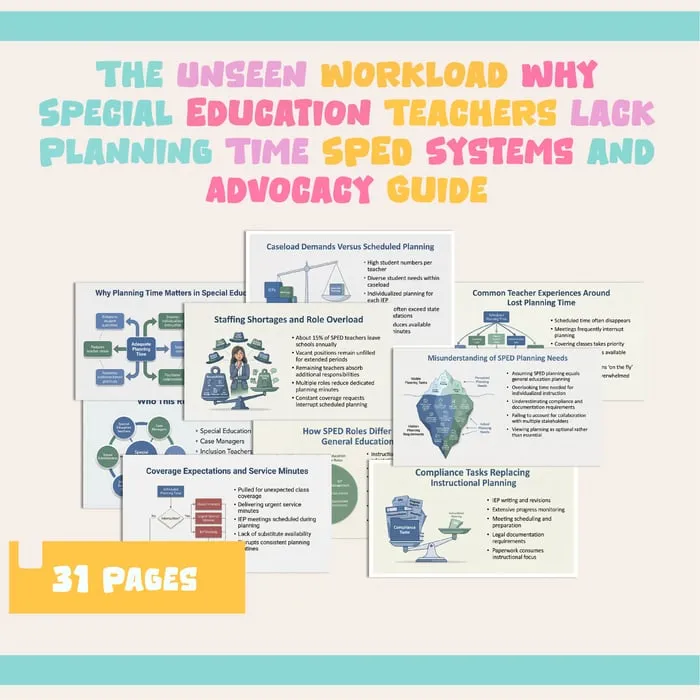
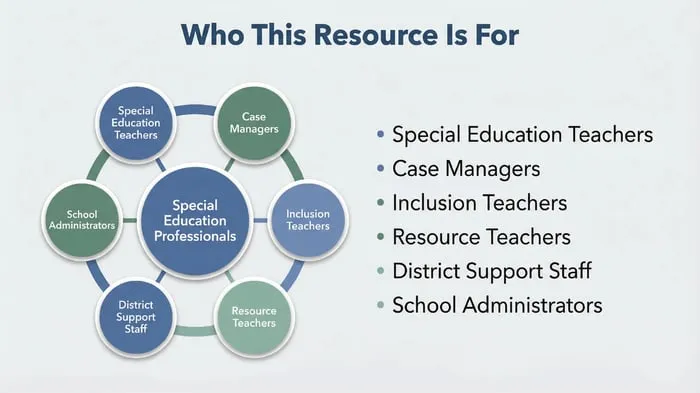
The Unseen Workload: Why Special Education Teachers Lack Planning Time: a visual resource that explains the hidden scope of SPED planning, compares caseload demands with scheduled planning, and gives teachers and administrators language for advocating for protected time.
Sources and scope
- IDEA, U.S. Department of Education: the federal law behind IEPs and special education services.
- Council for Exceptional Children: a professional association for special educators with resources on practice and working conditions.
- IRIS Center, Vanderbilt University: free modules on IEPs, data collection, and collaboration.
- Understood.org: plain-language articles on IEPs and working with school teams.
This guide covers practical ways for special educators to document and advocate for planning time. It does not give legal or contract advice, which depends on your state, district, and local agreements.
Key takeaways
- Special education planning time covers many hidden tasks beyond lesson plans.
- A two-week log turns frustration into clear, shareable numbers.
- Compare caseload demands with the time your schedule really protects.
- Give each block one job, batch tasks, and use templates.
- Bring one summary and one specific request, then review the change together.






Leave a Comment