
Navigating demand avoidance and school refusal requires specialized approaches that address the underlying anxiety and need for autonomy in students with PDA-style profiles. This comprehensive guide provides educators and parents with practical strategies for demand avoidance and effective interventions for school refusal challenges. Discover how understanding PDA profiles can transform your approach to supporting students who struggle with attendance and engagement.

What Are PDA-Style Profiles?
Pathological Demand Avoidance (PDA) profiles represent a pattern of behavior where individuals experience extreme anxiety when faced with everyday demands and expectations. Understanding these PDA-style behaviors is crucial for developing effective approaches to school refusal and creating supportive learning environments that reduce anxiety triggers.
Get complete strategies: Demand Avoidance and School Refusal: PDA-Style Profiles Guide
Recognizing Demand Avoidance Behaviors
Key characteristics of demand avoidance in PDA profiles include:
- Resistance to Ordinary Demands – Extreme avoidance of everyday expectations
- Social Manipulation – Using social strategies to avoid demands
- Surface Sociability – Appearing socially engaged while avoiding compliance
- Mood Swings – Rapid changes in emotional state
- Comfort in Role-Play – Feeling safer in pretend scenarios
- Obsessive Behavior – Focusing intensely on specific interests
Effective Strategies for School Refusal
These proven approaches address school refusal in PDA profiles:
- Indirect Communication – Presenting demands as suggestions or choices
- Collaborative Problem-Solving – Involving students in solution development
- Anxiety Reduction Techniques – Creating low-demand environments
- Flexible Structure – Providing predictability with adaptability
- Interest-Based Learning – Connecting curriculum to student passions
- Gradual Exposure – Slowly increasing school attendance expectations
The PDA-Style Profiles Guide provides detailed implementation plans for each strategy.
Building Supportive School Environments
Creating success for students with demand avoidance needs requires:
- Trained Staff – Educators who understand PDA-style behaviors
- Flexible Scheduling – Accommodating varying attendance patterns
- Safe Spaces – Designated low-demand areas within school
- Collaborative Planning – Involving students in their educational plans
- Parent Partnerships – Consistent approaches between home and school
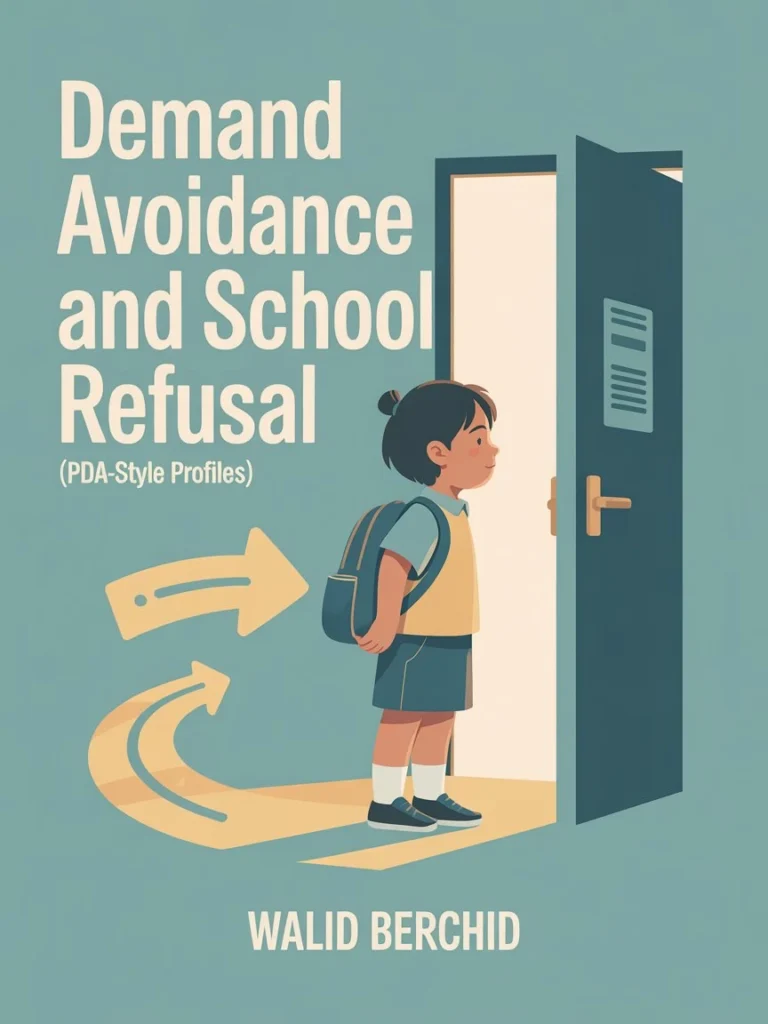
Your Complete PDA Resource
This essential PDA-Style Profiles Guide by Walid Berchid includes:
- Comprehensive assessment tools for identifying PDA-style behaviors
- Step-by-step intervention plans for school refusal
- Communication strategies for reducing demand resistance
- Classroom accommodation templates and checklists
- Parent collaboration guides and home strategies
- Professional development materials for school staff
Transform your approach to demand avoidance today! Get the PDA-Style Profiles Guide
For more resources on autism profiles and school engagement strategies, visit our educational blog.









Leave a Comment