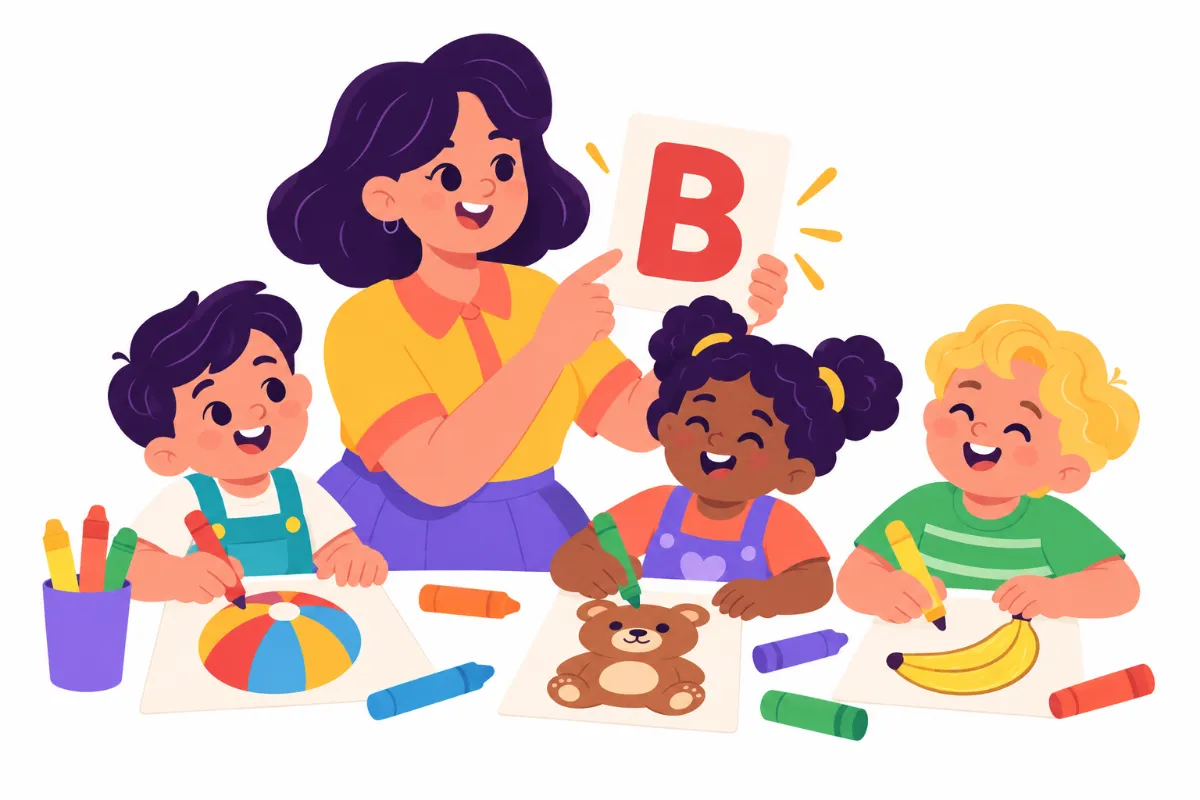

Beginning sounds activities work best when a child can hear the first sound of a word before trying to name the letter. Picture a kindergartner looking at a picture of a ball. She says “ball” with confidence, but when you ask which sound it starts with, she answers “a” because that is the last letter she sang. She knows plenty of words. She has just not yet learned to stretch out the very first sound and hold onto it.
This guide walks you through five steps you can use in a classroom, a small group, or at a kitchen table: check what the child already hears, choose a sensible letter order, teach with pictures, practice in short daily routines, and review progress. By the end, you will have a simple plan you can repeat for every letter from A to Z.
Examples are fictional. Adapt to the student’s goals and agreed supports. This is guidance, not a diagnosis.
At a glance
- Start with listening: the child should hear the first sound before matching it to a letter.
- Teach a few high-contrast letters first, then add letters that look or sound alike.
- Use real pictures, short sorts, and coloring so practice feels like play.
- Keep sessions to five to ten minutes and repeat them often.
- Record a few quick checks each week so you know which letters to revisit.
1. Check which beginning sounds the child already hears
Before you plan any beginning sounds activities, find out where the child is right now. A quick, friendly check takes about five minutes and saves weeks of teaching letters the child already knows. Most importantly, it shows you whether the child can hear sounds at all, or whether the gap is only in linking sounds to letters.
Keep the check relaxed, as if it were one of your regular beginning sounds activities. First, gather 12 picture cards with simple, familiar words such as sun, map, dog, and fish. Then say each word slowly and ask, “What sound do you hear at the start?” Accept the sound, not the letter name. For example, for “sun” the answer is the hissing /s/ sound, not “ess.”
Next, sort your results into three groups: sounds the child says easily, sounds the child says after a model, and sounds the child does not yet produce. This gives you a starting list for the next steps.
Worked example. Lena is in kindergarten. Her teacher, Ms. Rivera, shows her 12 picture cards. Lena gives the correct first sound for 7 of them right away. For 3 more she needs to hear the teacher model the sound first, and for the last 2 she guesses a letter name instead of a sound. That makes 7 plus 3 plus 2, or all 12 cards checked.
| Result | Cards | Example words |
|---|---|---|
| Says sound easily | 7 | sun, map, dog |
| Says sound after a model | 3 | fish, top, nest |
| Not yet | 2 | lamp, van |
| Total | 12 |
As a result, Ms. Rivera now knows that Lena hears most first sounds and needs focused practice on just a handful. She will not reteach the whole alphabet from scratch.
2. Choose a letter order for beginning sounds activities
Once you know which sounds are secure, decide which letters come next. Teaching A to Z in order is simple, but it is not always the easiest path for a young learner. Instead, many teachers start with letters whose sounds can be stretched, such as /m/, /s/, and /f/, because a child can hold those sounds long enough to notice them.
In addition, spread out letters that are easy to confuse. For example, b and d look alike, while /f/ and /v/ sound alike. If you teach them in the same week, the child has to learn two similar things at once. Separating them by a week or two gives each one time to settle.
A good plan also makes beginning sounds activities easier to prepare, because you know which pictures to pull. A practical approach is to pick three letters for a week: one review letter the child knows, one new letter with a stretchy sound, and one new letter with a short sound such as /t/ or /p/. That mix keeps practice successful while still moving forward.
Worked example. Based on her check, Lena’s first week includes s (review), l (new, stretchy), and t (new, short). In week two, Ms. Rivera adds v, but she waits until week three to add f, so the two similar sounds do not arrive together.
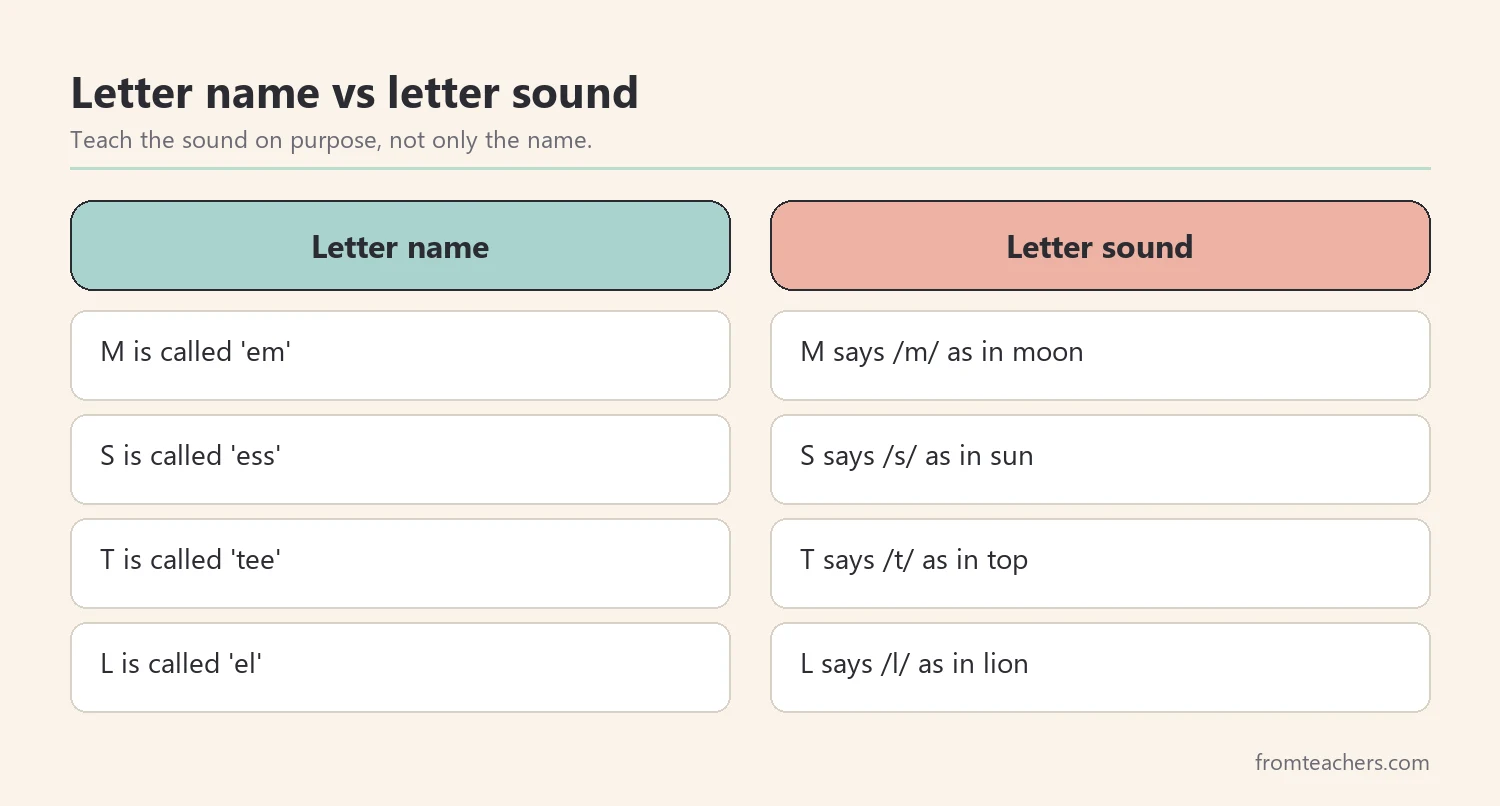
Therefore, whenever you introduce a new letter in your beginning sounds activities, say its sound clearly and keep the letter name separate. Children often mix the two, and a clear model at the start prevents months of confusion later.
3. Teach beginning sounds activities with pictures and coloring
Now the teaching begins. The best beginning sounds activities are simple. Young children learn sounds best when they can see a picture, say the word, and hear the first sound all at the same moment. Pictures also make these lessons accessible to children who are not yet reading any words.
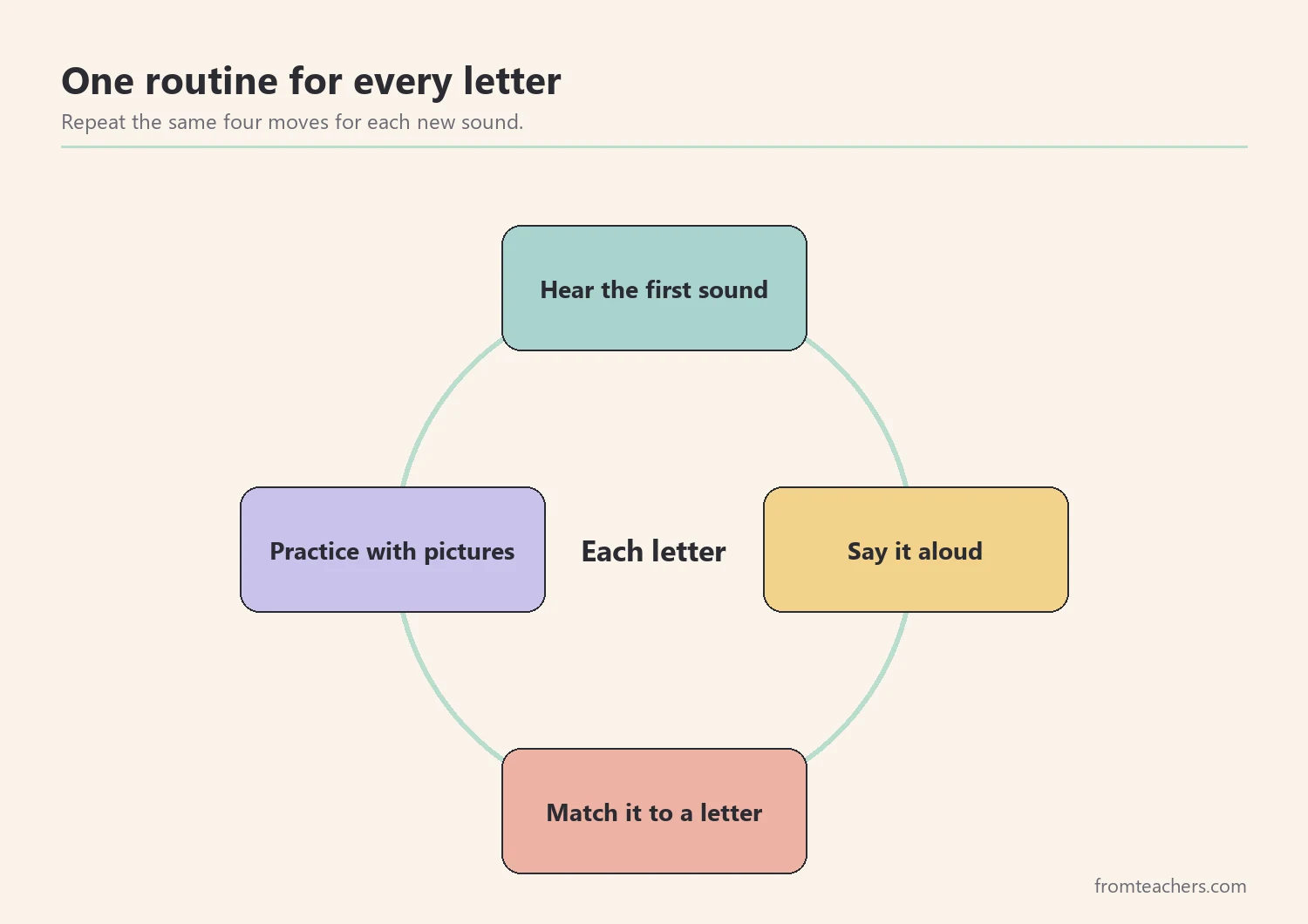
Use a simple four-part routine for each new letter. First, show the letter and say its sound three times. Second, show four pictures that start with that sound, say each word, and stretch the first sound: “Mmmm-moon.” Third, ask the child to say the words with you. Fourth, let the child color the pictures while naming them aloud.
Coloring is not filler here. While a child colors an apple, an ant, and an alligator, you can ask, “What sound does alligator start with?” several times without it feeling like a test. Moreover, the finished page becomes a picture dictionary the child can look back at.
If you want ready-made pages, the A-Z alphabet coloring posters and beginning sounds worksheets pair four labeled illustrations with each letter, which fits this routine well.
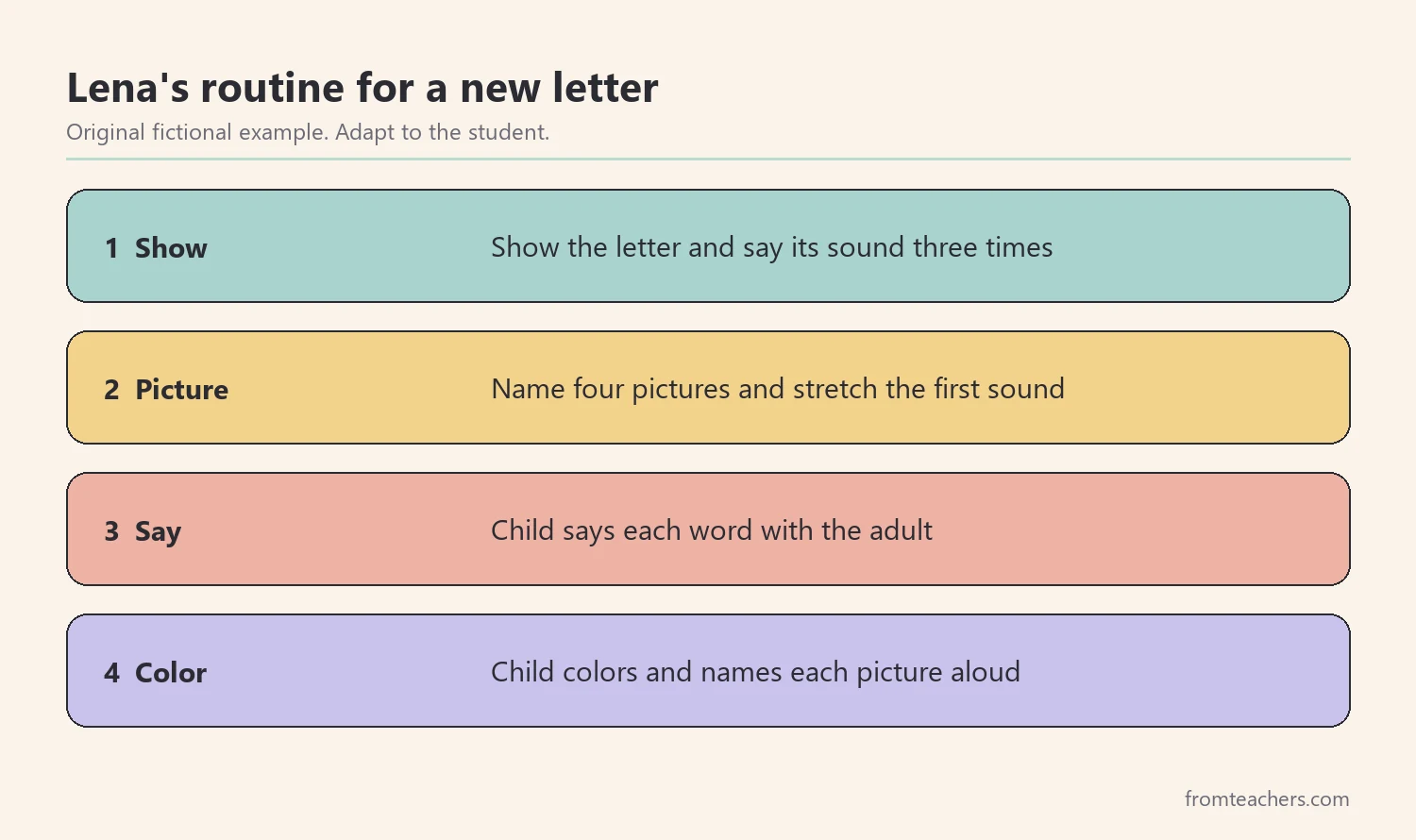
Worked example. For the letter l, Ms. Rivera shows Lena pictures of a lamp, a leaf, a lion, and a lemon. Lena says “lllion” with a long first sound, colors the lion, and then finds the lemon on her own. The whole routine takes about eight minutes.
4. Practice beginning sounds activities every day
After the first lesson, short daily practice does most of the work. Five to ten minutes a day is usually more useful than one long session a week. For this reason, plan a small menu of beginning sounds activities you can rotate without new preparation.
- Picture sort: Give the child six pictures and two letter cards. The child places each picture under the letter it starts with.
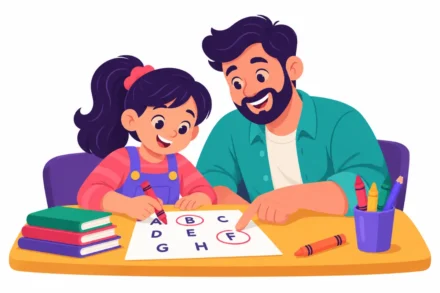
- Circle the sound: Show a picture with three letter choices underneath. The child says the word, then circles the matching letter.
- I spy: “I spy something that starts with /m/.” The child looks around the room for a match.
- Sound walk: At home or on the playground, collect three objects that start with the same sound.
- Silly names: Change the first sound of the child’s name. “Lena” becomes “Mena,” then “Sena.”
Meanwhile, keep beginning sounds activities short and end on success. If a child misses a sound, model it, let the child repeat it, and move on. Long corrections can turn a game into a chore.
Worked example. During centers, Lena completes a picture sort with s and l. She places 5 of the 6 pictures correctly on her own and fixes the sixth after Ms. Rivera models “ssssock.” At home, her dad plays I spy for /t/ and Lena finds a towel, a toy, and a tent picture in a book.
Similarly, families can use the same beginning sounds activities at home. A short note that explains the routine, plus one page a night, is enough for most children.
Adapting beginning sounds activities for different learners
Not every child responds to the same format. Some children need to move, some need fewer choices, and some need more time to answer. Fortunately, most beginning sounds activities can be adjusted in small ways without new materials.
| If the child… | Try this adjustment |
|---|---|
| Guesses quickly | Ask the child to say the word aloud before choosing |
| Feels overwhelmed | Reduce the sort to two letters and four pictures |
| Needs to move | Hide pictures around the room for a sound hunt |
| Is learning English | Name each picture together first, then ask for the sound |
For example, when Lena has a restless afternoon, Ms. Rivera turns the picture sort into a hunt. Lena walks to four pictures taped to the wall, says each word, and brings back only the ones that start with /l/. The goal stays the same, while the format fits the moment.
Likewise, a child learning English may know the object but use a different word for it at home. Naming every picture together first keeps beginning sounds activities fair, because the child is tested on sounds rather than vocabulary.
5. Review beginning sounds activities with a weekly check
Finally, check progress in a simple, consistent way. Choose 8 picture cards for the letters you have taught and ask the child for the first sound of each one once a week. Write down how many were correct. You do not need a long assessment, just the same short check each time so the numbers can be compared.
Look for two patterns. First, are the correct answers rising week by week? Second, are the same one or two sounds still missed? If so, return those letters to the daily routine and add a few more pictures for them.
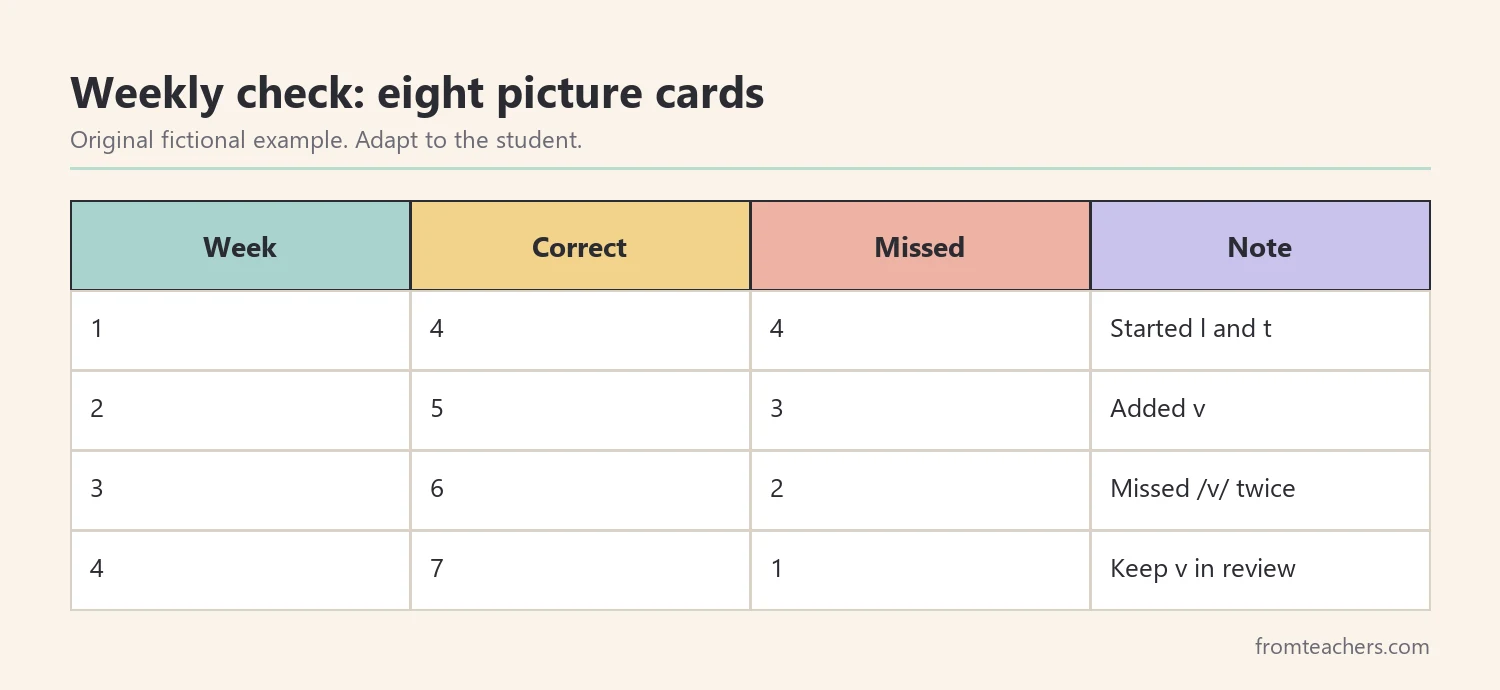
Worked example. Lena’s checks across four weeks show 4, 5, 6, and then 7 correct out of 8 cards. In weeks 3 and 4 the only sound she still misses is /v/. As a result, Ms. Rivera keeps v in her review letters for another week and pairs it with pictures of a van and a vest.
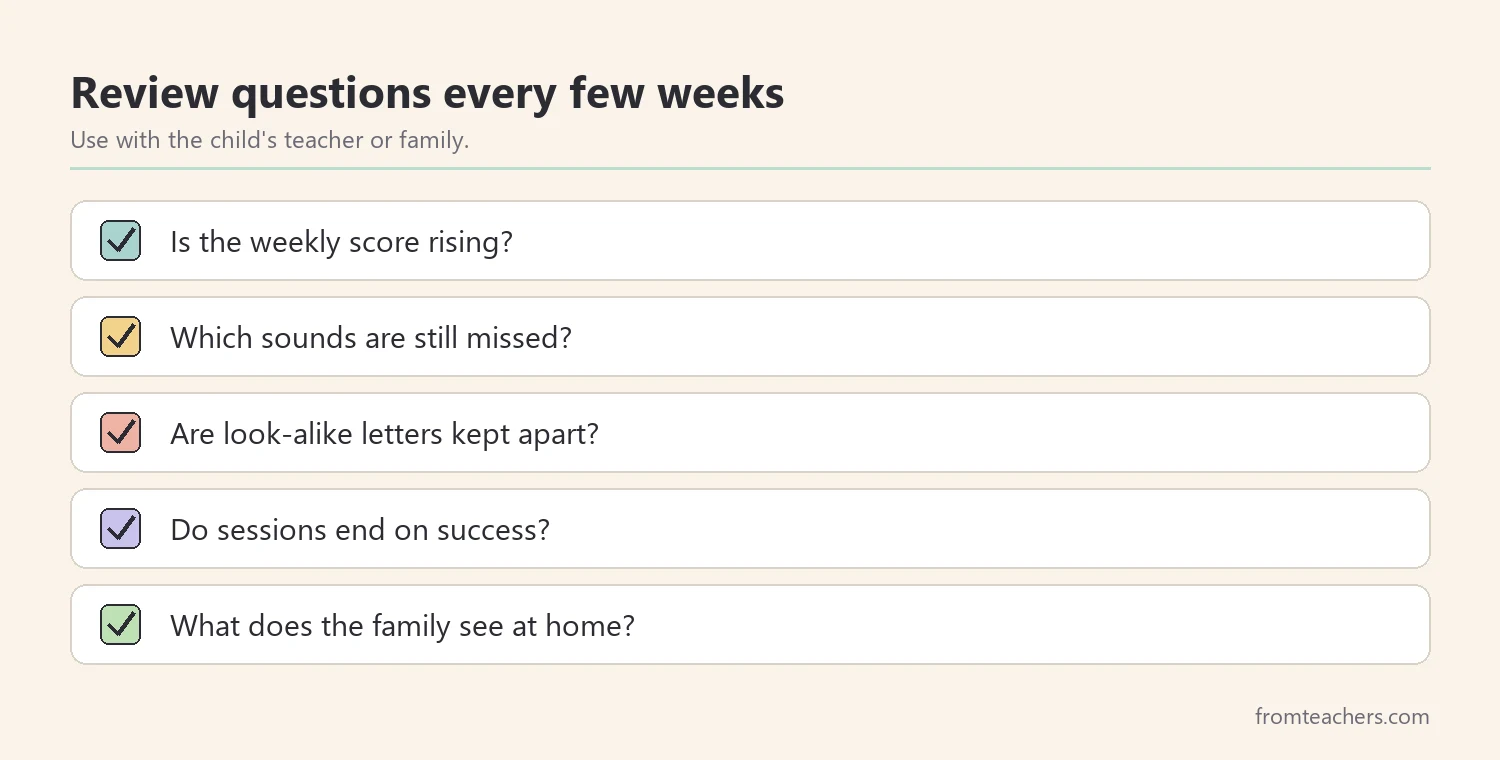
In short, a quick weekly record turns guessing into planning, and it shows which beginning sounds activities are paying off. It also gives you something concrete to share with families during conferences.
Common mistakes and how to avoid them
- Teaching letter names as if they were sounds. Fix: say the sound clearly, such as /m/, and keep the name “em” for alphabet songs.
- Adding an “uh” to short sounds. Fix: say /t/ crisply rather than “tuh,” so the child can blend it later.
- Using pictures with unclear names. Fix: name each picture first. A “bunny” could also be a “rabbit,” which changes the sound.
- Introducing look-alike letters together. Fix: separate b and d, or p and q, by at least a week.
- Making practice too long. Fix: stop after five to ten minutes while the child is still succeeding.
Questions teachers and parents ask about beginning sounds activities
At what age should children start beginning sounds activities?
Many children start noticing first sounds in preschool or pre-K, and kindergarten programs usually teach them directly. However, every child is different. Start with listening games and watch for interest rather than following a strict age.
Should I teach letters in A to Z order?
You can, and many printed resources follow that order. Still, starting with stretchy sounds and spacing out similar letters often helps children succeed sooner. Either way, regular review matters more than the exact order.
What if my child keeps saying the letter name instead of the sound?
This is very common. Model the sound, ask the child to copy it, and praise the sound itself. Over time, consistent modeling helps the child separate names from sounds.
How long should one session last?
For most young children, five to ten minutes is plenty. Short, frequent sessions keep attention high and make it easier to repeat beginning sounds activities across the week.
Are worksheets enough on their own?
Worksheets are useful for practice and review, but they work best alongside talking, listening games, and hands-on sorts. Say the words aloud every time, even on a printed page.
Related reading: Learning Styles Student Success Guide, 5 Practical Teaching Tips to Boost Classroom Focus and Learning, and Dyslexia Solutions in the Classroom: Evidence-Based Strategies for Success.
A companion resource for beginning sounds activities:
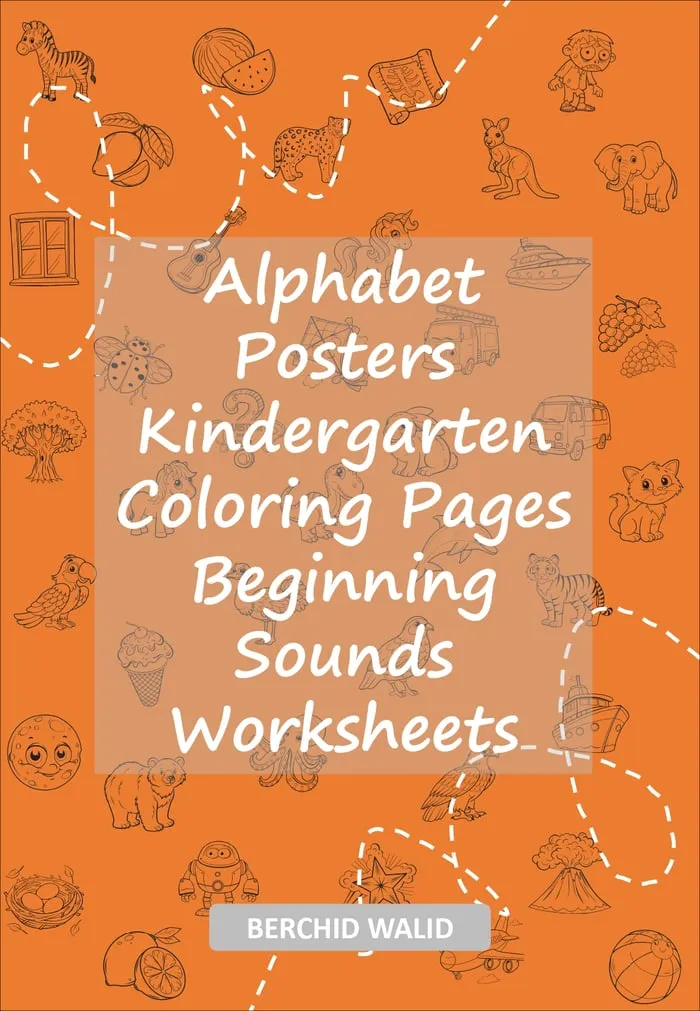
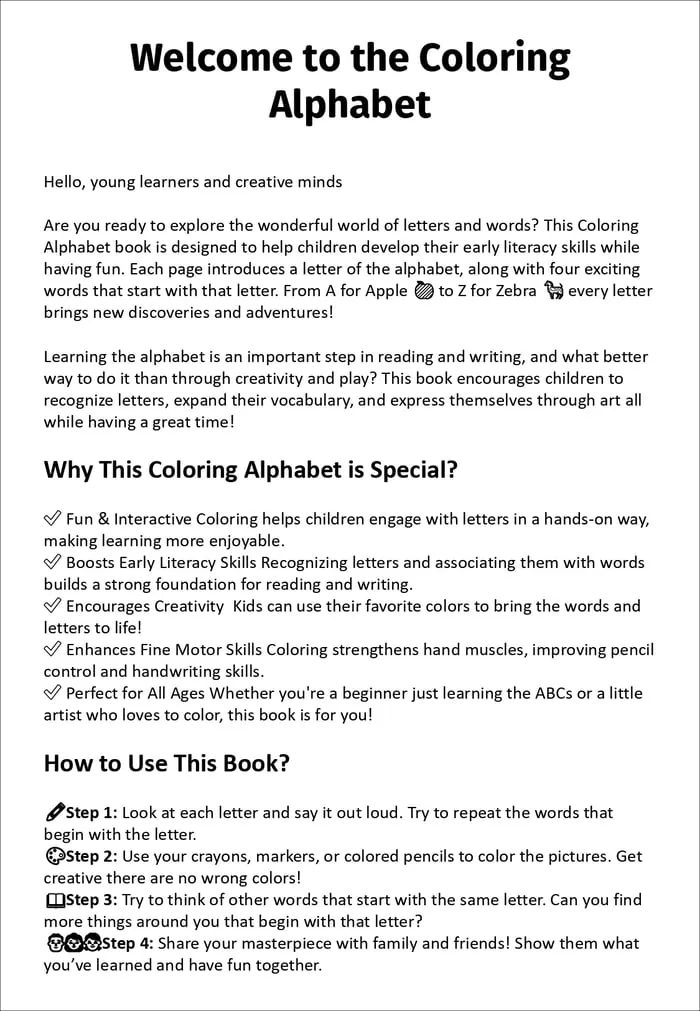
Alphabet Coloring Posters and Beginning Sounds Worksheets: A-Z Kindergarten Bundle: A-Z coloring pages with four labeled illustrations per letter, plus “what is the beginning sound?” worksheets with multiple-choice letter circles and a simple welcome page for children.
Sources and scope
- Reading Rockets: free articles and classroom ideas on phonemic awareness, phonics, and early reading.
- National Association for the Education of Young Children (NAEYC): guidance on developmentally appropriate practice in early childhood.
- What Works Clearinghouse: reviews of research on foundational reading skills, including practice guides for early grades.
- International Literacy Association: resources and position statements on literacy teaching.
This guide covers everyday practice of first sounds for young learners at school and at home. It does not replace a reading assessment, speech-language evaluation, or individual advice from the child’s teacher or specialist.
Key takeaways
- Check what the child hears before you plan, and teach only what is missing.
- Choose stretchy sounds first and keep look-alike or sound-alike letters apart.
- Pair each sound with pictures, saying and coloring, in one short routine.
- Rotate a few daily beginning sounds activities that take five to ten minutes.
- Use the same eight-card check each week to decide which letters to revisit.

Leave a Comment